



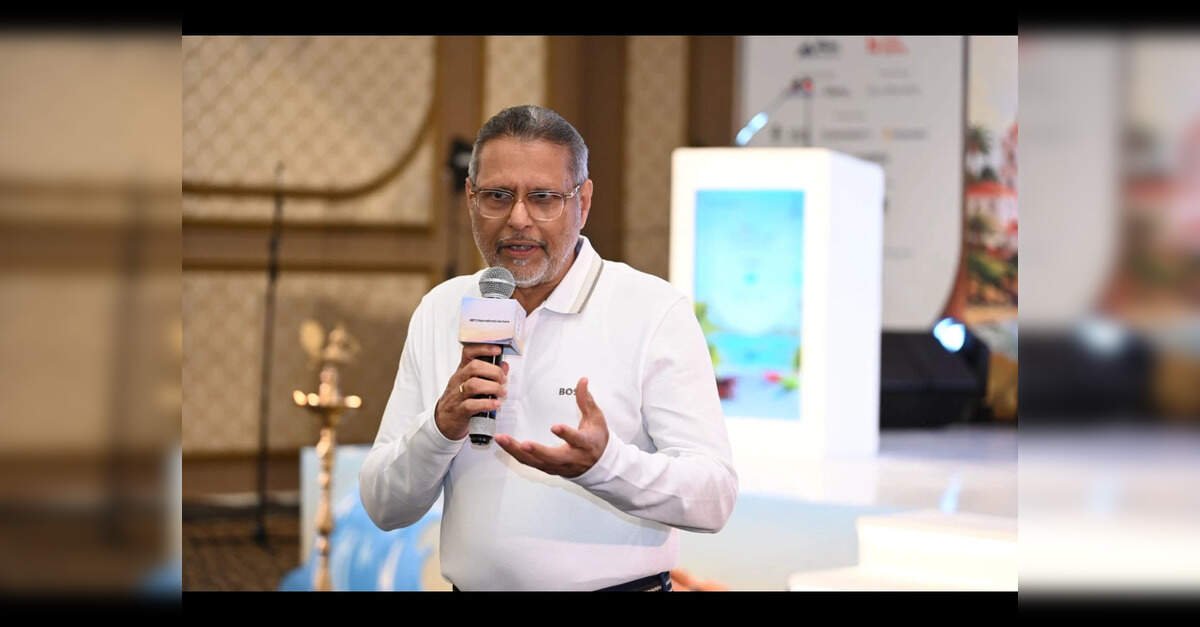
Goa: Artificial intelligence and changing student expectations are forcing universities to rethink their purpose, with traditional degree-centric education at risk of losing relevance, said Dr Chenraj Roychand, Chancellor of JAIN (Deemed-to-be University) and Founder Chairman of JAIN Group, Bengaluru, during his keynote address at the ETEducation Chancellors’ Conclave 2026.
Roychand described the current phase as an era of permanent disruption, where AI is evolving from a supporting tool into a fundamental part of learning infrastructure. He warned that universities relying primarily on classroom teaching, examinations and academic certificates could struggle to attract future generations of students.
With information increasingly accessible through digital platforms and AI-powered systems, he questioned the value proposition of conventional university education. He also pointed to declining applications at some institutions, warning that enrolments could face further pressure unless universities transform their learning models.
Personalised learning and practical skills are the future
Roychand emphasised that higher education must shift from information delivery to personalised, adaptive learning that encourages creativity, innovation and real-world problem-solving.
He advocated stronger integration of technical skills, entrepreneurship and enterprise-based education, highlighting the importance of preparing students to develop solutions to societal and economic challenges.
Referring to international models such as Australia’s technical and further education system and community colleges in the United States, he stressed the need for practical, industry-relevant learning. He also cited Centurion University’s hands-on, skill-based approach as an example of educational innovation.
NEP creates opportunities for institutional transformation
Highlighting the National Education Policy‘s emphasis on flexibility and student-centric learning, Roychand said institutions must use the opportunity to redesign curricula, teaching methodologies and assessment practices.
He stressed that faculty must evolve alongside technology, replacing conventional teaching approaches with models that encourage independent thinking, practical exposure and entrepreneurial capabilities.
Roychand also acknowledged emerging challenges around education costs, regulatory oversight and institutional sustainability.
Looking ahead, he maintained that the next decade would redefine the role of universities. Their long-term relevance, he argued, would depend not on the degrees they award but on their ability to develop skilled, creative individuals capable of solving real-world problems and contributing meaningfully to society.
