


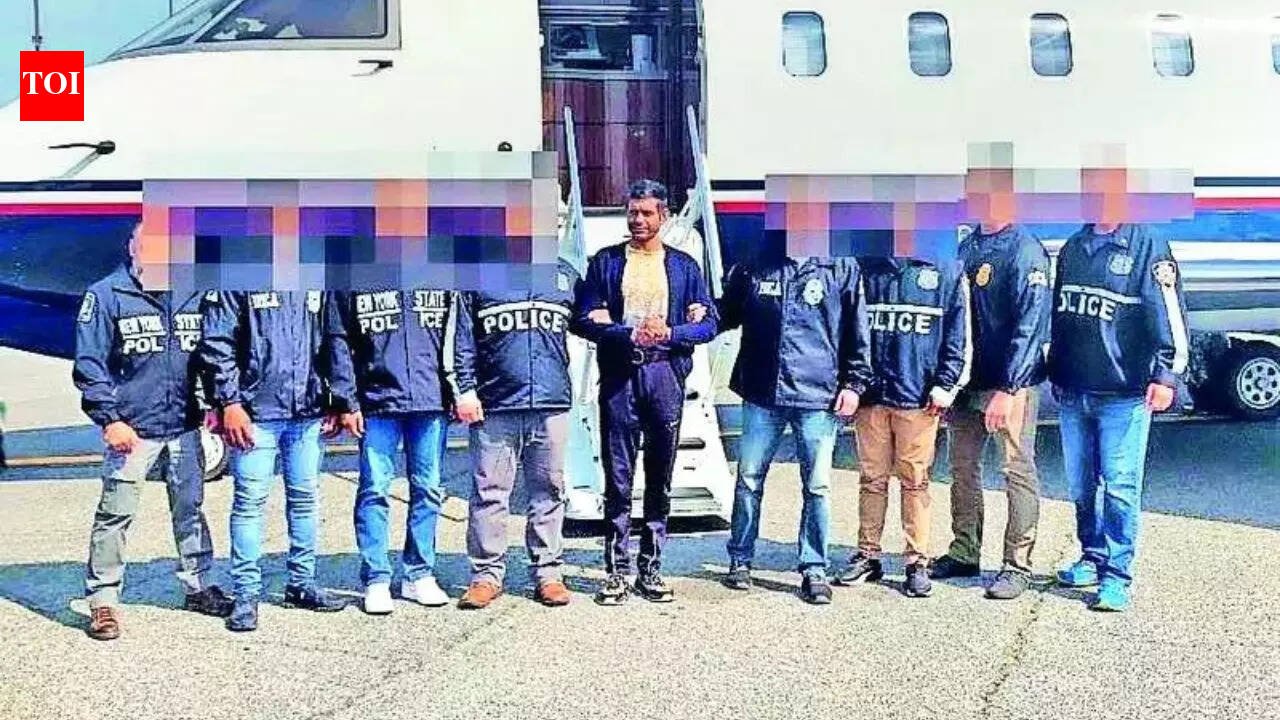
NEW DELHI: The US department of justice’s indictments against Nikhil Gupta do not read like a high-stakes espionage thriller; they, if true, point to an amateur crude plot conceived and sought to be executed with no regard to the basics of intelligence tradecraft. Serving and retired security establishment officials feel, going by the claims of FBI, the whole affair seemed to brazen violate every rule in the book that even rookie interns at any agency across the globe wouldn’t, a recklessness that is associated with an overzealous operative in a terrible hurry who was not bothered with irritants like protocol requiring restraint.“Forget a senior, any mid-level officer in an agency in the know would have shut it down instantly given the amount of red flags the whole thing generated,” said a retired govt officer.From the outset, the operation violated the cardinal rule of tradecraft – never link an agency directly to the street. DOJ documents show the conversation stressed on unnecessary involvements.“Handlers never communicate directly with low-level criminal middlemen using traceable electronics. Yet, DOJ documents reveal that Vikash Yadav and Gupta exchanged routine messages on encrypted platforms that were clearly compromised,” said an officer. The handlers, sources said, always use “dead drops or cut-outs” – multiple layers of individuals who don’t know each other – to ensure if one person is caught, the trail to the state ends immediately. DOJ documents show Yadav sending his own contact information and even a “selfie” to Gupta. The photograph showed him in an official military uniform, complete with visible insignia. This single act effectively handed FBI the “who” of the operation before it had even begun.“In a real operation, a handler is a ghost; here, Yadav comes across as a digital pen pal. The ‘trap’ was not just visible; it was screaming. When Gupta sought a hitman, he reached out straight away to a ‘criminal associate’ who was, in reality, a confidential source of the US’s Drug Enforcement Agency (DEA), a place teeming with double agents like Pakistani American David Coleman Headley aka Daood Gilani of 26/11 notoriety and those who have been responsible for breakthroughs in the drive against Latin American drug cartels as well as stunning failures. This source then introduced Gupta to a ‘hitman’ who was a DEA undercover officer,” another official said.An agency would have spent months vetting these assets. Instead, Gupta and Yadav sprinted into the ambush. The financial trail was equally catastrophic. On June 9, 2023, the conspirators arranged for an associate to hand over $15,000 in cash to the undercover agent in a car in Manhattan. This was a ‘Financial Op-Sec’ suicide. By moving physical cash in a place like Manhattan to a man they had never met, they turned a geopolitical plot into a common street crime captured on federal surveillance. In a real operation, money for “wetwork” is laundered through complex front companies or transferred via untraceable methods to avoid physical exposure.Perhaps the most damning evidence of their “continuing despite the trap” was the aftermath of Khalistani terrorist Hardeep Singh Nijjar killing in Canada. Rather than going “dark” to avoid regional heat, Yadav allegedly sent Gupta a video of Nijjar’s bloodied body and a message stating that the New York target was now a “priority”. “By discussing an assassination so casually and explicitly linking the two hits, they surrendered all deniability and handed DOJ the narrative of a transnational repression plot,” an official said.By the time Gupta was arrested in the Czech Republic, he wasn’t a victim of a brilliant sting; he was the inevitable casualty of an eagerness, whose parenthood remains doubtful, that broke basic rules while the trap was being set in plain sight.


