






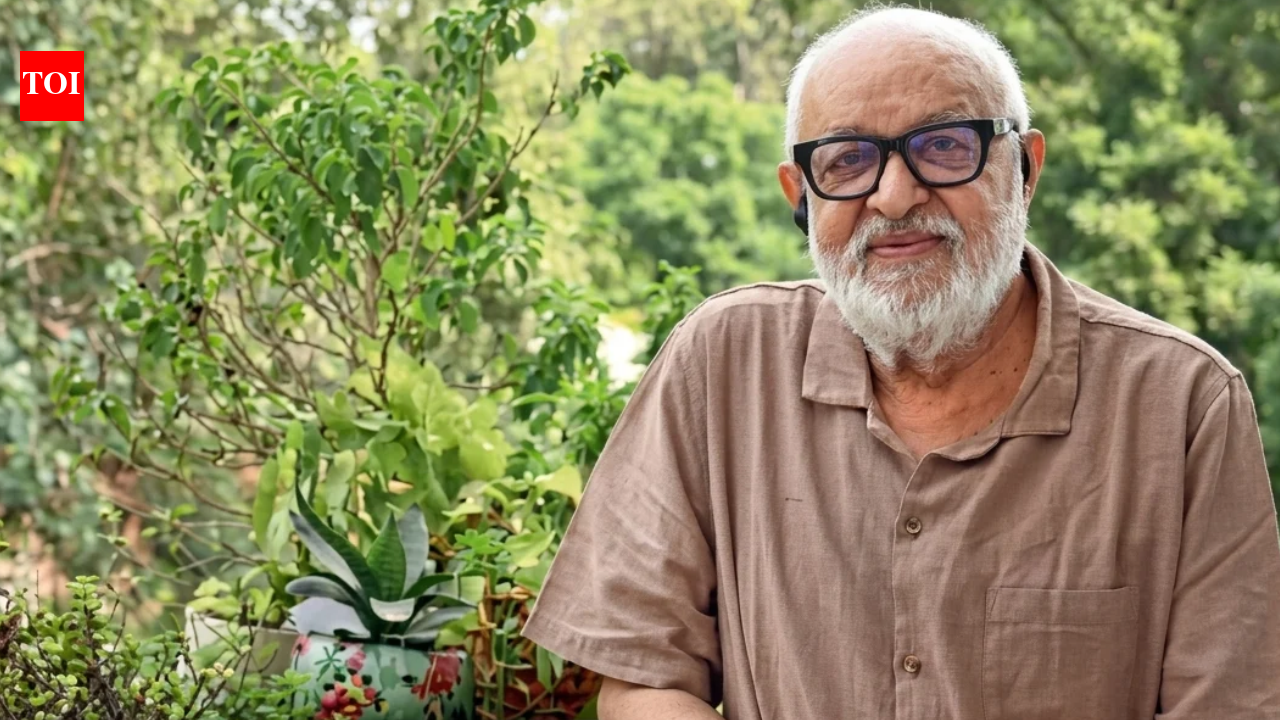
Pushpesh Pant recalls the time when a coffee house served masala dosa for 27 paise at Connaught Place and draws the link between momos and migrationMulti-tasking came easily to Pushpesh Pant. A generation of JNU students of international affairs would remember his lectures on diplomacy. Along with writer Krishna Sobti, Pant was also the principal researcher for Ramesh Sippy’s iconic television series, ‘Buniyaad’. The unassuming director of ‘Sholay’ would visit Pant’s home, borrow John Updike’s short stories collection. The JNU professor would also translate Prime Minister Rajiv Gandhi’s speeches from English to Hindi. “I would feel self-important,” he recalls.That’s until chef Jiggs Kalra, whom he knew since his days of freelancing for The Times of India, would tell him that unlike the USA, nobody remembered a speechwriter in India. “He said, ‘Why don’t you do something that you are remembered for? Why don’t you write on a subject that everybody is interested in?’,” says Pant, while Khampa, an extra-large but immensely friendly German Shepherd rests at his feet, and toffee-nosed Luna, a grey Persian Cat, ignores all at his Dwarka residence.The food for thought brewed into a transformative moment for Pant. Childhood had drilled in him a taste for diverse cuisines. But as an academic, he also saw food through the looking glass of culture and class, where caste and community reflected their personalities through their culinary fare. Which is why his switch from diplomatic desk to dinner table has produced a smorgasbord of food histories and television shows, notably ‘Raja, Rasoi aur Anya Kahani-yan’, which gave commoners an insight into royal kitchens.Now, approaching 80, Pant still speaks with the speed of a Swiggy delivery guy trying to beat a deadline while he explains how his earliest lessons in life and food were homemade. Mostly homeschooled by his mother, he grew up in the restorative hill settlement of Mukteshwar, where his father served as a doctor in the Imperial (now Indian) Veterinary Research Institute. “He had a Bengali roommate during his years at Lucknow’s King George’s Medical College. He could speak and abuse in Bengali,” Pant smiles. In the city of nawabs, his father also developed a fondness for kebabs and kormas.His mother, Jayanti, was born in Saurashtra, went to schools in Allahabad, Varanasi and Shillong, and studied at Santiniketan. Her father served for the Rampur ‘riyasat’ and in Mysore familiarising her with a range of culinary traditions. “My mother was a vegetarian, but she would cook non-veg,” Pant says.The home kitchen would produce a gastronomic version of mini India smelling as much of “sambar” as “shami kabab”. “My father would say, today I feel like a Gujarati, make me some lahsuni kadhi”. Another day my mother could prepare ‘doi maach’. We would even distinguish if the dish was ‘Ghoti’ or ‘Bangal’, the traditional social sub-groups with distinct cuisines,” he says.Culinary variety was outside too. Research scientists at the institute came from different states. “The Sindhis would make crispy ‘aloo tuk’ and ‘seyal gosht’. But those were pre-pressure cooker days. Cooking meat in the hills would take four hours,” the food historian recalls.With the passage of time, Pant understood that food wasn’t just taste but also ritual. “My mother was a devout Hindu. Poornamashi (full moon night) meant falahar (a meal of fruits). But we also loved the koftas and kimami sewai sent by a Muslim family friend from Shahjahanpur during Eid. There were no taboos,” he remembers.An incident taught him that every person’s palate is shaped by his experience. When his father earned a promotion, all workhands were served an array of sweets: ‘peda’, ‘sandesh’, ‘pantua’ and ‘laddoo’. “My mother asked one of them if he wants more? He replied, ‘Madame, even if you offer me gud (jaggery), I would refuse it.’” For him, Pant explains, ‘gud’ was the ultimate delicacy, the sweet he was brought up on.In the mid-1960s, Pant arrived in Delhi for his PhD enrolling with Indian School of International Studies (later JNU’s SIS) staying in Sapru House hostel. Food was regulated due to the 1966-67 Bihar drought that claimed at least 70,000 lives. “Once every week we would be served cereal-less food — millets, vegetables, fruits — but no rice or wheat,” he recalls.Living close to Connaught Place and Bengali Market, Pant would look for modestly-priced eateries. He remembers the coffee house, located where Palika Bazaar stands now, serving masala dosa for 27 paise (25 paise plus 2 paise sales tax). And eating four rotis and half a plate of sabji, with free daal, for 70 paise, at Azad Dhaba in Shankar Market.In 1969, Pant started teaching at DU’s Ramjas College. “The fashionable street food was at Tibetan Dhaba where, among other things, you bought a kettle of the mildly-alcoholic drink, ‘chang’, for Re 1. The young lecturer would explore old Delhi. At Chandni Chowk, he would relish the samosa jalebi combo at Old Famous Jalebiwala. In the Jama Masjid area, while gorging on ‘istew’, nihari and khamiri roti, he would also visit Sheeren Bhawan, an old snack and sweet shop, for their puri and aaloo-chholey. “Many think only Hindus eat such breakfast,” he says. His experiences would later become part of “From the King’s Table To Street Food,” a book on food history of Delhi.Over the decades, street food has morphed in the capital. “Delhi’s street food today is a creation of migration. With changing regional demographics, momos and litti chokha have taken over,” says Pant, adding, “Each generation reinterprets the street food for itself.” He points out how dishes such as Champaran mutton or Moradabadi biryani have sprouted. “These names didn’t exist 50 years ago,” he says.If stranded on an island with only one dish to eat, what would he choose? “Khichdi,” he says, unhesitatingly, “For both taste and nutritional balance.”


