


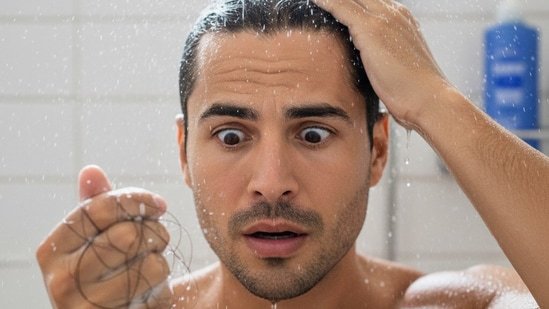
Moved to a new city and suddenly noticing more hair in the shower drain? For many people, especially in metropolitan areas, the first instinct is to blame the water supply. Hard water often becomes the easy culprit when hair starts thinning. But is the real issue flowing from your taps – or is it a deeper medical or lifestyle concern that needs attention?
Dr Agni Kumar Bose, a dermatosurgeon and trichologist specialising in dermatology, venereology and leprosy, with eight years of clinical experience, is addressing a common concern many people have: does hard water really cause baldness? In an Instagram video shared on February 15, the dermatologist breaks down how hard water can impact hair health, while clarifying why true balding is a medical issue that requires timely professional evaluation rather than just changes to your water supply.
How does hard water affect your hair?
Many people attribute their hair loss to hard water, but according to Dr Bose, it is not a direct cause of baldness. While hard water can alter the texture of your hair – leading to dryness, roughness, and frizz – it does not trigger permanent hair loss. Concerns such as a receding hairline, bald patches, or progressive thinning are typically linked to genetic hair loss rather than the quality of water.
He explains, “Hard water does not cause balding. Yes, of course, it can cause roughness, dryness, and frizziness of the hair, but that is just the texture. Hard water does not cause a receding hairline, hair thinning, or bald patches. That is genetic hair loss. If hard water caused baldness, then people in coastal cities across the world would be bald by now.”
The real reason you’re losing hair
Dr Bose emphasises that baldness is not a plumbing problem but a medical concern. While genetics play a central role, lifestyle factors such as poor nutrition, chronic stress, and disrupted routines can accelerate hair loss. Many people notice increased shedding after moving to a new city for college or work – a transition that often brings irregular meals, heightened stress, and inadequate self-care, all of which can negatively impact hair health.
He explains, “People usually move to a new city either for college or for work, which is roughly around the same age when genetic hair loss begins. Because they are no longer living at home, their nutrition and stress levels also suffer, yet the blame is placed on the plumbing.”
The dermatologist explains that this type of hair fall is often reversible – but only if addressed early, before permanent damage sets in. Unfortunately, many people focus on changing their shower filters or blaming the plumbing, while delaying a medical consultation. By the time they seek professional help, the window for effective intervention may already be narrowing.
He stresses, “And what do they do? They buy expensive water filters, bathe with RO water, or even bathe with Bisleri, but they won’t go to a simple doctor. Because of this, they end up wasting precious years when they could have actually started treatment, and by then, the hair loss becomes irreversible. Please note that balding is not a plumbing problem; it is a medical problem. Go see your doctor, not your plumber.”
Note to readers: This article is for informational purposes only and not a substitute for professional medical advice. It is based on user-generated content from social media. HT.com has not independently verified the claims and does not endorse them.


