



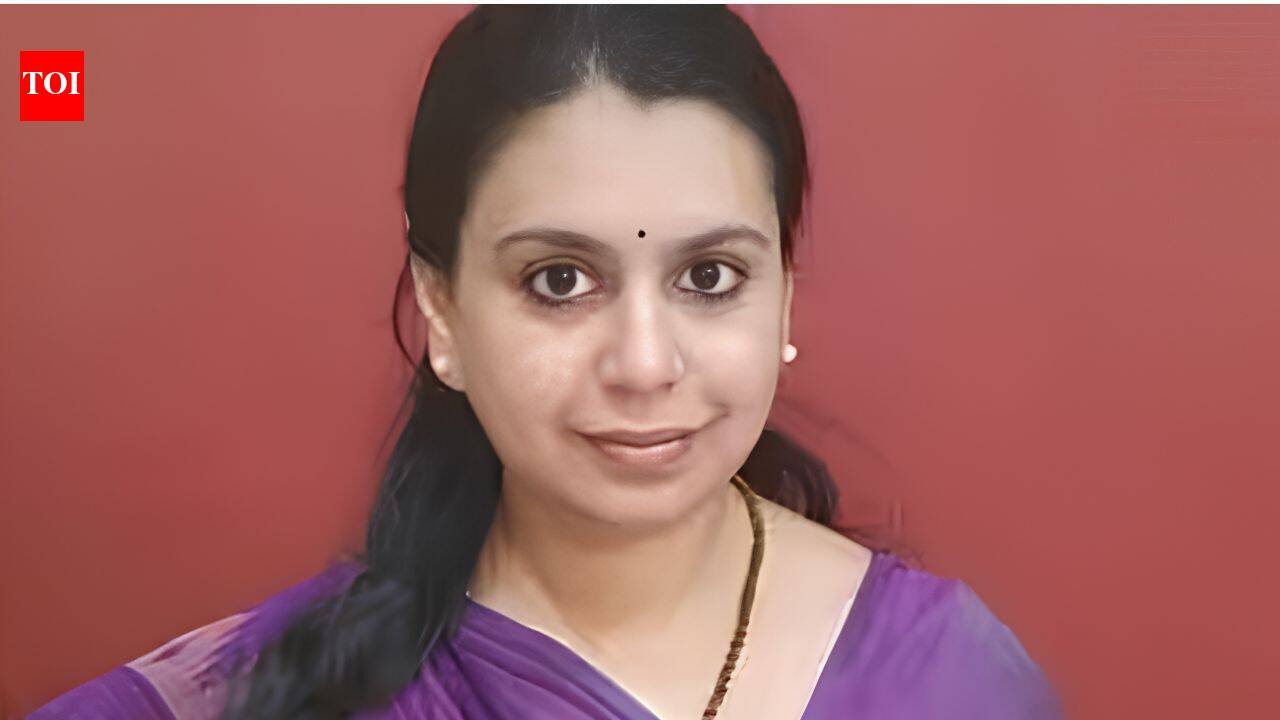
LUCKNOW:“Don’t fight the Sirens. Tie yourself to the mast,” IAS officer Divya Mittal wrote on X after watching Christopher Nolan’s The Odyssey.The post is characteristic of the ideas Mittal shares across her social media accounts. Her online presence combines reflections on discipline, education, self-awareness and public service with personal memories of places where she has worked.One such place is Mirzapur, where she served as district magistrate. “Time moved on, but a part of me still lives in Mirzapur. I miss you Mirzapur,” she wrote in a post on X in July. The message, accompanied by a video and three red hearts, offered a glimpse of the emotional connection she appears to have developed with the district.
Divya Mittal’s digital diary
In 2023, while serving as the district magistrate of Mirzapur, Mittal took up what govt records had described as an “impossible case” in Lahuria Dah village. Nearly 1,500 residents, most of them from Dalit families, had lived without piped water for 75 years.The village, located on the Uttar Pradesh-Madhya Pradesh border, depended on water tankers. Women walked several kilometres across rocky terrain to collect drinking water, while the Gram Sabha was pushed into debt by the cost of tanker supplies. Mittal recalled that the situation had become so difficult that people avoided marrying their daughters into the village.Previous efforts had produced surveys but no solution. The terrain was considered too difficult, the residents too poor and the project financially unviable. But Mittal and her team refused to accept the official verdict.Engineers from the Jal Nigam redesigned the lift water supply system. The project involved sourcing water, pumping it across difficult terrain, building storage facilities and creating a distribution network. Mittal said she visited the site every week to review its progress.Nine months later, water began flowing from taps installed in 125 homes. It was the first time in seven decades that Lahuria Dah had received piped water.“When the tap was turned on for the first time today, tears of joy streamed down almost every face we saw,” Mittal wrote. An elderly woman held her hand and cried. Mittal said she cried with her, describing it as one of the most moving moments of her 11 years in public service.She drew several lessons from the project. Poor villages, she wrote, are not always poor because they are difficult to serve. Often, they remain neglected because nobody takes ownership.“Impossible is rarely an engineering verdict. It’s usually an ownership verdict,” she wrote.Her second lesson was that govt schemes alone cannot deliver results. “Schemes don’t deliver water. People do,” she said, arguing that even the best-designed programme can remain ineffective unless someone takes responsibility for implementation.Three years later, in 2026, Mittal found a parallel in The Odyssey. In the film, Odysseus asks his crew to tie him to the mast because he knows the Sirens’ song will be impossible to resist.“The strongest man on the ship didn’t trust his willpower. He trusted his systems,” she wrote.Mittal’s reflections also draw on her own journey. An IIT Delhi and IIM Bangalore graduate, she worked with JP Morgan in London before returning to India. She cleared the UPSC examination three times, entering the Indian Revenue Service, Indian Police Service and finally the IAS.Through her book The Crafted Genius, she has written about preparation, discipline and resilience. Her LinkedIn posts also discuss the gaps in formal education, including emotional regulation, communication, financial management, loneliness and mental health.Her Independence Day message carried the same emphasis on personal responsibility. “Freedom is not a date. Freedom has to be earned every day,” she wrote in Hindi, describing nation-building as a sacred sacrifice in which every Indian must contribute a spoonful of ghee.For one person, she suggested, that contribution could be writing words that raise questions. For another, it could be providing water to a thirsty village. Someone else could contribute through an act of kindness or by supporting what is right.Across her social media accounts Facebook, X, Instagram and LinkedIn, Mittal presents public service through human experiences. Whether writing about a Hollywood film, a village water project, or India’s Independence Day, Mittal returns to the same idea: meaningful change begins when people stop waiting for ideal circumstances and choose to take ownership.


