



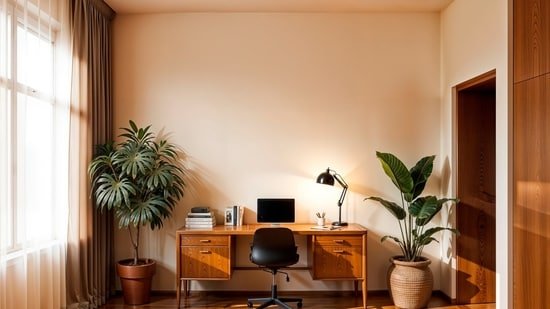
From early morning hustle to burning the midnight oil, the study room is the true ground zero of productivity. The dedicated space is more than a desk, chair, and notice board with pinned to-do lists and tasks. All your ideas get shaped here, plans get executed while you maintain your razor-sharp focus.
ALSO READ: Small room feeling too stuffy? Make your space appear big with these lighting tips
But the study area also gets the most neglect, whether it is spare items piled on the desk or a DIY-fixed chair. Investing in tuning your study room to its optimal potential can also unlock your own productivity. It all begins with a few simple decor tweaks that make a big difference.
HT Lifestyle, in an interview, asked Rohana Sarah, founder and CEO at Green World Design, to share with us a common mistake she observed, along with some tips to make study rooms more productive.
“In most residential homes, study rooms are often treated as residual spaces rather than performance-driven environments,” she remarked, suggesting how study spaces are regarded as leftover spaces and used only when required, instead of being designed for focus and productivity.
It also reflects the flawed mindset that studying or working from home can happen anywhere, so the space’s design is sidelined. But the difference is clear: not designing a proper study room and optimising it can affect your efficiency and productivity, making work feel like a chore. With better focus, your output becomes substantially better.
“How well the room functions depends on decisions taken much earlier – natural light, ventilation, and how it is positioned within the overall layout,” Rohana outlined some of the pre-requisites.
To create a space that supports your productivity, you need to be mindful of the basics. When you get the foundations of the study room right, it becomes more effective. “A few practical decor interventions can significantly improve cognitive focus and reduce distraction,” she shared, reminding us how a study’s design is influential in how you concentrate.
Here are some of her tips to make your study room better:
1. Natural light
- Use it to your advantage by ‘controlling’ it.
- Direct glare or inconsistent lighting creates fatigue very quickly.
- Align the workspace to receive diffused daylight, and layer it with shading elements so the room remains usable through the day.
2. Thermal comfort
- Certain rooms, especially west-facing ones, can heat disproportionately in urban homes.
- Go for strategies that help stabilise indoor conditions without relying entirely on mechanical cooling.
- Ensure shaded openings to reduce direct heat.
- Use cross ventilation to allow natural airflow, for the room to stay cool.
- Add external planting buffers.


