



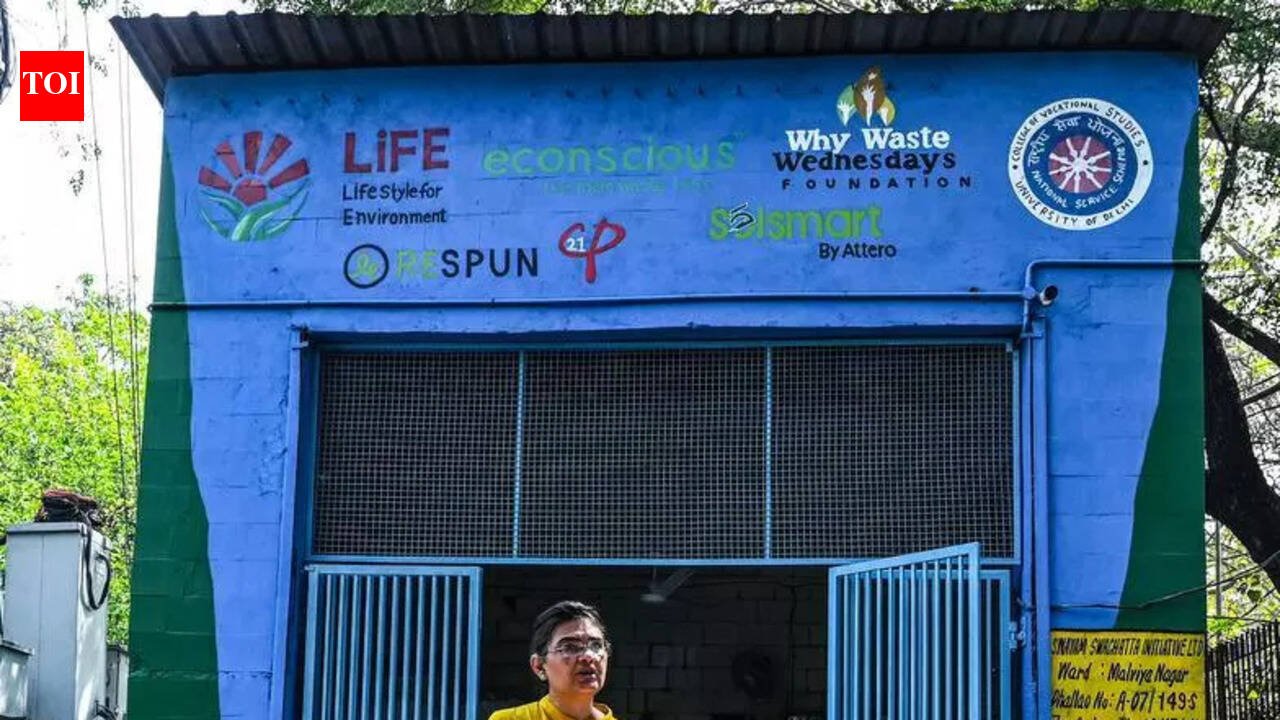
New Delhi: For decades, Residents Welfare Associations—the hyper-local power centres that quietly shape the daily rhythms of neighbourhood life—were seen as the domain of retired men with time to spare and the inclination to supervise civic minutiae. RWAs were often dismissed as “toothless bodies”, existing more for routine paperwork. But across Delhi, that perception is steadily being dismantled. An unmistakable shift is underway: women, many of them full-time professionals, are stepping into these traditional bastions and transforming them with their resolve, creativity and community-driven lens. This wave of women leaders is reshaping the character of RWAs—once viewed as rigid, bureaucratic spaces—into responsive, people-first platforms. TOI spoke to several women who, while balancing demanding careers, are taking on RWA leadership roles and redefining what civic engagement looks like in Delhi’s neighbourhoods. ‘Not a kitty group — A tag we fought fiercely against’ It has nearly been a decade since Neha Puri, president of the Green Park Extension RWA, first joined the association on her mother-in-law’s suggestion. But the journey, she recalls, was anything but smooth. “Despite serving as general secretary earlier, people labelled our team as a ‘kitty group’ five years ago when many women joined as RWA members,” she says. “People doubted our ability to make any difference… and warned that the work would disturb our professional lives and household responsibilities.” The remarks unsettled her for a moment—but they also galvanised her. Determined to test the waters herself, Puri plunged into civic work with a persistence that gradually changed perceptions. She began making rounds of MCD, DJB and the district magistrate’s office so regularly that “officials—from junior staff to senior officers—began recognising us and paying attention to our concerns.” With support from her team, she tightened response time for residents’ complaints, intensified ground monitoring and persistently followed up on long-pending projects with elected representatives. “Gradually, that helped streamline several civic issues,” says Puri, who spent 17 years in the corporate sector before switching to hypnotherapy. The early scepticism has since receded, replaced by tangible improvements and a renewed trust in the RWA. ‘I have a vision for sustainable neighbourhood’In south Delhi’s Navjiwan Vihar, Dr Ruby Makhija, an ophthalmologist and general secretary of the RWA, has spent nine years building a model that civic bodies now cite as an example: a neighbourhood with 100% waste segregation at source. The colony’s waste management system—complete with composting units, a dry waste collection centre and a reduce–reuse–recycle hub—has become a template for others looking to replicate sustainable practices. “I might have taken up the RWA role with excitement, but it was definitely not an easy journey,” she says. Her initial work involved checking on senior citizens living alone, organising health camps through her professional network and gradually earning residents’ trust. Sometimes that meant stepping out late at night for security-related conflicts; during the Covid pandemic, she helped the colony host one of Delhi’s earliest vaccination camps, benefiting nearly 5,000 people. “These efforts encouraged people to take my work seriously, including those who initially dismissed us,” she says. ‘We are empathetic and efficient’ For Anantmala Potdar, a lawyer and president of the D Block RWA in Saket, her professional experience and association with district committees proved invaluable. “Disparities exist everywhere, but thankfully people are aware and open-minded,” she says. Rather than dwelling on criticism, she focuses on solutions—whether tackling parking encroachments or running an initiative to educate underprivileged children. At A1 Block, Safdarjung Enclave, interior architect Payal Kapoor believes RWA work, as its president, is largely about time management. Tech-savvy and hands-on, she gained attention during the Covid lockdown when she single-handedly began revamping the area’s only park. The effort drew residents into collective maintenance and eventually led to her leadership role. “It is not rocket science—your goodwill, organisational skills and coordination skills eventually help resolve issues. My efforts were even felicitated by former MP Meenakshi Lekhi,” she says.


