



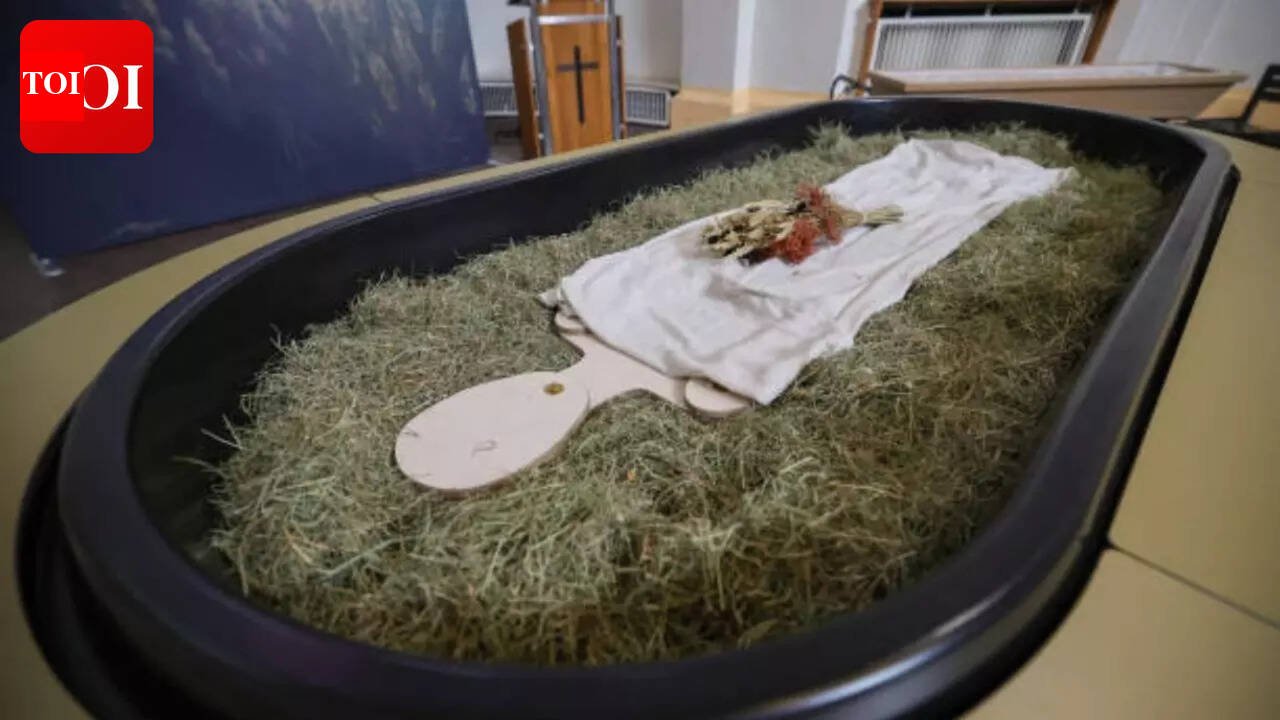
Oklahoma State Representative Jim Shaw’s recent post on X has sparked a heated debate online over a process called Natural Organic Reduction (NOR), colloquially known as human composting, in which dead human bodies are used to fertilise the farming soil. Shaw revealed that the House advanced bill HB3660, which could legalise the composting method in the state. This would add Oklahoma to a list of 14 “BLUE” states that have already legalised the process. He claimed that instead of outlawing this practice, the state was on track to allow it and called it a “disgusting step forward.”While biosolids have been used as fertiliser in farmlands for decades, this bill would add human remains to the list. Shaw shared that he had proposed a bill in two sessions in a row to ban the application of biosolids as fertilisers in Oklahoma but it had been “killed outright.” Numerous netizens supported Shaw’s disappointment with the move pursued in the house. “My state government is an SNL skit” mocked one user. “This is reprehensible and absurd to think that anyone would consider using human composting as a means of fertilising anything! Please do not let this bill pass. My God, is there any decent human left?” asked another. The controversy centres around the transition of the human body from a vessel of life into a fertiliser in the field and raises questions over sustainable death care. The process of human composting is currently legal in 14 states including: Arizona, California, Nevada, Colorado, Delaware, Georgia, Maine, Minnesota, Maryland, New Jersey, New York, Oregon, Vermont and Washington DC. The United States funeral industry is worth $20 billion annually. However, nearly 50% of Americans surveyed are concerned about the cost of funerals or burial plans. NOR first gained approval in Washington state in 2019 and over the years, has gained popularity as an alternative to traditional burial and cremation. Developed and popularised by companies like Recompose, the process involves placing the human body in a vessel filled with organic materials like wood chips, straw and alfalfa. Oxygen, moisture and microbial activity act in 30-60 days to generate approximately one cubic yard of soil. The process typically costs $7000 to complete, less than the traditional funeral process. In Utah, there is even a parlour that offers the process. Shayneh Starks, funeral director of Starks Funeral Parlour, said to PBS Utah, “in some way, it feels like the person living on.” Currently, the parlour completes the process in Seattle and brings the soil back home. But, a bill was introduced in February to legalise human composting in the state which is yet to be passed.However, critics of the process argue that it reduces the human from a person to be memorialised to just a nitrogen-rich additive for a crop cycle. The underlying philosophical shift is what rattles many: the transition from seeing a body as sacred to seeing it as input. In a February hearing on Capitol Hill, funeral director Andrew Anderson said the law does not address the “safe placement” of the soil or what would be done with it. This has an uncanny resemblance to the dystopian logic of The Matrix, where humans are reduced to a physical resource to sustain a system. Much like the film’s “liquefication” of the dead to feed the living, critics fear this process strips humanity of its dignity by turning the body into a mere industrial commodity.


