





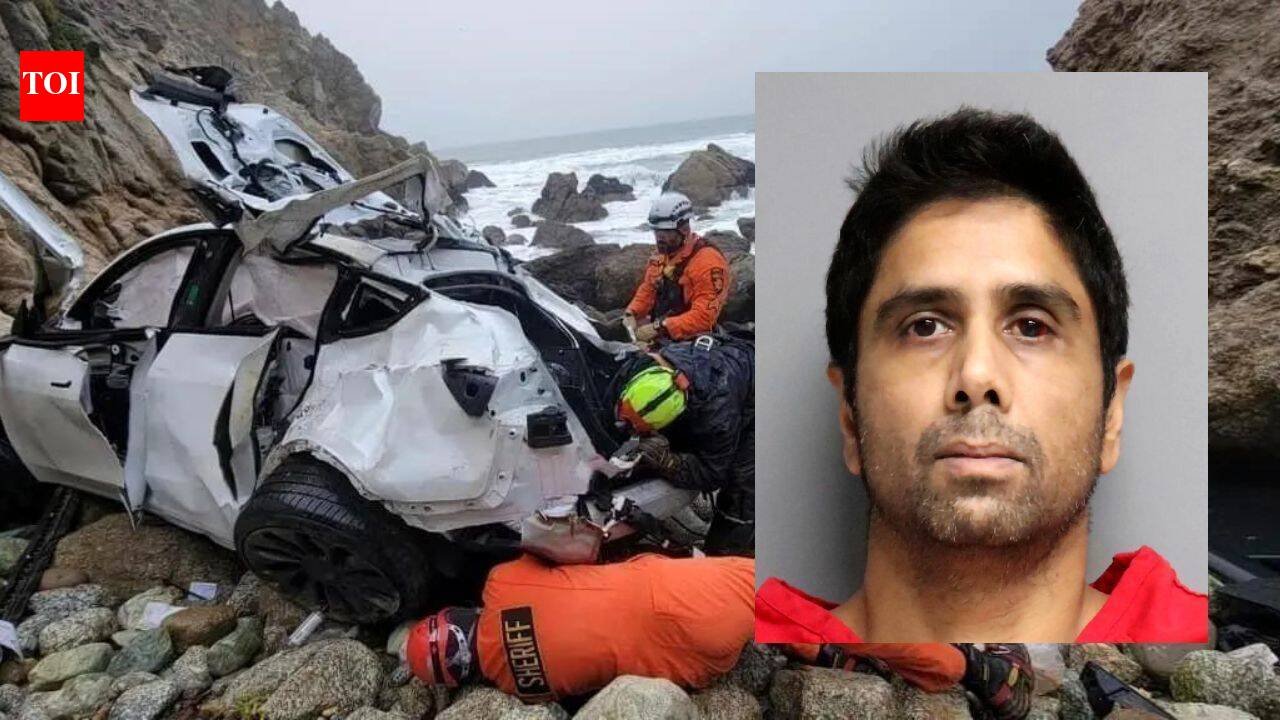
TOI correspondent from Washington: For years, Dharmesh Patel seemed to embody the American dream. The 45-year-old radiologist lived with his wife and two young children in a quiet cul-de-sac in Pasadena, California. Colleagues described him as a respected physician, while neighbours remembered him as a thoughtful man who brought poinsettias to nearby homes during the holidays.That image shattered on January 2, 2023, when according to prosecutors, Patel deliberately drove his Tesla off a 250-foot cliff at Devil’s Slide, a notorious stretch of California’s Pacific Coast Highway, with his wife Neha and their two children, aged four and seven, inside the vehicle. Miraculously, all four survived.On Monday, following more than three years of trial, a San Mateo County judge dismissed all three attempted murder charges against Patel after he successfully completed a two-year mental health diversion program that focused on psychiatric treatment rather than criminal punishment. The decision closes one of California’s most controversial and emotionally complex criminal cases, raising difficult questions about mental illness, accountability, and public safety.Emergency responders who arrived at the scene in 2023 described the family’s survival as nothing short of miraculous. Investigators later alleged that Patel intentionally steered the vehicle off the cliff, and according to court records, Neha Patel told paramedics that her husband had tried to kill the family.Patel remained in jail from January 2023 until August 2024, when a San Mateo County Superior Court judge allowed him to enter California’s mental health diversion program. The program, created in 2018, permits certain defendants whose crimes were substantially influenced by mental illness to undergo treatment instead of prosecution. During hearings last year, multiple psychologists diagnosed Patel with major depressive disorder and testified that he had suffered a psychotic break at the time of the crash.Doctors said Patel was experiencing paranoid delusions and hallucinations, and reportedly feared that his children had been sex-trafficked and was consumed by anxieties over the fentanyl epidemic, the war in Ukraine, and child exploitation. Some of his fears were reported to be linked to media coverage surrounding convicted sex offender Jeffrey Epstein.Remarkably, Patel’s wife strongly supported his entry into the treatment program. “We need him in our life. We’re not a family without him,” she told the court. Calling the crash “a mental health episode beyond any of our understanding or control,” she described Patel as a “kind and altruistic” man who had been her “best friend for more than 25 years.”She also recounted the emotional toll on their children during his incarceration, saying her son “wished daddy would magically appear on St. Patrick’s Day when he saw a rainbow” and “seeing my kids in emotional pain is one of the hardest things I’ve had to endure.”The diversion program required Patel to regularly see a psychiatrist and family therapist and periodically report his progress to the court. Judge Sharon Cho said reports from clinicians indicated Patel was “doing very well” and planned to continue treatment. After the charges were dismissed, Patel embraced his wife in the courtroom gallery, and the couple left together.Prosecutors were not exactly chuffed by the outcome. “We felt that the crime was way too serious. Allowing diversion in a case where someone had allegedly planned to kill his two small children and his wife, as well as himself, was not good for public safety,” San Mateo County District Attorney Stephen Wagstaffe, who had vigorously opposed Patel’s diversion request, told the local media. “Wow, boy, did he get the break of breaks…I hope he takes advantage of it,” he added.The Dharmesh Patel case has become a touchstone in California’s debate over mental health diversion laws. Critics argue that such programs can be too lenient even in cases involving grave violence, while supporters contend that untreated mental illness should be met with treatment rather than incarceration. In the end, the case leaves behind no easy answers — only the image of a family that survived an unimaginable fall, physically and emotionally, and now faces the difficult task of rebuilding its life together.


