



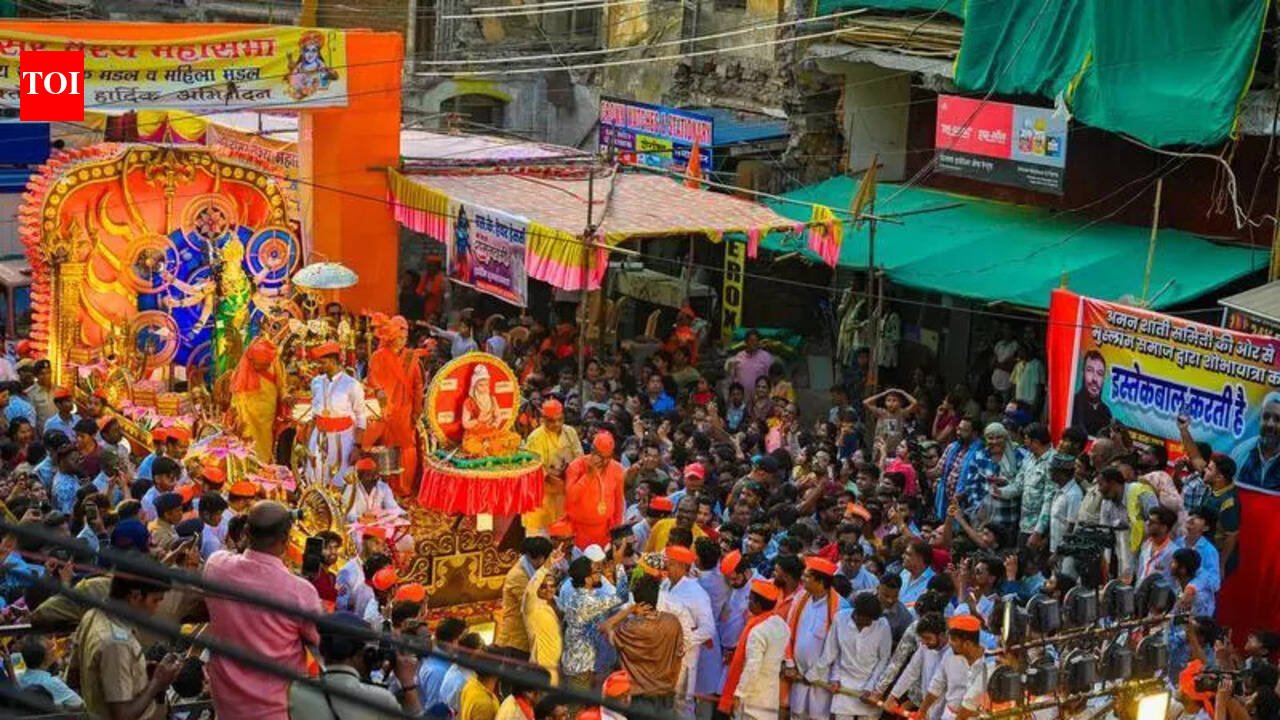
Nagpur: A sea of devotees surged through the city on Thursday as the Poddareshwar Ram Temple’s 60th Shobha Yatra rolled out, with packed streets, rising chants, and continuous movement of crowds turning the procession route into a live, unfolding celebration. Devotees lined up along the route — from Itwari through Badkas Chowk, Gandhi Gate, Cotton Market, and Variety Square — hours in advance, with continuous chants and drumbeats accompanying the procession. The scale of participation remained high through the afternoon, with crowds swelling at every major junction. Chief minister Devendra Fadnavis and Union minister Nitin Gadkari joined the celebrations at the temple, where they performed pooja of Lord Ram and attended the aarti. They later symbolically pulled the chariot, marking the formal start of the rath procession. Senior leaders, including revenue minister Chandrashekhar Bawankule, mayor Neeta Thakre, were also present. Fadnavis, while speaking to mediapersons at the Poddareshwar Ram Temple, said the ideals of Maryada Purushottam Lord Ram continue to guide society. “The Shobha Yatra here in Nagpur has become a unique tradition, growing in scale and participation every year. It is heartening to see such overwhelming devotion and unity among people. This spirit of faith and discipline is what defines our cultural strength,” he added. The procession featured around 94 tableaux, making it one of the largest in recent years, which spanned over 3.5 km in length, with 24,000 volunteers helping to smooth out the process. These depicted scenes from the Ramayana and other mythological themes, including Ram Darbar, Lord Hanuman, Mahadev, Maa Bhagwati, and Indra. Several groups also presented live dance performances and bhajan recitals, adding movement and sound to the procession. A major highlight was a 51-ft-long, 11-ft-high saffron flag carried by Shri Ram Dev Baba Sevan Sangh, drawing attention as it moved along the packed route. Women turned out in large numbers in the procession, many participating in traditional attire. Along the procession path, hundreds of mandals and organisations set up prasad distribution points, ensuring a continuous flow of offerings for devotees. Volunteers managed the arrangements across both the main route and adjoining lanes, helping regulate movement amid the heavy turnout. The festive build-up began early in the day, with temples in Mahal and surrounding areas witnessing heavy footfall from around 4.30 am for aartis, dindis, and prabhat feris. The midday Ram Janm aarti saw another surge in attendance, with elaborate rituals performed at multiple temples. As the procession advanced, chants of ‘Jai Shri Ram’ echoed across the route, with devotees joining in from the streets as well as balconies and terraces. Police and traffic personnel were deployed across key junctions to manage crowd movement and ensure the smooth passage of the yatra.


