


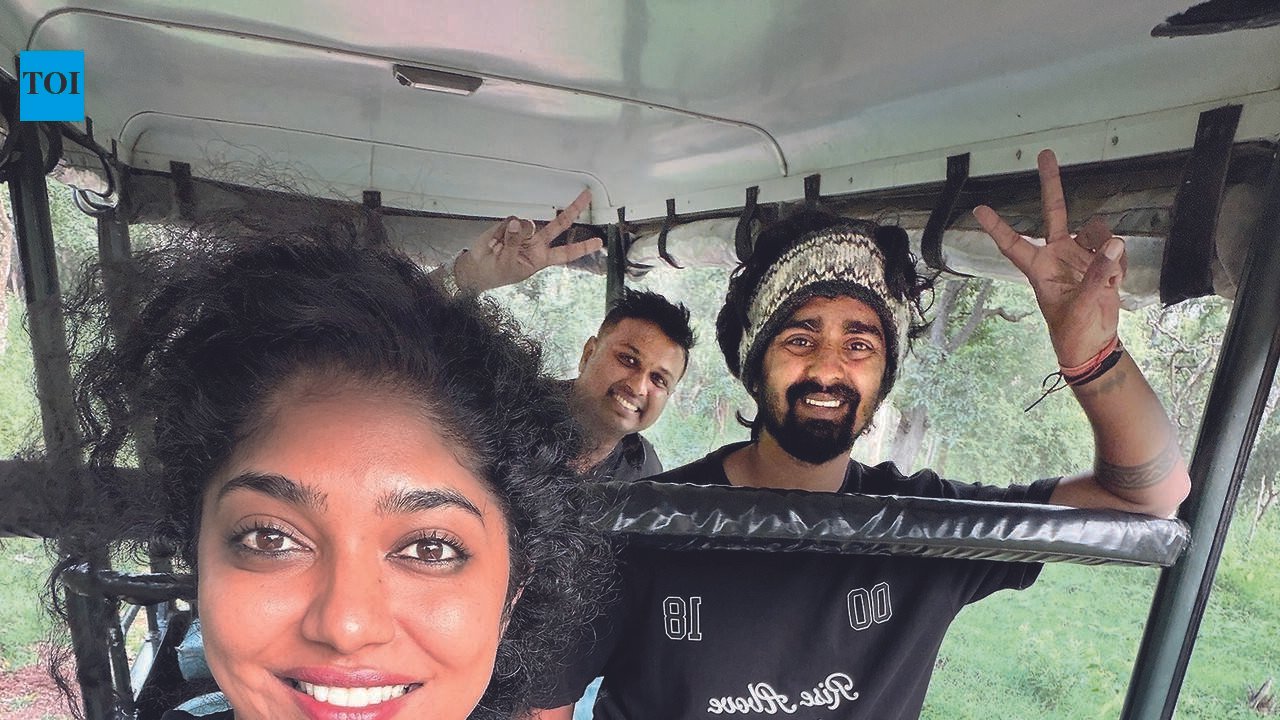
Actor-turned-filmmaker Samyukta Hornad is stepping behind the camera with a slate of films rooted in her long-standing engagement with animals and the environment. On World Elephant Day, today, she tells us about her first project that explores the relationship between humans and elephants, while subsequent stories will look at other aspects of the natural world. For Samyukta, however, these aren’t simply wildlife films. They are an attempt to shift the way we look at the world around us — by moving beyond statistics and conflict to empathy and emotion. Excerpts:You are exploring wildlife and man-animal conflict through cinema. How do you think filmmakers can approach such a sensitive subject without reducing it to a simple question of who is right or wrong?Development is important — for the city, for the country, for everyone. This is a problem that is going to exist, but that does not mean we stop caring. With climate change and forests shrinking, animals don’t have a place to go, so they have to come out. I feel like violence is increasing everywhere. Human-human conflict is also increasing, but the villain is always the animal because it can’t come out and speak to the press. You don’t get its point of view. That is where I feel the beauty of filmmaking lies. You can show different points of view of the same thing. We are still looking at everything from our point of view; there is no 360-degree view of the problem.In Hassan itself, the forest has shrunk and it is continuing to decrease. You see most of the conflict happening there. The elephants are being pushed into cities. That is where the title Crossing Paths comes from. It is a world we have to share. For our own selfish reasons, we have to work with the ecosystem. If the forests keep decreasing and leopards come out, they are now even getting rabies because they aren’t finding enough food in the forest. They go out and eat abandoned dogs. The cycle is almost not reversible anymore. We have reached that extent.But there is still hope, and that is why I started doing this through Prana and also through my work with the animal husbandry and forest departmentsIs Crossing Paths one film, or are you looking at multiple stories?This particular one is being made in association with the forest department. It begins with the measures they have taken and what is actually happening on the ground. I am thankful for the likes of Eshwar B Khandre, Pushkar Kumar, Manoj Rajan, Saurabh Kumar and Avinash Krishnan from the forest department for inspiring me and helping me out with these projects. I speak to farmers and villagers and show how, instead of technology or AI, it is actually dogs that are tracking wild elephants. Dogs are being trained in Bannerghatta National Park, Bandipur and other places to track aggressive elephants and warn villagers and farmers when elephants are approaching. The interesting thing is that even with all our technology and AI, you need real-time detection and tracking.You were also the only woman in a predominantly male crew. Did that experience affect the way you looked at the people working in the forest?There aren’t many women there. But these men are so kind because they work with nature and animals. And in the animal world, there is a lot of female leadership. When I come back into my real life, into the city, it’s completely different. You keep calling someone a lion or saying someone is macho, but if you have actually seen wildlife, you realise how graceful they are. The most ‘macho’ elephant is actually a gentle giant. It can kill you, but it chooses not to. Every minute, it is deciding not to trample you. That is incredibly humbling.Now that you have stepped into filmmaking, have you discovered anything new about yourself?I think one thing I’ve realised is that in the animal world, women dominate and make the rules. And I love the responsibility I have right now. I feel I need to handle it with a lot of care and love. Now someone across the continent can potentially see my story. My films aren’t going to be ticketed shows, at least not these. They are going to be for children. I want to take them to schools and other spaces. The idea is to reduce fear. If there is some girl somewhere who is as lonely and lost as I was when I was growing up, I want her to have hope. She should be able to escape into this beautiful world and not into doom-scrolling, drugs or something else. Sometimes I’m like, ‘Oh my God!’ Things happen, the weather changes, everything is going wrong and suddenly I have to take a call. I’ve never dealt with that before. But I love it. I want to get better at it. And I have a lot to learn from elephants — especially the matriarchs, the female population of the forest and the way they lead. Even with lions, it is the lionesses who hunt and feed the others. Is that what your ambition is now?My ambition in life right now is to be a wild animal. It sounds like a really weird statement, but it’s true.
