


Contrary to the announcement made by Punjab chief minister Bhagwant Mann and his Haryana counterpart Nayab Singh Saini on January 27 to hold periodic meetings between officials of the two states to resolve the long-standing Sutlej Yamuna Canal (SYL) issue, not a single meeting has taken place in the past five months.

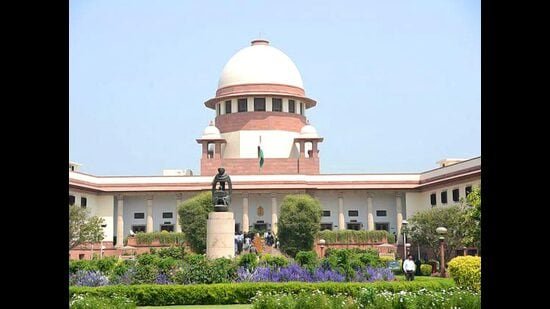
In May last, the Supreme Court directed the two states to cooperate with the Centre for an amicable solution to the decades-old dispute, asking them to hold bilateral meetings to resolve the matter.
Following the top court’s directions, Union jal shakti minister CR Patil convened two meetings between Mann and Saini on July 9 and August 5.
The Punjab chief minister back then had sought scrapping of the SYL canal project, while asking the Centre to utilise the Chenab river water to resolve the dispute. He also mooted the idea of a Yamuna-Sutlej Link canal instead of the Sutlej Yamuna Link canal, stating that “Sutlej had already dried up and not a single drop of its water could be shared”.
The SYL canal was conceptualised for the sharing of water from Ravi and Beas rivers between the two states. The project envisages a 214-kilometre canal, with 122 kilometres to be constructed in Punjab and the remaining 92 kilometres in Haryana.
Haryana has completed the project in its territory, but Punjab, which began the work in 1982, had shelved it and returned the canal land back to local farmers. In 2016, the then SAD-BJP government de-notified 5,376 acres and handed them back to the original owners for free.
With the dispute lingering on for decades, the apex court in 2002 ruled in favour of Haryana, in a suit filed by the state in 1996, directing the Punjab government to construct its portion of the SYL canal.
However, the Punjab government has been maintaining that the state has no surplus water for others and demanding its legitimate share of the Indus waters.
When contacted, Punjab water resources minister Barinder Goyal said there had been no call for a meeting from the neighbouring state. But he questioned, “Conducting meetings is fine. But when we do not have surplus water, what will flow in the canal?”
He further added that the states needed water, but were not ready to share the cost of the devastation it caused during floods. An official privy to the matter, while not wishing to be named, said a meeting could take place next month before the apex court resumed work on July 13 after summer vacation.
