



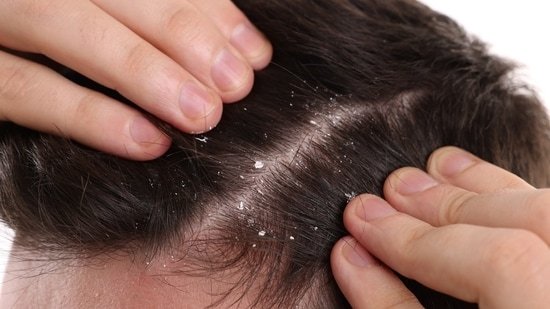
Just like there are different hair types, your dandruff can also present in different forms. It can look different and feel different from person to person. Identifying your type is essential, as each may have distinct underlying causes and may require a different approach to treatment and care. It is better to go for a specialised, targeted treatment approach than a one-size-fits-all plan.
HT Lifestyle connected with Dr Ankur Sarin, dermatologist at Sarin Wellness, who confirmed that dandruff indeed looks different. He said, “In the clinic, dandruff rarely looks the same in every person.”
How are they different? At first glance, dandruff may seem like a single, uniform issue, but in reality, the way it shows up can be quite distinct. Elaborating on this, the dermatologist explained, “For some, it shows up as fine white dust on dark clothes. For others, it’s constant itching that never fully settles. And for many, it appears as oily, sticky buildup that returns even after frequent washing.”
What is actually causing dandruff?
First, let’s begin with the basics by learning what causes dandruff. Contrary to popular belief, the dermat debunked that it is not simply dryness or poor hygiene.
Elaborating on it in the medical context, Dr Sarin explained, “Dandruff is a recurring scalp condition linked to an imbalance involving a naturally present fungus called Malassezia.”
Further, the dermatologist elaborated that this yeast normally lives on everyone’s scalp and feeds on sebum, the natural oil produced by the scalp. In some individuals, the scalp reacts strongly to the by-products produced when this fungus breaks down oil.
Now, what does this reaction result in? Dr Sarin listed these issues:
- Irritation of the scalp
- Faster skin cell turnover
- Clumping of dead skin cells
Then you may ask why dandruff is visible as flakes? The dermatologist reasoned, “Instead of shedding invisibly, these cells stick together and become visible flakes.” Besides the visible white flakes, many report itching, redness or scalp discomfort too.
Irrespective of scalp type, Dr Sarin emphasised that dandruff can occur on oily, dry or combination scalps and is often not just about how you wash your hair, but more about what is happening on the scalp surface.
Different types of dandruff
The dermatologist gave a brief overview of the different types of dandruff and explained why they occur:
1. Oily, sticky flakes
- Appearance: Slightly yellow, sticky or clumped flakes on a greasy scalp
- Common trigger: Excess sebum production creates a favourable environment for fungal growth
- Underlying cause: Overgrowth of Malassezia due to increased scalp oil
- Key signs: Greasy scalp within 24 hours, sticky flakes, persistent itch, scalp buildup
- What to know: Regular shampoos may remove surface oil temporarily, but do not address the underlying fungal imbalance, leading to quick recurrence
2. Dry, powdery flakes
- Appearance: Fine, white flakes that fall easily onto clothing
- Common trigger: May be mistaken for dryness caused by weather changes or harsh hair products
- Underlying cause: Often still linked to fungal activity and scalp sensitivity, not just lack of moisture
- Key sign: Flakes return quickly even after oiling or moisturising the scalp
- What to know: Hydration may give temporary relief, but it does not address the root cause
3. Itchy, irritated scalp with scaling
- Appearance: Intense itching, redness, and visible scaling patches.
- Triggers: Heat and sweat, helmet use, pollution, product buildup, and irregular scalp cleansing.
- Underlying cause: Often driven by fungal overgrowth combined with increased scalp sensitivity.
- What to know: Symptoms may flare up with factors like heat and sweat, helmet use, pollution, product buildup, and irregular scalp cleansing.
- Some individuals experience intense itching, redness, or visible scaling patches.
Why ingredient choice matters in treating dandruff
The dermatologist then reminded that ingredient choice is equally important, and that most shampoos are designed to clean the hair shaft, not treat the underlying cause of dandruff.
What should you go for in the long term? He urged looking for clinically studied anti-fungal ingredients that target the Malassezia yeast, one such ingredient being Piroctone Olamine.
How do shampoos containing this compound help? He explained, “Piroctone Olamine works directly on the scalp by helping control the growth of dandruff-causing fungus. Instead of simply washing away visible flakes, it helps correct the microbial imbalance responsible for dandruff.”
Lastly, he emphasised that if dandruff keeps returning, then it is vital to look at the ingredient list on shampoo and look for scalp-care ingredients such as Piroctone Olamine, which are designed to target fungal imbalance at the scalp level.
Note to readers: This article is for informational purposes only and not a substitute for professional medical advice. Always seek the advice of your doctor with any questions about a medical condition.


