






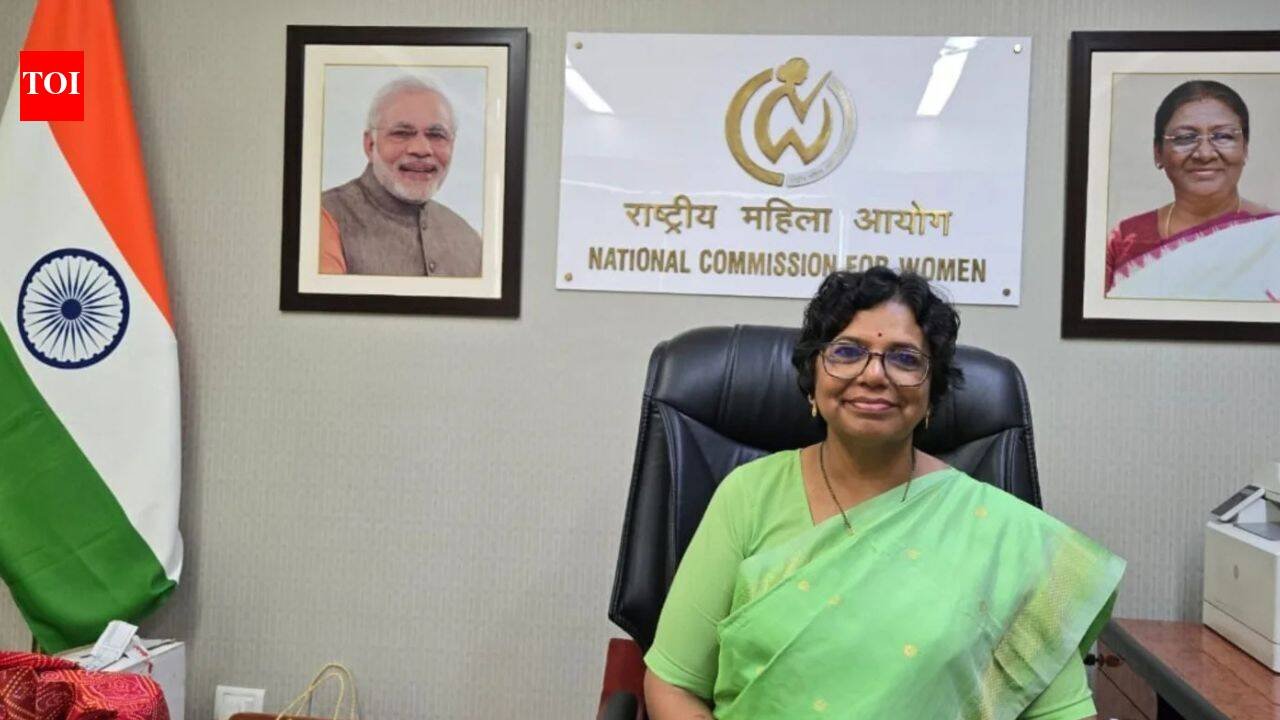
PUNE: The National Commission for Women (NCW) has urged the state government to deny parole to convicts involved in heinous crimes against women and children and is working with the Centre and other agencies to create a database of such offenders to ensure their criminal history is considered before any parole or remission is granted.In Pune on Wednesday, NCW chairperson Vijaya Rahatkar told TOI that the commission has written to Maharashtra chief minister Devendra Fadnavis and governor Jishnu Dev Varma recommending that parole should not be granted to convicts in heinous sexual offences.Rahatkar said the proposal stems from the commission’s concern over repeat offenders and the need for a robust mechanism to track their criminal history.She said the NCW is working with the Union home ministry and other authorities to develop a database of convicts involved in heinous crimes against women and children to help ensure such offenders do not secure parole or other forms of premature release.Referring to the recent Nasrapur rape and murder case, she said the NCW had taken suo motu cognisance immediately after the incident. “Within two months, the police filed the chargesheet and the court awarded the death sentence. Such swift justice has strengthened public faith in the criminal justice system,” she said, adding that convicts in such crimes should not be granted parole or any leniency.On workplace safety, Rahatkar said that although the criminal proceedings in the Nashik TCS case will continue, TCS has implemented all the recommendations made by the National Commission for Women regarding compliance with the POSH Act.She expressed satisfaction over the company’s implementation of these recommendations.The NCW had taken suo motu cognisance of media reports on the allegations and, in April, constituted a four-member fact-finding committee under Section 8 of the National Commission for Women Act, 1990.The committee, which included a retired Bombay high court judge and a retired director general of police, found the absence of a functional on-site human resources department, inadequate POSH awareness and sensitisation programmes, and the lack of an independent Internal Committee (IC) for the Nashik unit, which shared a joint committee with Pune.Following the committee’s report, the NCW summoned TCS’s senior management and asked the company to rectify the shortcomings within a month.“TCS has now undertaken comprehensive, focused and time-bound measures across its establishments to strengthen the POSH ecosystem and improve the safety and security of women employees,” Rahatkar said.She added that the company has constituted independent Internal Committees in all 191 of its 198 units with 10 or more employees, while the remaining seven units have fewer than 10 employees.TCS has also rolled out nationwide POSH awareness programmes, disseminated information on Internal Committees, updated details on the SHe-Box portal and filed district-wise annual reports for applicable establishments.The NCW and TCS will jointly organise five regional training programmes for members of Internal Committees, with the first scheduled in Bengaluru on August 10 for the southern region, she said.On another issue, Rahatkar expressed concern over official figures showing that 327 girls went missing in Maharashtra over a 90-day period. While noting that recovery rates have improved in recent years, she urged police to treat such cases with greater sensitivity.“Most of the missing girls are teenagers. While law enforcement has an important role, families and society also have a greater responsibility. Parents need to communicate with their daughters and take them into confidence,” she said.


