









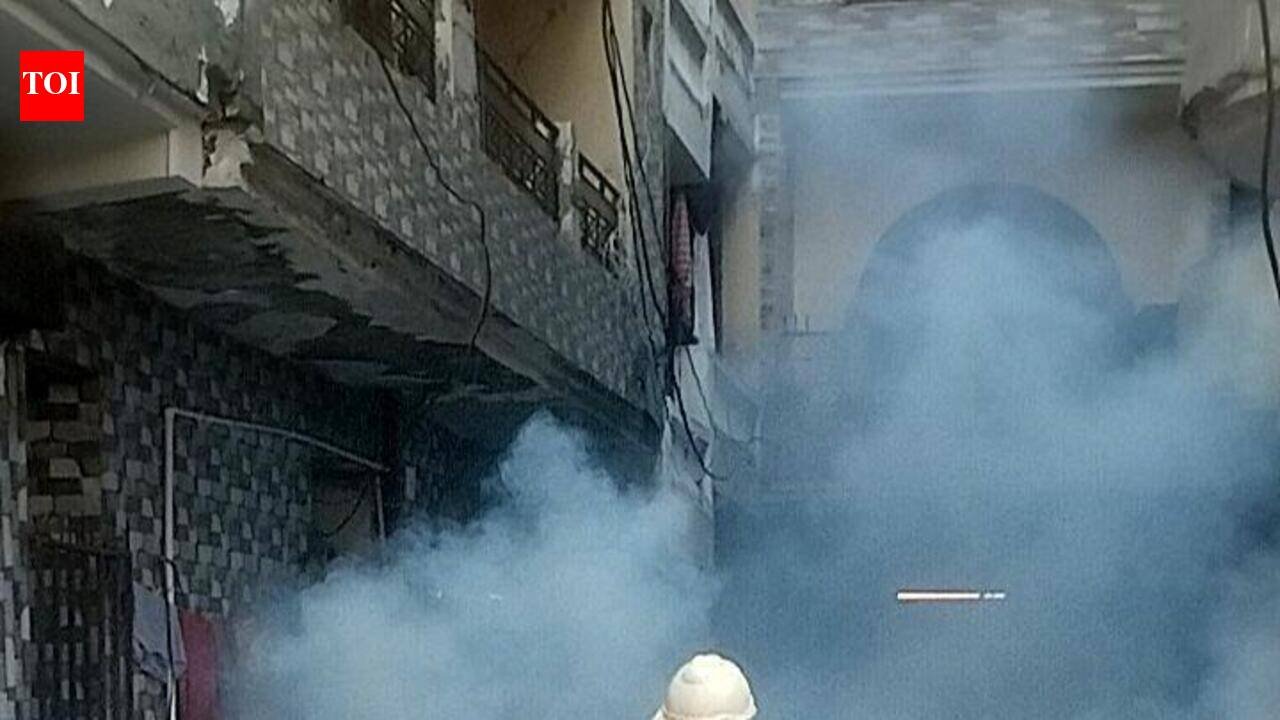
Noida: Dengue cases in the city crossed the 200-mark, with the health department recording 236 cases till Thursday. The number has prompted the district administration and health department to intensify surveillance and fogging drives in hotspots and vulnerable areas.The administration has also issued notices to more than 140 residential complexes and individual houses, directing residents and authorities to take measures to prevent mosquito breeding.District officials said teams are conducting regular inspections to identify areas with the most mosquito-breeding sites, particularly stagnant water collected in coolers, flower pots, rooftops, construction sites, drains and other water-holding containers. Anti-larval measures are being undertaken wherever mosquito larvae are detected, while residents are being advised to ensure that water does not get collected around their homes.Officials have also held a meeting with representatives of various departments and directed them to strengthen surveillance, sanitation and vector-control measures. The health department has identified several sensitive areas in the city and Greater Noida that are considered prone to the spread of vector-borne diseases.These include Sector 22, Sector 2, Dadri, Greater Noida West, Alpha 2, Gaur City and villages located around these areas.“Dengue prevention requires continuous community participation along with regular fogging and anti-larval activities. Our teams are carrying out surveillance in sensitive areas and taking action wherever mosquito-breeding sites are found. Residents must ensure that there is no stagnant water around their homes and should immediately report suspected breeding sites,” said Sruti Verma, the district malaria officer.Health officials have also stepped up awareness campaigns in residential societies, schools and other institutions. “Schools and students have been advised to take precautions, including wearing full-sleeved clothes, using mosquito repellents and avoiding places where mosquitoes are likely to breed,” said Verma.Residents have been urged to regularly clean coolers and water containers, keep overhead tanks covered, dispose of discarded tyres and containers that can collect rainwater, and maintain cleanliness in and around their premises.


