






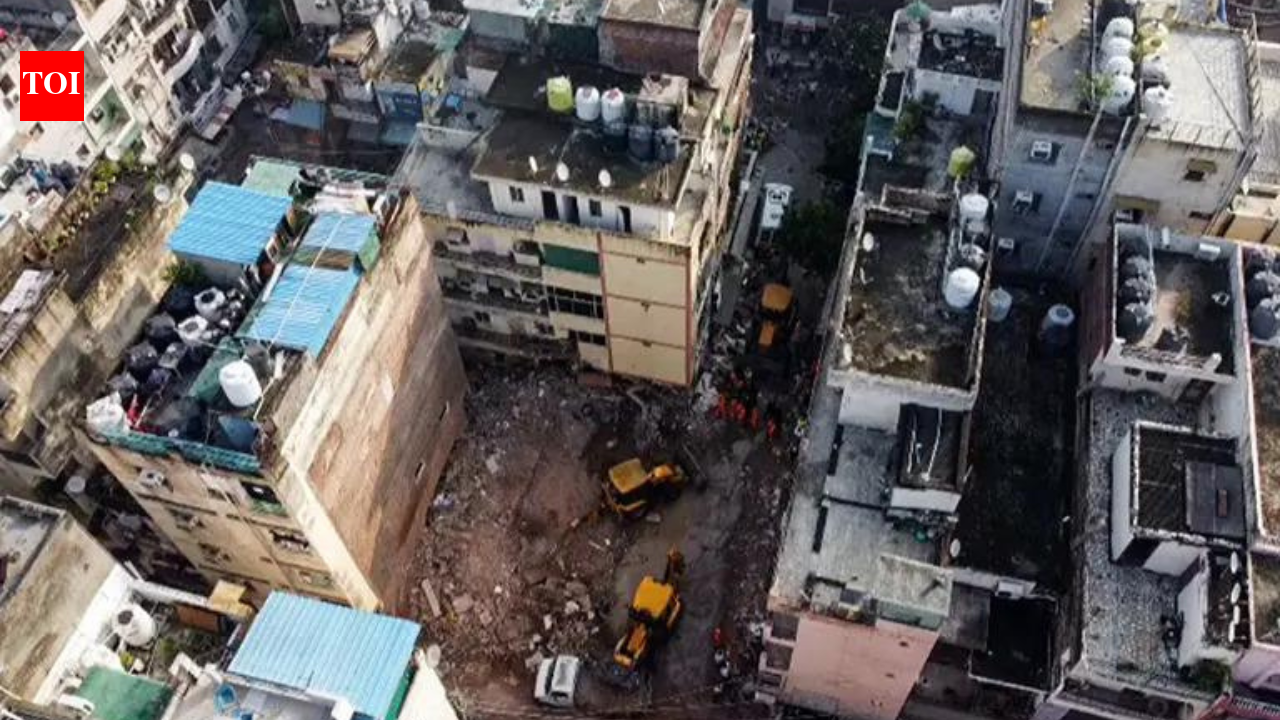
NEW DELHI: The Delhi government’s move to formulate a fresh safety policy for paying-guest (PG) accommodation may have followed the Satya Niketan building collapse, but efforts to bring such establishments under a regulatory framework date back over 30 years.CM Rekha Gupta said on Monday that the government was preparing a policy requiring owners of older buildings to furnish structural audit reports and certify that their properties are safe before using them to house paying guests, nursing homes, schools or other commercial establishments.The announcement followed the collapse of a building being used as a PG accommodation in south Delhi’s Satya Niketan.However, the history of attempts to regulate PG accommodation in the national capital stretches back to at least 1993, with successive governments and agencies subsequently turning to schemes, surveys, committees and proposals aimed at registration and licensing, according to news agency PTI.A 2006 Delhi high court judgment noted that a “Paying Guest Residential Accommodation” scheme introduced by the Centre was already operational in Delhi in 1993.“With a view to provide affordable and hygienic accommodation to foreign and domestic tourists, the central government formulated a scheme as per which residential buildings could be used for providing boarding and lodging to tourists,” the court said.“It was a term of the scheme that the person availing benefit of the scheme should have his/her residence in the building. The scheme was called ‘Paying Guest Residential Accommodation’,” it added.The judgment cited the example of a property in South Extension Part-I that received permission in December 1993 to accommodate paying guests under the scheme.Regulatory responsibility for the scheme was later handed over to the Delhi government. In 2000, the government, then headed by Congress leader Sheila Dikshit, cleared its own Paying Guest Residential Accommodation Scheme.The scheme allowed homeowners to register with Delhi Tourism for accommodating paying guests. It restricted such use to half of the bedrooms in a house, subject to a maximum of four rooms or eight beds.But the framework was primarily intended for tourists staying in homes where the owners also resided. It did not anticipate the emergence of large-scale commercial PGs that eventually spread around Delhi’s universities, coaching centres and employment hubs.As the PG sector expanded and changed in character, the existing regulatory system increasingly failed to keep up.This issue was still unresolved nearly two decades later. In August 2019, a Delhi Assembly Committee looking into problems faced by students in the vicinity of Delhi University was seeking clarity on the rules governing PGs as well as which authorities were responsible for their enforcement, PTI reported.The Committee on Petitions asked authorities at a meeting that month to compile details of PGs and other establishments functioning around DU.It also sought a document identifying the applicable regulations and outlining “problems/grey areas in terms of regulation” concerning fire safety, building norms and health licences.Authorities were given 15 days to submit the details.“However, no such documentation was received till date,” the committee later noted in its report.The 2019 exercise was followed by further efforts to survey and regulate PG establishments.In 2021, the erstwhile North Delhi Municipal Corporation suggested conducting a survey of PGs, particularly those operating around DU’s North Campus, and registering establishments functioning as commercial ventures.The following year, meetings involving the Delhi government’s home department, Delhi Police and civic agencies led to a proposal to bring around 700 private hostels and PGs housing college students under a Delhi Police licensing system.At the time, officials admitted that there was no statutory authority specifically tasked with regulating such establishments. The proposed framework was expected to address issues including occupancy, kitchens, elevators, fire clearances and other facilities.The regulatory uncertainty surfaced again in 2023 after a fire broke out at a women’s PG in Mukherjee Nagar in September.The Municipal Corporation of Delhi (MCD) subsequently ordered another survey. Civic officials said then that there were no specific norms governing the operation of PGs in residential areas and that the corporation did not issue licences for such establishments, although building, land-use and fire-safety regulations remained applicable.The survey later identified more than 100 PG establishments allegedly operating in violation of building bylaws, according to PTI.Now, more than three decades after the first government scheme was introduced, and following multiple surveys, committees and regulatory proposals, the Satya Niketan collapse has once again placed the issue under scrutiny.The latest response is another proposed policy, this time centred on structural safety and certification of older buildings before they are used for PG accommodation or other commercial purposes.(With agency inputs)


