









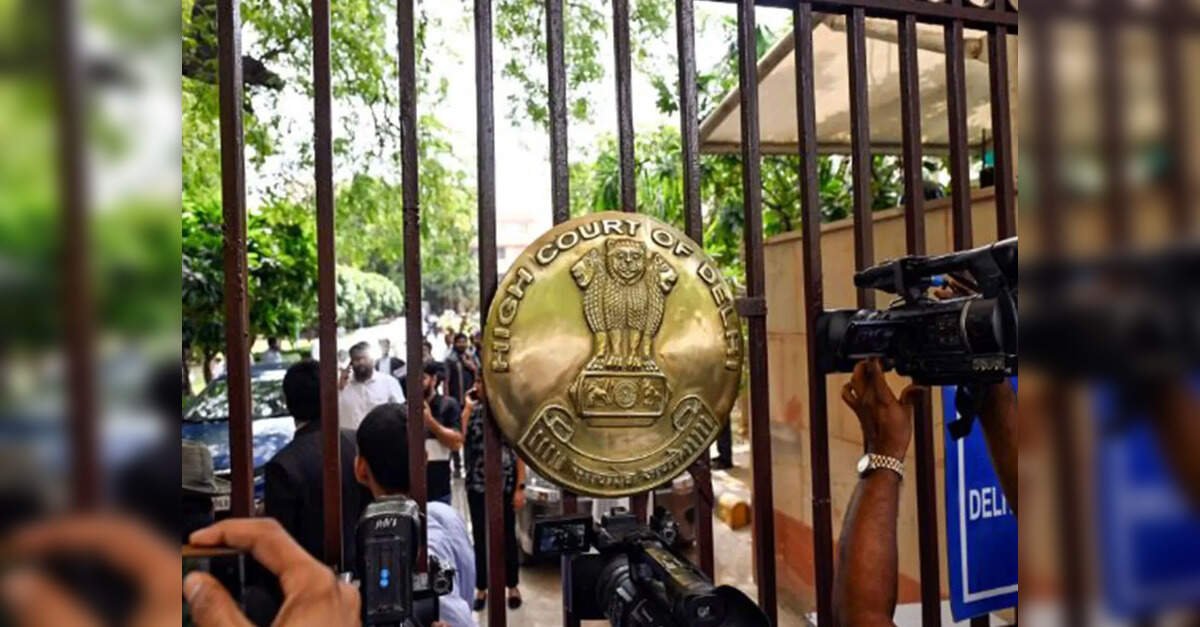
The Delhi High Court has quashed seven orders passed by the Income Tax Appellate Tribunal (ITAT) in a batch of cross-appeals involving Patanjali Ayurved Ltd., terming the manner in which the Tribunal dealt with the matters a “shocking picture” of procedural lapses and opaqueness.
A bench of Justice Dinesh Mehta and Justice Rajneesh Kumar Gupta said the Tribunal appeared to have acted with “undue haste” and “recklessness” while passing and signing the orders, and held that such negligence by an appellate authority entrusted with the highest level of fact-finding “cannot be countenanced.”
The Court directed that all seven matters be heard afresh by the Tribunal and specifically ordered that they would not be placed before the same Bench which had passed the orders earlier. It also directed that a copy of the High Court’s order be sent to the President of the Tribunal and the Secretary, Ministry of Law and Justice, for information.
The High Court was particularly concerned with the fact that the Tribunal had disposed of seven appeals through a common order running into fewer than seven paragraphs, without dealing with the assessee’s contentions or properly discussing the issues involved. The Court clarified that it was not concerned with the length of the order but with the “non-application of mind and undue haste” displayed by the Tribunal Members.
The Court also noticed a serious discrepancy concerning the dates of hearing and pronouncement. Four appeals were recorded as having been heard and pronounced on August 6, 2025. However, the same common order also dealt with three Revenue appeals which were shown as having been heard and pronounced on August 13, 2025.
When the matter was first listed before the High Court on February 2, 2026, counsel appearing for Patanjali was himself surprised by the discrepancy and sought to verify the Tribunal’s record and certified copy of the order. After examining the certified copies and making an inquiry, counsel fairly submitted that there appeared to be a procedural error on the part of the Tribunal, possibly due to inadvertence.
The High Court said it was unable to comprehend the impugned order, describing it as being bereft of “logic, reasoning or rationale”. It questioned how a common order could have been passed and released for appeals which, according to the record, had been heard and pronounced on different dates.
The seven appeals arose from proceedings initiated under Section 153C of the Income Tax Act following a search conducted between October 31 and November 3, 2018, in the Hawala Traders Group. The proceedings eventually resulted in assessments concerning Patanjali Ayurved for assessment years 2013-14, 2014-15, 2015-16 and 2017-18.
In its order, the Tribunal had held that the assessment years were “unabated” and had quashed the four assessments, while allowing Patanjali’s four appeals and dismissing three cross-appeals filed by the Revenue. It had relied, among other things, on the Supreme Court’s decision in PCIT v. Abhisar Buildwell Pvt. Ltd. concerning the requirement of incriminating material in search-related assessments.
However, the High Court did not examine the merits of the tax dispute. Instead, it held that because of the serious procedural defects in the Tribunal’s orders, it had no option but to set aside all seven orders, including orders which were not independently under challenge, apparently because of the monetary limits applicable to Revenue appeals.
Importantly, the High Court clarified that it had not observed on the merits of the dispute. The Tribunal has therefore been left free to take an independent view of the matter in accordance with law. The judgment was delivered on September 10, 2026 and uploaded on September 15, 2026.


