



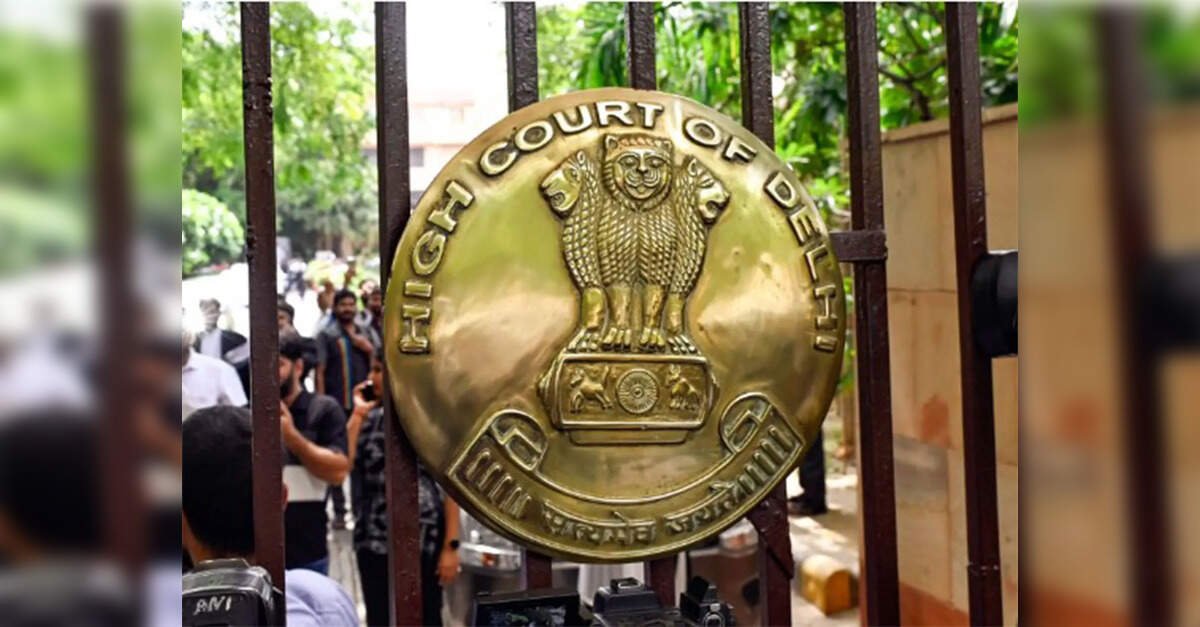
New Delhi [India], April 10 (ANI): The Delhi High Court has observed that insurance details cannot be disclosed merely on the basis of a general request without providing basic identifying information, noting that it would be practically impossible for Life Insurance Corporation (LIC) to trace policies in such cases.
The Court clarified in simple terms that while an insured person has the right to seek details of their policies, they must furnish minimum personal particulars to enable the retrieval of records.
The Division Bench led by the Chief Justice held that LIC deals with an enormous database comprising crores of policies, and expecting it to search for specific records without key details such as name, date of birth, address, or other identifiers is not feasible.
The Court emphasised that even if the policy number is not available, certain essential information must be provided to locate the relevant data.
The Court further noted that LIC already has a mechanism in place to retrieve policy information using multiple personal details, and therefore, it is not correct to assume that information cannot be accessed without a policy number.
However, it stressed that a request lacking even basic particulars cannot be entertained. The Bench also highlighted that insurance-related information is sensitive in nature and indiscriminate disclosure without proper identification safeguards could pose risks.
The case arose from an RTI application filed by the appellant seeking details of all LIC policies in her name without providing policy numbers. LIC had declined the request, citing the inability to trace records without such details. While the Central Information Commission had earlier directed LIC to develop a system to provide such information even without policy numbers, the Single Judge later treated these directions as advisory and refrained from issuing mandatory directions, taking into account practical limitations.
Upholding the Single Judge’s view, the Division Bench observed that there is no restriction on an insured person seeking policy details without a policy number, but the applicant must necessarily provide sufficient personal information, such as name, date of birth, address, or other relevant identifiers. Without such details, the retrieval of information would be nearly impossible given the scale of LIC’s operations.
The Court also rejected the appellant’s argument that orders of the Central Information Commission are final and cannot be challenged, clarifying that the High Court’s power of judicial review under Article 226 of the Constitution remains unaffected by such statutory provisions.
Finding no merit in the appeal, the Court termed it misconceived and dismissed it, holding that no interference was warranted with the earlier judgment.


