



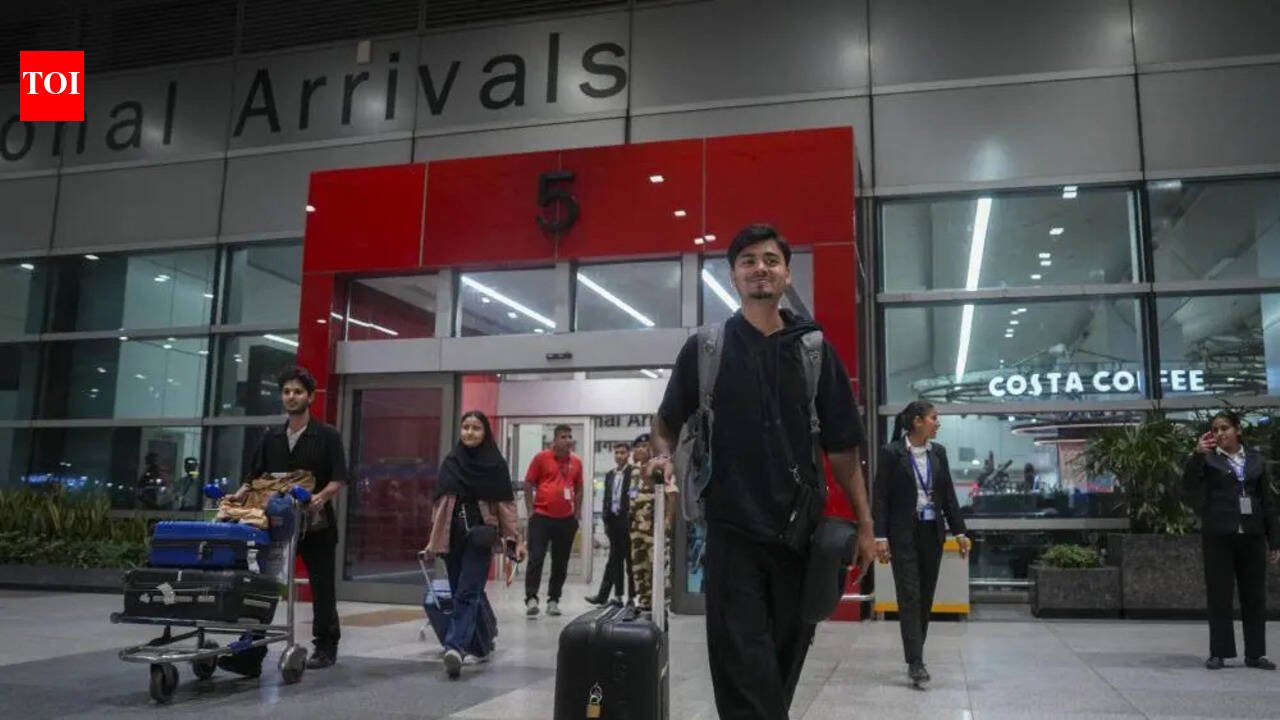
New Delhi: Tourists travelling to Thailand and other Asian countries tend to spend more at Delhi airport’s duty-free stores than those travelling to the US, an official said.Singapore, Dubai and London are the top international routes in terms of duty-free sales.“Tourists to the US are mostly people who are visiting their relatives or students,” an official said. Another official said Southeast Asia is a growing leisure market, while the European hub routes also generate high duty-free spending from passengers at Delhi airport. This trend has remained consistent over the past few years after Covid.“Duty-free sales are primarily driven by a mix of high-volume international routes across key regions, including the Middle East, Europe and Asia.Both arrival and departure traffic from major global aviation hubs contribute significantly to overall sales performance,” a spokesperson for GMR Duty Free said. The spokesperson added that performance at the duty-free is further supported by the curated product assortment and value-added services, including click and collect, pre-order options, premium concierge assistance, gifting solutions and seamless omnichannel shopping, which enhance the overall customer experience.The duty-free at Delhi airport is one of India’s largest such zones, providing a luxurious and enriching shopping experience to millions of passengers every year.Most shoppers at the duty-free section are tourists from the Indian diaspora. Of the total sales here, around 55-60% take place at arrivals, while the remaining occur at the departures. “Purchase participation varies across international passenger segments and travel direction. Arrivals are largely Indian and diaspora shoppers, while departures have a more mixed international composition. Conversion is influenced by factors such as traveller demographics, trip purpose, seasonality, promotional activity and the overall retail proposition, resulting in differing participation levels across arrivals and departures,” the spokesperson said.Liquor remains the most popular segment of the duty-free facility, followed by beauty products. The other top-selling product categories are confectionery, fashion and accessories, and tobacco. “Trends favour premium and travel-retail-exclusive assortments,” the spokesperson said. He added that the 2025-26 financial year continued the growth trajectory seen in prior years, driven by higher passenger traffic, premiumisation, improved engagement and digital services.Asked about challenges facing the duty-free facilities, the spokesperson said the key factors are macroeconomic and geopolitical volatility, currency fluctuations, supply‑chain pressures and rapidly evolving consumer expectations. Staying relevant requires continuous innovation in assortment, digital engagement, pricing and customer experience. “Our focus is on new retail concepts, experiential activations, exclusive launches and digital services to differentiate the passenger experience,” he said.


