



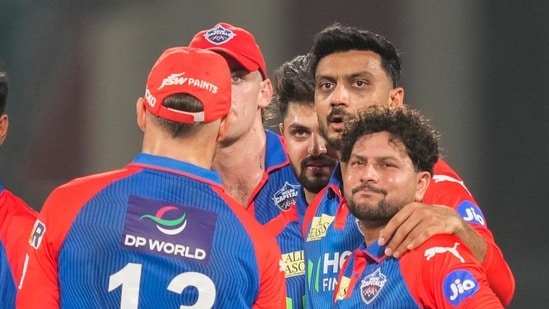
Delhi Capitals head into IPL 2026 with a squad that looks more intelligently built than loudly assembled. This is not a side held together by a single auction splash or an oversized promise. DC have put together a team with a stable batting core, layered middle-order options, a high-class spin pairing and enough pace variety to believe they can remain competitive across conditions. Axar Patel’s promotion to captain fits that design. He is exactly the kind of all-phase cricketer around whom a T20 side can be shaped with purpose.
That is what makes this squad interesting. The more important question is whether Delhi can turn depth into clarity quickly enough. KL Rahul, Tristan Stubbs and David Miller give the batting real weight. Axar and Kuldeep Yadav give the attack a clear middle-overs identity. But there is still some overlap in the batting roles, and Mitchell Starc’s expected absence at the start of the season slightly changes the look of the seam attack early on. DC have the makings of a serious team. Whether they become a fully convincing one may depend on how quickly the right XI reveals itself.
DC squad for IPL 2026
Strengths of DC for IPL 2026
A batting group with both control and range
This is the squad’s strongest feature. KL Rahul gives Delhi calm, structure and innings management at the top. Stubbs gives them the ability to distort a game through the middle overs. Miller brings left-handed finishing quality and the kind of closing experience that still carries serious value in this league. Around that core, Delhi have enough supporting options to alter the tone of an innings without having to rip apart the batting order every other game.
That flexibility matters. Porel offers a left-handed top-order route. Duckett can lift the tempo. Nitish Rana adds another left-hand angle through the middle. Prithvi Shaw remains the high-risk, high-reward card if Delhi want to chase explosive starts. This is not a batting group trapped inside one method. It can absorb pressure, change gears and shift shape according to conditions.
Axar and Kuldeep give Delhi a genuine bowling spine
Any T20 side that can field Axar Patel and Kuldeep Yadav together begins with a meaningful tactical advantage. Axar gives control, pressure and matchup discipline. Kuldeep offers variation, deception, and a wicket-taking threat. Together, they give DC a middle-overs axis capable not just of limiting damage, but of changing the direction of an innings.
That is a major asset in a tournament where overs seven to fifteen so often decide whether totals stay manageable or run away. Delhi may not have the most explosive overall attack in the competition, but they do have one of the cleaner spin foundations. That gives them a dependable identity.
There is enough flexibility to survive a long season
A good IPL squad is not only about the best XI on day one. It is about how many different problems a side can solve without losing balance. Delhi look reasonably well-equipped on that front. They can strengthen the top order, add an extra overseas batter, go heavier on bowling, or shift their left-right combinations depending on venue and form.
That adaptability does not guarantee success, but it does reduce the risk of being trapped inside one flawed combination for too long. Over a season, that can be the difference between hanging around the top-four race and sliding out of it.
Weaknesses of DC for IPL 2026
There is depth, but also a little too much top-order congestion
This is where the squad becomes slightly complicated. Rahul, Duckett, Nissanka, Porel and Shaw all sit broadly around the same part of the batting card. They are not identical players, but they do create a degree of overlap in one area of the lineup. Depth is useful until it begins to compete with clarity.
Delhi are not short of batting. The concern is that they could spend too long trying to discover the ideal arrangement when the season starts. Strong teams usually know not just who their best players are, but what each player’s innings are supposed to look like. DC still have a little work to do there.
The pace attack has options, but not complete certainty
This is where Mitchell Starc’s update matters, though it should not overwhelm the larger reading of the squad. His expected unavailability for the initial phase matters because he is the premium left-arm pace presence in the side. But even beyond that, Delhi’s seam attack still feels like a unit that needs to establish rhythm and hierarchy rather than simply be trusted because the names sound familiar.
Natarajan is a specialist death over-bowler. Mukesh Kumar can be reliable. Ngidi, Chameera and Jamieson offer alternate overseas routes. But the attack still looks more workable than fully settled. If Starc returns quickly and lands well, the ceiling rises. If not, Delhi will need the rest of the pace group to become consistently dependable rather than merely usable.
The finishing power is strong, but it still needs the innings built properly
Stubbs, Miller and Ashutosh Sharma give Delhi obvious back-end muscle. That is a genuine plus. But strong finishers still need an innings set up with enough tempo and freedom. If the top order becomes too careful, or if the middle overs stagnate, the burden on the finishers could become heavier than it should be.
Delhi have the power to close innings well. The risk is not a lack of finishing talent. The risk is repeatedly asking that finishing talent to do too much.
Opportunities for DC in IPL 2026
Axar Patel can give this side its clearest identity in years
Axar’s captaincy could end up being one of the smartest decisions around this squad. He is central to the bowling structure, useful with the bat and tactically relevant in almost every phase of the game. Captains who directly influence matches tend to make teams look sharper, especially when the XI itself has a few moving pieces.
If Axar has a strong season as both a player and a leader, Delhi could become one of those sides that look more coherent on the field than they did on paper before the tournament. That would be a significant gain.
Stubbs can change the team’s ceiling
Every serious T20 side needs one batter who changes the geometry of an innings. Stubbs feels like that player for Delhi. Rahul may give the innings shape, and Miller may finish it, but Stubbs is the batter who can make 170 look thin or turn a steady chase into a one-sided finish.
If he has a standout season, Delhi’s batting will not just look deep. It will become difficult to contain. That is the sort of shift that changes a team’s ceiling.
Delhi have room for internal growth
Unlike squads that already look close to their finished form, DC still have upside through discovery. If Porel nails down a stable top-order role, if Vipraj Nigam grows into a dependable utility option, if Ashutosh sharpens into a genuine late-overs specialist, or if one of the overseas quicks locks down the seam balance early, the side could improve from within.
That matters. It means Delhi are not relying only on the first-choice names to justify optimism. The squad still has space to become more than its first draft.
Threats of DC for IPL 2026
A strong squad could still become a slow-starting one
This is the biggest danger. DC have enough players to build multiple credible XIs, but not every version of that XI will be equally balanced. If the opening phase of the season is spent searching for the right shape rather than imposing one, they could give away early ground in a tournament that rarely waits for anyone.
That is often how promising seasons become frustrating ones. Delhi have enough talent to compete, but they also have enough unresolved questions to risk drift.
Top-order control could become top-order caution
Rahul’s strengths are obvious. He gives the innings calm, order and protection against collapse. But modern IPL batting punishes teams that become too measured for too long. Delhi do have enough power later, but if the top order repeatedly leaves too much for the closing overs, the batting can begin to look slightly conservative rather than well-paced.
That is not a fixed flaw. It is simply the tactical line this side will need to manage carefully.
Their best version may still depend on the seam attack settling early
Delhi’s spin gives them a base. Their batting gives them options. What may decide whether they are merely good or genuinely dangerous is whether the pace attack finds shape early. If that group settles quickly, this squad becomes much more balanced. If it does not, DC may remain a side with many strengths but one recurring pressure point.
X-factor player: Tristan Stubbs
Tristan Stubbs is the Delhi Capitals’ x-factor because he gives them what even balanced squads still crave most: disruption. He can absorb pace, attack spin, accelerate from awkward positions and change the emotional direction of an innings very quickly. Delhi already have stability in the batting unit. What they need is a batter who can bend games out of shape. Stubbs is the likeliest candidate.
Best probable XI of DC for IPL 2026
KL Rahul (wk)
Ben Duckett ✈️
Abhishek Porel
Nitish Rana
Tristan Stubbs ✈️
David Miller ✈️
Axar Patel
Vipraj Nigam
Kuldeep Yadav
Mitchell Starc ✈️/ (T Natarajan when Starc is absent)
Mukesh Kumar/ Auqib Nabi
Impact substitute: Ashutosh Sharma
This gives Delhi batting depth, left-right variation and enough bowling shape to begin the season without looking unbalanced. Once Starc is fully available, he immediately enters the frontline pace conversation and upgrades the attack.
Verdict
Delhi Capitals have a squad with enough quality to be competitive, but not enough structural certainty to be trusted as one of the best-built sides in the league.
The batting has recognisable strength, especially through Rahul, Stubbs, Nitish Rana, Axar and the overseas options. The spin department is a genuine plus because Axar and Kuldeep give them control, variation and a route back into games. But the overall shape still feels slightly uneasy. There is some role congestion in the batting, the pace attack looks more respectable than dominant unless Starc hits top rhythm, and the XI still relies on getting a few balance calls exactly right.
The honest read is: DC look more like a mid-table side with upside than a clear title contender. They have enough talent to trouble stronger teams and enough individual quality to put together a run, but over a full season, they do not yet look as clean, settled or tactically complete as the best squads.
If things click early, they can outperform expectations. If they do not, this has the profile of a team that stays in the race for a while without ever fully convincing.


