



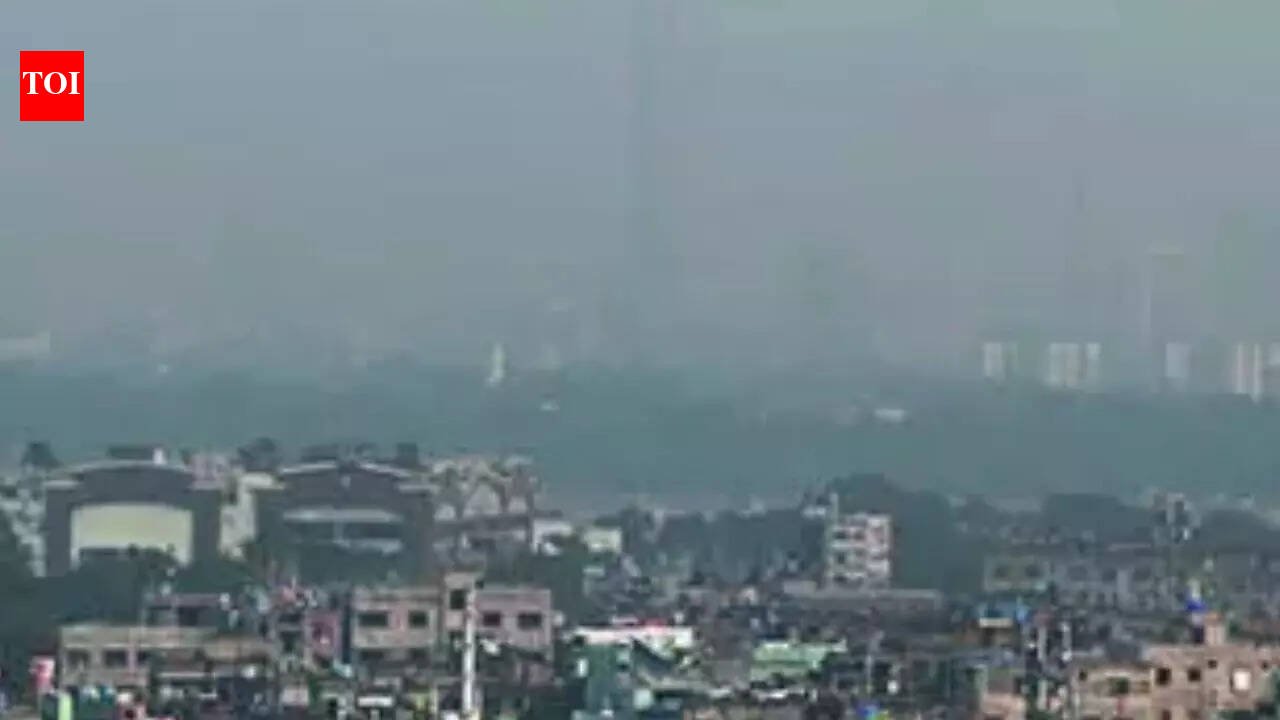
NEW DELHI: The number of days with AQI below 201 increased from 159 in 2018 to 200 in 2025, according to the latest Economic Survey report. The report also stated that no stubble burning took place in Delhi in the winter season 2025-26.The Consortium for Research on Agroecosystem Monitoring and Modelling from Space (CREAMS) laboratory, situated at Indian Agricultural Research Institute, which follows the standard protocol 2021 notified by the Commission for Air Quality Management (CAQM) in NCR and adjoining areas, said that satellites detected five paddy residue burning events in Delhi.“No case of stubble burning in Delhi has taken place in the present paddy harvesting season because of intense monitoring and awareness generated among paddy cultivators by the development department. All (five) burning incidents reported by CREAMS in Oct and Nov 2025 within Delhi territory have been physically verified, and none of them constitute stubble or paddy residue burning,” stated the report.
As per CPCB data, the number of days when AQI was below 201 was 163 in 2022, 206 in 2023, 209 in 2024 and 200 in 2025. However, number of days when AQI surpassed 400 was 20 in 2018, compared to eight in 2025. The number of such days was six in 2022, 15 in 2023 and 17 in 2024.The Economic Survey report stated that to reduce pollution caused by illegal industrial units, the report said a first-ever survey of polluting industries was conducted in notified industrial areas, redevelopment areas and non-conforming areas in Delhi. Based on the surveys, over 700 air and water polluting units in conforming areas were sealed by Delhi Pollution Control Committee and more than 300 air and water polluting units in non-conforming areas by MCD.
Out of a total of 2,049 industries in Delhi, 1,890 are running on PNG while 67 run on approved LPG. The remaining 92 industries have been moved out of Delhi.On the Yamuna, the report noted 10 cumecs of water is being released by Haryana at Hathnikund during the lean season. However, most of it evaporates or percolates before it reaches Wazirabad and, therefore, it is highly inadequate to meet the dilution requirement to achieve the desired water quality. “The Yamuna, the reason for Delhi’s existence, has suffered heavily from pollution, which is due to the flow of untreated or partially treated sewage and industrial effluents,” said the report.To boost Delhi’s green cover, the forest department, in collaboration with 21 greening agencies, planted 53.7 lakh saplings as of Jan 2026 under Green Action Plan 2025-26. It comprised 4.8 lakh trees, 41.8 lakh shrubs and two lakh bamboos, complemented by the strategic distribution of five lakh seedlings to the public.“The forest department achieved a significant milestone by notifying 4080.8 ha of Southern Ridge as reserved forest under Indian Forest Act on Oct 24. This expansion of reserved forest area to 4,177 ha fundamentally reinforces the legal framework and long-term efficacy of institutional conservation efforts,” said the report.


