






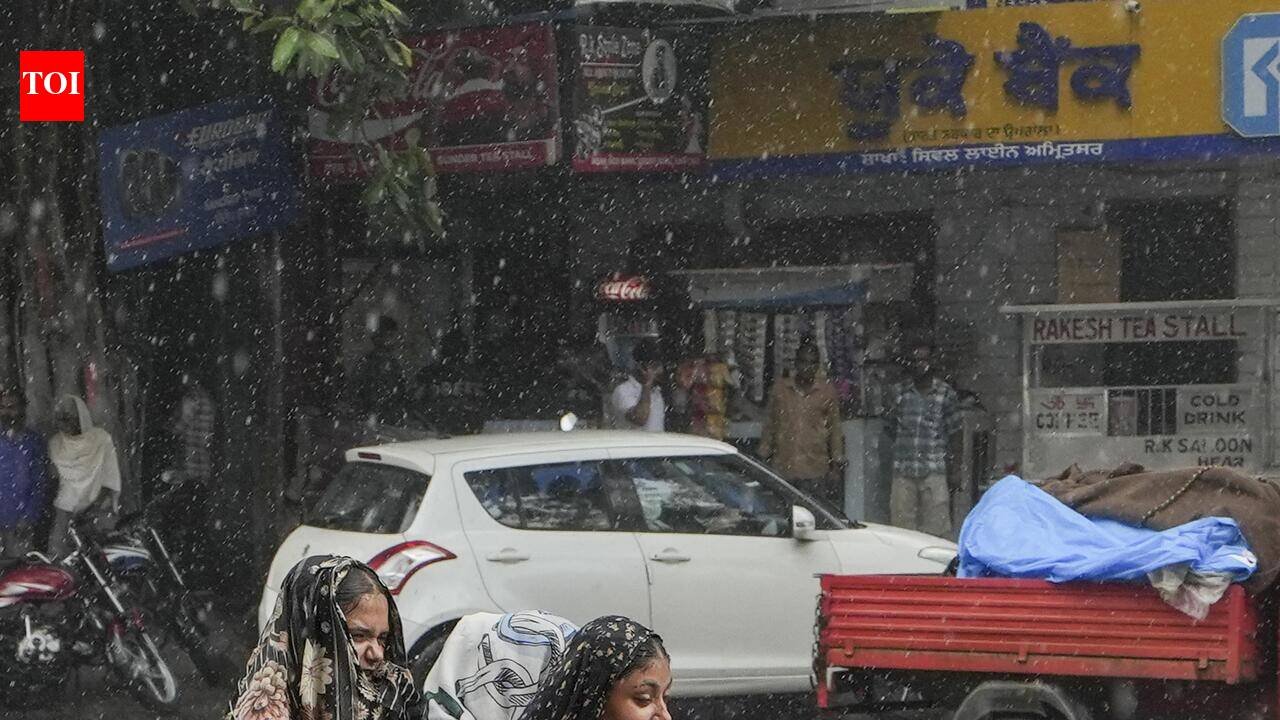
Bathinda: Punjab, Haryana and Himachal Pradesh received scanty rainfall this monsoon season. Punjab was the worst sufferer as the state recorded 41% deficient rainfall.Haryana recorded 23% deficient rainfall, and Himachal Pradesh recorded 10% deficient rainfall. Up to 19% deficient or excess rainfall is treated as normal.Punjab received 258.7 mm of rain against the normal of 439.8 mm, while Haryana recorded 333 mm of rainfall against a normal of 430.7 mm. Himachal Pradesh recorded 662.1 mm of rain against a normal of 734.4 mm.The lack of rainfall meant that both paddy growing states, Punjab and Haryana had to depend more on surface and groundwater for irrigation.The dry spell in Punjab supplemented the power demand in the state.The India Meteorological Department (IMD) had predicted below-normal rainfall this monsoon season.In September, Punjab recorded 63% deficient rainfall. The state received 28.1 mm of rain from Sept 1 to Sept 30 morning against the normal of 76.7 mm. During the same period, Haryana recorded 44% deficient rain as it received 42.6 mm of rain against the normal of 75.6 mm. Himachal Pradesh recorded 12% deficient rainfall, receiving 104.7 mm of rain against the normal of 119.6 mm.Northwest India, comprising Punjab, Haryana and Himachal, recorded 6% deficient rainfall, receiving 553 mm of rain against the normal of 587.6 mm. The country as a whole has recorded 13% deficient rainfall, receiving 759.4 mm of rain against the normal of 868.6 mm till Sept 30.IMD director general Mrutyunjay Mohapatra Wednesday evening said the monthly rainfall in October is expected to be below normal (<85 % of LPA) and above-normal maximum temperatures are likely over most parts of the country.Strong El Niño conditions are currently prevailing over the equatorial Pacific Ocean, with sea surface temperatures well above average, especially in the east central and eastern equatorial Pacific, the DG said.Forecasts from the Monsoon Mission Coupled Forecast System and other major climate models indicate that El Niño will continue to strengthen through the end of the year, he added.Agriculturists believe that under such conditions, the wheat crop is also expected to be impacted during the initial sowing stages.


