


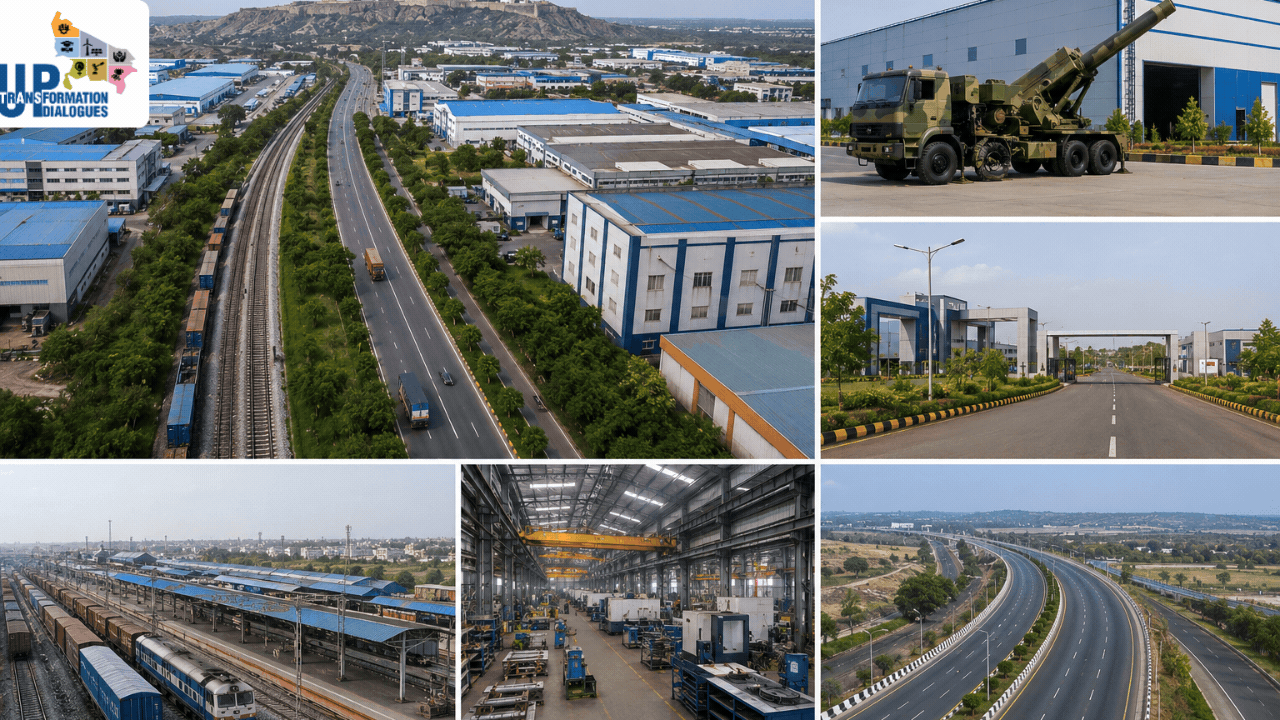
Jhansi has long occupied a distinguished place in India’s history as the land of Rani Lakshmibai, whose valour during the First War of Independence in 1857 made the city a symbol of courage and patriotism. Yet, despite its strategic location at the crossroads of Uttar Pradesh and Madhya Pradesh, Jhansi remained economically underdeveloped for decades. As part of the drought-prone Bundelkhand region, it struggled with limited industrialisation, dependence on agriculture, inadequate private investment and large-scale migration of youth in search of employment.Over the past nine years, however, Jhansi has begun to rewrite its economic story. Backed by visionary policies and major infrastructure investments, the district is emerging as one of Uttar Pradesh’s most promising industrial centres. The transformation is being driven by the Uttar Pradesh Defence Industrial Corridor (UPDIC), the proposed Bundelkhand Industrial Development Authority (BIDA), improved transport connectivity, and an investor-friendly policy framework. Together, these initiatives are positioning Jhansi as a future hub for defence manufacturing, heavy engineering and advanced industrial production.Defence corridor: The game changerThe most significant catalyst behind Jhansi’s industrial transformation is its inclusion as one of the six nodes of the Uttar Pradesh Defence Industrial Corridor, announced by the Government of India and implemented by the Uttar Pradesh Expressways Industrial Development Authority (UPEIDA).Among the corridor’s six nodes—Lucknow, Kanpur, Agra, Aligarh, Chitrakoot and Jhansi—the Jhansi node has emerged as one of the largest planned manufacturing destinations. It is being developed to host industries engaged in land systems, arms and ammunition, defence components, heavy engineering and Maintenance, Repair and Overhaul (MRO) facilities.Jhansi’s central location, extensive railway network and highway connectivity make it an ideal destination for large-scale manufacturing. The Defence Corridor also aligns with the national vision of Aatmanirbhar Bharat, promoting indigenous defence production and reducing dependence on imports.Creating a modern industrial ecosystemThe Defence Corridor is not merely an industrial estate but a comprehensive manufacturing ecosystem. The state government has undertaken large-scale land acquisition and is developing roads, power supply, water infrastructure, drainage, boundary walls and other essential utilities to create investment-ready industrial zones.To accommodate increasing investor interest, additional funding has been approved for expanding industrial infrastructure. The objective is to provide industries with world-class facilities and minimise delays in project implementation.Bharat Dynamics Limited: Anchor investmentA landmark development for Jhansi is the establishment of a manufacturing unit by Bharat Dynamics Limited (BDL), one of India’s leading defence public sector enterprises.Spread over nearly 450 acres with an investment of around ₹400 crore, the facility is expected to manufacture advanced missile systems and strategic defence equipment. Beyond its direct investment, BDL is expected to attract ancillary industries, component manufacturers, logistics providers and engineering firms, creating a robust industrial ecosystem around the defence sector.The project is also expected to generate substantial employment for engineers, technicians, skilled workers and support services while stimulating growth across the regional economy.BIDA: A vision beyond defenceComplementing the Defence Corridor is the proposed Bundelkhand Industrial Development Authority (BIDA), envisioned as a modern industrial city with integrated manufacturing zones, logistics parks, commercial centres, residential townships and social infrastructure.Unlike conventional industrial estates, BIDA seeks to develop industries alongside housing, education, healthcare and civic amenities, creating a sustainable urban-industrial ecosystem. The initiative aims to attract investments across sectors while correcting the long-standing regional imbalance that has affected Bundelkhand for decades.Connectivity driving growthIndustrial growth depends heavily on efficient logistics, and Jhansi enjoys a strategic advantage in this regard. The city is one of North India’s major railway junctions, connecting Delhi, Mumbai, Lucknow, Kanpur, Bhopal and other industrial centres. Strong National Highway connectivity and improved access to the Bundelkhand Expressway have further strengthened regional and interstate transportation.Improved connectivity reduces logistics costs, enables faster movement of goods and enhances the competitiveness of industries. These advantages are expected to make Jhansi an important manufacturing and distribution hub for northern and central India.MSMEs: Augmenting the Industrial BaseWhile large defence industries provide the foundation, the long-term success of Jhansi’s industrial transformation will depend on the growth of Micro, Small and Medium Enterprises (MSMEs).Defence manufacturing requires an extensive network of suppliers producing precision components, fabricated structures, electrical systems, packaging materials and engineering services. Jhansi already has a growing MSME base engaged in engineering, transformers, batteries, leather products and allied manufacturing.With technology upgradation, quality certification and improved access to finance, these enterprises can become part of the defence supply chain. The establishment of a dedicated SIDBI branch in Jhansi is expected to strengthen credit availability and promote entrepreneurship across the Bundelkhand region.Employment and Skill DevelopmentFor decades, migration has been one of Bundelkhand’s biggest socio-economic challenges. The emerging industrial ecosystem offers the opportunity to generate employment across multiple skill levels and reduce dependence on migration.New industries are expected to create jobs for engineers, technicians, machine operators, welders, electricians, quality inspectors, logistics professionals and administrative staff. Industrial growth will also generate indirect employment in construction, transportation, warehousing, hospitality, banking and retail.To meet future workforce requirements, greater emphasis is being placed on strengthening Industrial Training Institutes (ITIs), polytechnics and industry-oriented technical education. Collaboration between industries and educational institutions will help local youth acquire skills required for advanced manufacturing.Transforming the Bundelkhand EconomyJhansi’s industrialisation has significance far beyond the district itself. Historically, Bundelkhand has faced challenges such as water scarcity, erratic rainfall, limited industrialisation and low private investment. The Defence Corridor and BIDA aim to diversify the regional economy by creating a manufacturing-led growth model.As industries expand, they are expected to stimulate investments in logistics, warehousing, housing, healthcare, education, banking, hospitality and commercial services. This multiplier effect can strengthen urbanisation, generate sustainable employment and improve the overall quality of life.Such structural transformation has the potential to reduce regional disparities while creating a stronger economic foundation for Bundelkhand.Although considerable progress has been made, several projects are still under implementation. Timely completion of infrastructure, faster operationalisation of approved investments, availability of skilled manpower, sustainable water management and continued ease of doing business will be essential for maintaining investor confidence.Close coordination among government agencies, industries and educational institutions will play a critical role in ensuring that Jhansi realises its full industrial potential.A New identityJhansi’s transformation reflects Uttar Pradesh’s broader strategy of promoting balanced regional development through new manufacturing centres beyond traditional industrial hubs. Once known primarily for its glorious history, the city is steadily emerging as a strategic node in India’s defence manufacturing ecosystem.The Uttar Pradesh Defence Industrial Corridor has laid the foundation, Bharat Dynamics Limited has provided a major anchor investment, and the proposed Bundelkhand Industrial Development Authority promises to create a modern industrial city capable of attracting large-scale investment. Supported by improved connectivity, growing MSMEs and a favourable policy environment, Jhansi is well placed to become a major centre for defence manufacturing, engineering excellence and industrial innovation.As these initiatives gather momentum, Jhansi is poised to evolve from a historic fortress city into one of northern India’s most important industrial destinations—driving economic growth in Bundelkhand while contributing to India’s vision of self-reliance in strategic manufacturing.
