



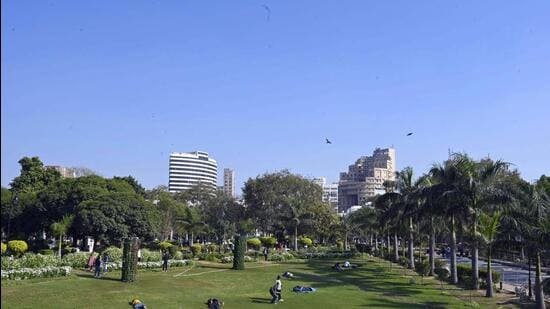
The Delhi Development Authority (DDA) has initiated a city-wide plan to irrigate parks and green spaces using treated wastewater instead of fresh groundwater, inviting bids to appoint a consultant for the project, officials said.


According to the request for proposal (RFP) issued on Wednesday, the consultant will be tasked with preparing a comprehensive management plan and a feasible network design to supply treated water to parks and green spaces under DDA’s jurisdiction across the Capital.
“The proposal comes after initial discussions to reduce dependence on groundwater for horticulture purposes. The project is now moving into the implementation stage, beginning with the appointment of a consultant who will prepare a detailed project report (DPR), assess water demand across parks, and design an integrated supply network based on distance from the nearest sewage treatment plant (STP),” an official said.
As per the RFP, the consultant will map existing water demand and the availability of treated water, design pipelines and associated infrastructure, and prepare plans for capturing raw sewage and treating it through STPs for reuse. The plan will also include measures to minimise water losses and improve irrigation efficiency at the park level.
The consultancy assignment has a timeline of 210 days for preparation of the plan and DPR, following which the project will move towards execution. Officials indicated that the implementation phase, which includes the construction of infrastructure and integration with existing systems, is expected to take approximately a year.
“The project is expected to involve significant capital investment in pipeline networks, pumping systems, and STPs, though the exact cost will be determined after the DPR is prepared,” the official added.
Once implemented, the project is expected to create a sustainable irrigation system for DDA parks, reduce the extraction of groundwater, and promote the reuse of treated wastewater in line with broader urban water management goals.
DDA maintains nearly 750 parks, green belts, and floodplains, and currently relies significantly on groundwater for irrigation. The proposed shift to treated wastewater is expected to substantially reduce the use of fresh water, particularly in a city facing recurring water stress.


