






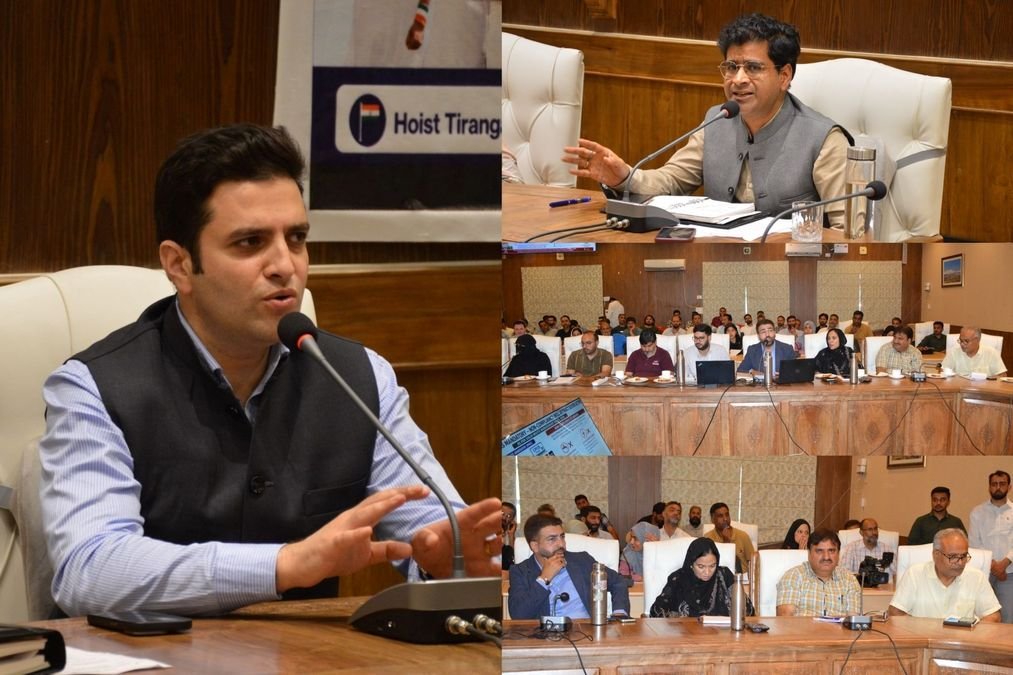
Budgam, Aug 10: District Administration Budgam, in collaboration with Swachh Bharat Mission Urban 2.0 (J&K), MoHUA and Swaaha Resource Management on Monday organized a Capacity Building Session on Solid Waste Management (SWM) Rules, 2026 at DC Office, Budgam.
The training session aimed to sensitize stakeholders about identification, regulation and management of Bulk Waste Generators (BWGs), besides strengthening compliance with the SWM Rules, 2026.
Deputy Commissioner (DC) Budgam, Athar Aamir Khan, who presided over the programme, said keeping Budgam clean is a shared responsibility requiring active participation of government departments, Urban Local Bodies, institutions, BWGs, commercial establishments and citizens.
“Every stakeholder, particularly Bulk Waste Generators and institutions, must take ownership of waste management, ensure segregation at source and adopt proper and scientific methods of waste disposal,” the Deputy Commissioner said.
The session focused on statutory provisions, compliance requirements, digital monitoring, technological interventions and enforcement mechanisms under the Rules.
Participants were sensitized about four-stream segregation at source—wet, dry, sanitary and special-care/domestic hazardous waste—and the responsibilities of BWGs.
The Deputy Commissioner said the new rules mark an important shift towards a scientific, accountable and technology-driven waste management system. “Our priority must be source segregation, traceability, decentralized processing and effective compliance at every level,” he said.
He stressed upon departments, Urban Local Bodies, institutions, commercial establishments and households to strengthen segregation, awareness and enforcement mechanisms, while calling for strict action against persistent violations.
The session also highlighted decentralized processing of organic waste through household composting, Aerobin systems and Electrical Organic Waste Composters, besides proper waste management arrangements during large gatherings.
“A clean Budgam requires collective ownership. Every department, institution, market, commercial establishment and household has a role in making scientific waste management a daily civic practice. Citizens must cooperate in source segregation and ensure proper disposal of waste,” the Deputy Commissioner said.
Among others, the programme was attended by Additional District Development Commissioner Vivek Agarwal, SDMs, ACD, ACP, BDOs, CEO Education, ZEOs, Medical Superintendent District Hospital, EOs of Municipal Committees, MY Bharat, representatives of security agencies, market associations and other stakeholders.


