






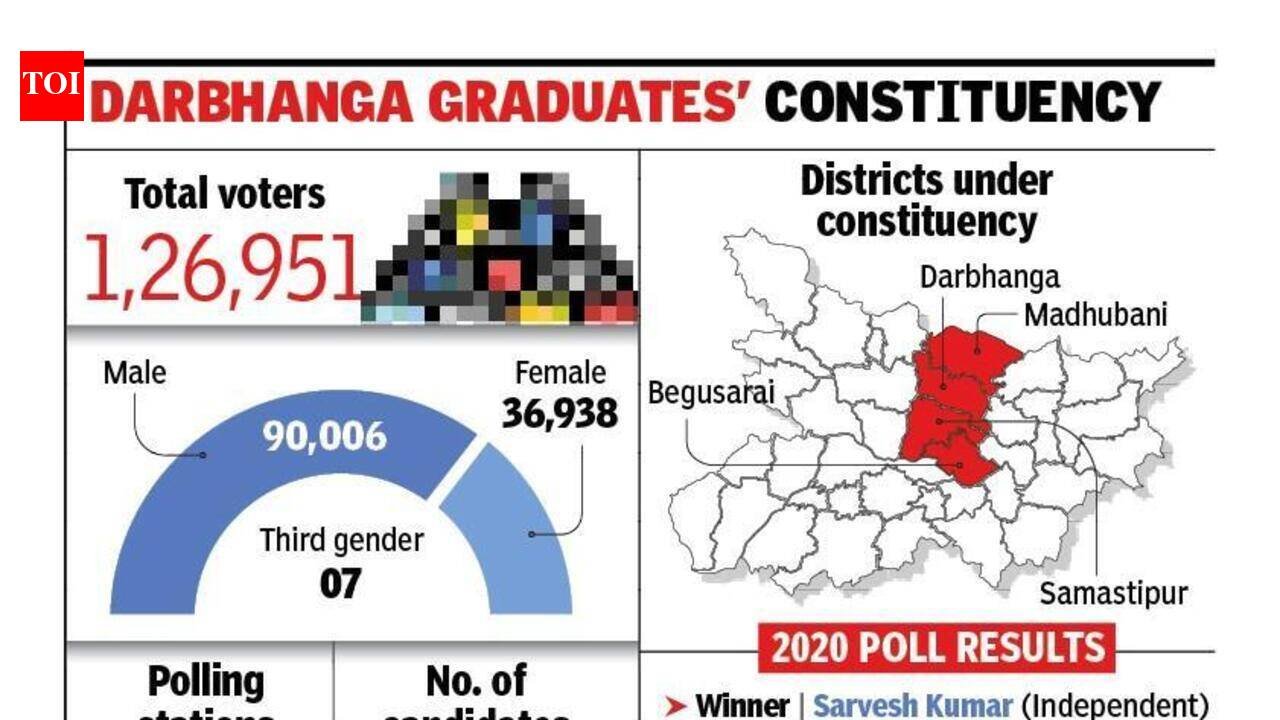
Patna: The Darbhanga graduates’ constituency of the Bihar legislative council is heading for a closely watched contest with 40 candidates in the fray, the highest among the state’s graduates’ constituencies. Patna has 18 candidates, Tirhut 17 and Kosi 15. The constituency covers Darbhanga, Madhubani, Samastipur and Begusarai districts in the Mithila region, known for its politically aware and educated electorate.Key contenders include incumbent MLC Sarvesh Kumar of BJP, Anil Kumar Jha of RJD, Mohammad Imtiaz Noorani of Jan Suraaj, Sandeep Choudhary of CPI-ML and Rajnikant Pathak of Congress.Sarvesh, who won the 2020 election as an Independent, is now contesting on a BJP ticket. The switch gives him the backing of the ruling NDA’s organisational network, including BJP and JD(U), and its voter base across the four districts.However, the move could also pose challenges. His earlier appeal partly rested on his independent, non-partisan identity, which attracted voters looking beyond established parties. Contesting as a BJP nominee could cost him support among neutral voters and moderate minority graduates. As the sitting MLC, he also faces questions over pending demands and the fulfilment of promises.The opposition faces a separate challenge, with RJD, Congress and CPI-ML fielding different candidates. The division could split anti-incumbency, secular and anti-BJP votes, potentially benefiting the BJP nominee.Jha’s prospects depend partly on whether he can consolidate Brahmin voters alongside RJD’s traditional Muslim-Yadav support base. Analysts point to an undercurrent of support for him among Brahmins, a significant community in Mithila. A substantial shift in his favour could strengthen his first-preference vote.Jan Suraaj, led by Prashant Kishor, is targeting educated youth and working professionals with its focus on education reforms, unemployment and migration. Its candidate, Noorani, could attract graduates seeking alternatives to established parties.With several candidates competing across four districts, voter mobilisation, community support and concerns over the incumbent’s performance are likely to shape the contest.


