



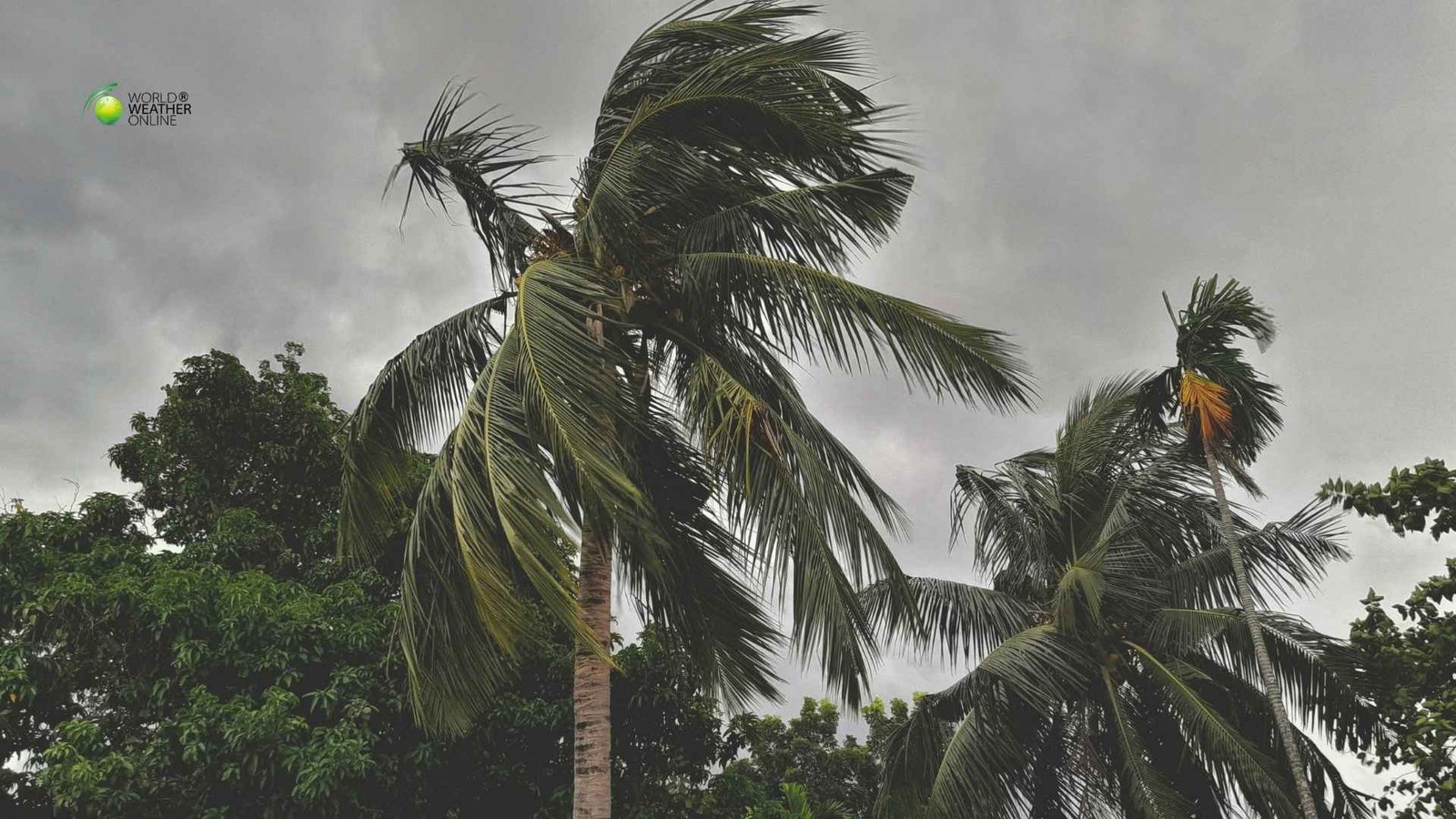
During the last week of March 2026, Tropical Cyclone Narelle carved an unusually long and complex path across northern Australia. Consequently, it left behind widespread damage and disrupted energy production. The reason behind the impeccable importance of Narelle was not its strength but its journey.
Meteorologists described it as one of the rare cyclones to impact multiple Australian coastlines. Surprisingly, the skies of Shark Bay in Western Australia also turned blood red due to an iron-infused dust storm. From its early development on 17 March to its significant landfall and lingering impacts, Narelle became one of the most impactful weather events in Australia.
A Rare and Unpredictable Cyclone Path
Typically, cyclones in Australia form in the warm waters of the Coral Sea or the Indian Ocean. Then they follow relatively predictable tracks, but Narelle did not.
Initially, the system of this tropical cyclone intensified over unusually warm seas and reached Category 4 strength, with wind gusts estimated at up to 250 km/h at its peak. It intensified in just a couple of days, and on 20 March, its strength was labelled as Category 5. However, instead of dissipating quickly, it continued to move across northern Australia, influencing weather patterns across multiple regions.
Weather analysis by the World Weather Online indicates that Narelle affected Queensland, the Northern Territory, and Western Australia. It evidently covered a wide geographical area that was rarely witnessed. This extended path created challenges for forecasting and emergency planning, as communities far apart were forced to prepare for impact.
Western Australia Hit Hard: Winds, Surge, and Infrastructure Damage
The most severe impacts of Narelle were felt in Western Australia, particularly along the Pilbara coast. Although authorities issued warnings of destructive winds, heavy rainfall, and flash flooding, people living along the coast were largely affected.
Specifically, major export ports in the region were forced to shut down. Initial inspections after Narelle passed by these regions revealed damage caused by a combination of high winds, wave uplift, and powerful ocean swells.
Moreover, the disruption extended beyond transport, as the cyclone also affected Australia’s critical energy sector. Operations at major liquefied natural gas (LNG) facilities, including Gorgon (15.6 million tonnes per year) and Wheatstone (8.9 million tonnes per year), were temporarily impacted. So, due to the harsh weather conditions, the world’s largest LNG exporter felt the ripple effects.
While moving through Denham, Western Australia, an unprecedented dust storm was observed. It turned everything red due to the deep red color of the sky. This was an impact of Narelle.
Exmouth: A Community at the Center of the Storm
Among the hardest-hit locations was the coastal town of Exmouth, a key tourism hub in Western Australia. The residents of Exmouth witnessed extreme wind gusts nearing 250 km/h. They also experienced complete power outages, disruption to the water supply, and structural damage across parts of the town.
Reports also indicated the town’s airport was severely damaged. Thus, it restricted immediate recovery and evacuation efforts. It was ultimately a complete disruption to daily life.
Heavy Rainfall and Flooding Risks
Although North Western Australia, Far North Queensland, and the Top End in the Northern Territory are commonly affected by tropical storms, it was a rare scene to see all three being affected simultaneously.
While wind damage drew immense attention, rainfall also played a critical role in Narelle’s impact. This is because tropical cyclones, such as Narelle, carry massive amounts of moisture. As it weakened over land, it continued to produce intense rainfall, raising the risk of flash flooding, river overflow, and road closures.
Even after the cyclone, the danger is far from over. This is because floodwaters can persist long after winds subside, especially in low-lying or poorly drained areas.
Comparing Narelle to Past Cyclones
Australia has experienced numerous powerful cyclones, including Cyclone Yasi in 2011 and Cyclone Debbie in 2017. Both caused extensive damage and highlighted the destructive potential of tropical systems.
However, Narelle stands out for a different reason – its unusual track and multi-region impact. Cyclones rarely maintain strength and influence across such a wide geographical span. This made Narelle particularly challenging for forecasters and emergency planners.
It also raises questions about whether such patterns could become more common in the future.
Climate Signals: Warmer Seas, Stronger Storms?
Scientists have long warned that warmer ocean temperatures can influence cyclone behavior. This is because warmer seas provide more energy, which ultimately can:
- Increase storm intensity
- Prolong cyclone life cycles
- Alter movement patterns
While no single event can be directly attributed to climate change, Narelle’s strength and unusual path align with broader trends observed in recent years.
The waters around northern Australia have shown signs of warming, and this may be contributing to more complex and unpredictable storm behavior.
Tropical Cyclone Narelle will be remembered not only for its extraordinary strength but for how it behaved throughout the coastline. Its rare multi-landfall path, prolonged impact, and economic consequences make it a standout event in Australia’s recent weather history.
For meteorologists and scientists, Narelle provides another case study in changing weather patterns. Communities should also take it as a reminder of how rapidly weather conditions can escalate. And for the world, extreme weather is not just becoming more intense; it is becoming more complex.


