



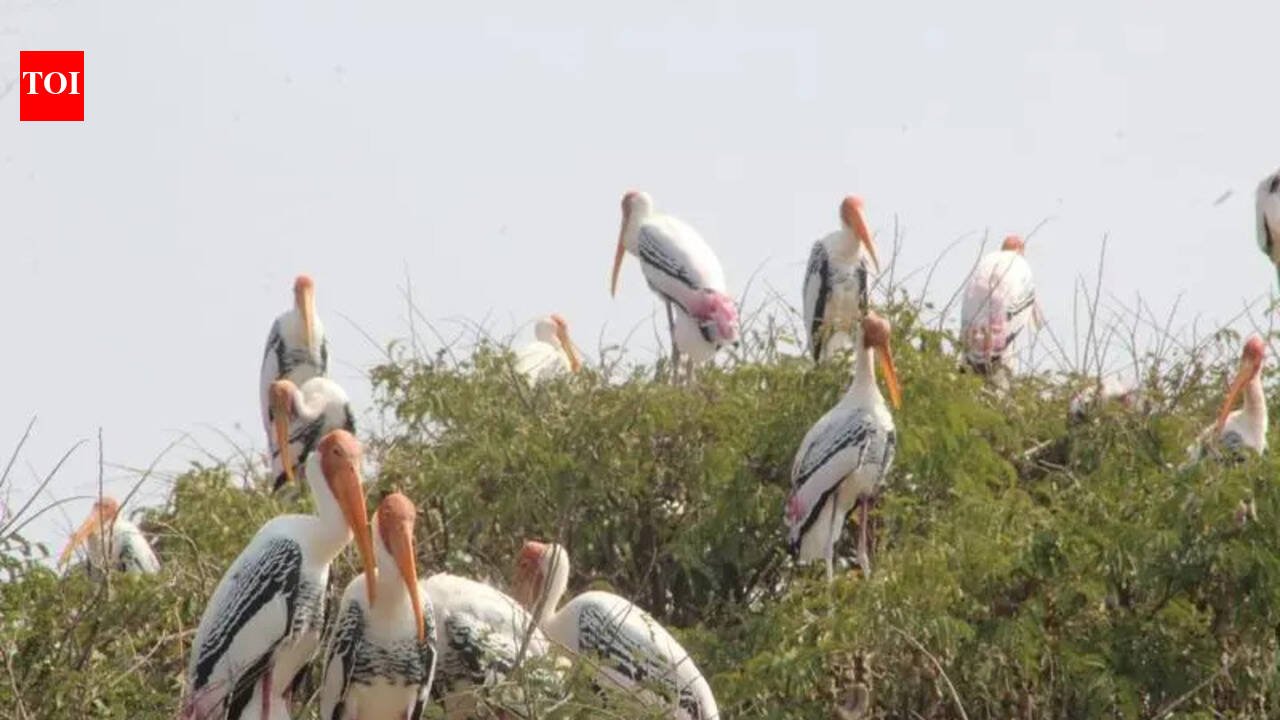
Mandya: Nearly 90 km from Bengaluru and 100 km from Mysuru, in Maddur taluk, is the tranquil Kokrebellur Bird Sanctuary, which has turned into a vibrant paradise for bird lovers, as thousands of migratory birds continue to thrive during the ongoing breeding season. The sanctuary currently hosts over 1,800 nests, many of which now shelter 2 to 3-month-old chicks, creating a fascinating spectacle as birds are seen carefully feeding and nurturing their young.Every year, flocks of migratory birds travel thousands of kilometres from regions, including Siberia, to breed in this unique ecosystem. Among the most prominent visitors to the sanctuary are the graceful painted stork and the majestic spot-billed pelican, which build their nests on tall tamarind trees scattered across the village landscape.Currently, the nests are bustling with activity as young nestlings stretch their wings and eagerly wait for food brought by their parents. Visitors can witness touching scenes of parent bird feeding their chicks, carefully guarding them, and preparing them for their first flight in the coming weeks. Despite occasional crop damage caused by the birds, the local community has for generations protected these migratory birds, and allowed them to nest peacefully amidst human habitation. In several locations, as many as 15 nests can be seen on a single tamarind tree. The village is nourished by the flowing Shimsha River, and several surrounding waterbodies, which serves as a feeding ground for the birds that prey on fish and shellfish. This abundance of food attracts thousands of birds every season and sustains them.According to range forest officer HV Prashanth, nearly 2,000 migratory birds, including about 1,300 painted storks and 250 pelicans, have arrived this season. Altogether, the sanctuary now hosts around 4,000 birds, including more than 1,000 resident species such as pond herons, egrets and cormorants. “These migratory birds start flying in from Sept and usually stay for nearly six months. After the chicks grow strong and learn to fly, the birds start their return journey in June or July,” he explained.Forest officials closely monitor the nesting sites to ensure the safety of the birds. In cases where chicks accidentally fall from nests, staff members promptly rescue them and help them survive. For nature enthusiasts and photographers, May is the most enchanting time, as the growing birds just begin to flap their wings and prepare for their first flights.


