



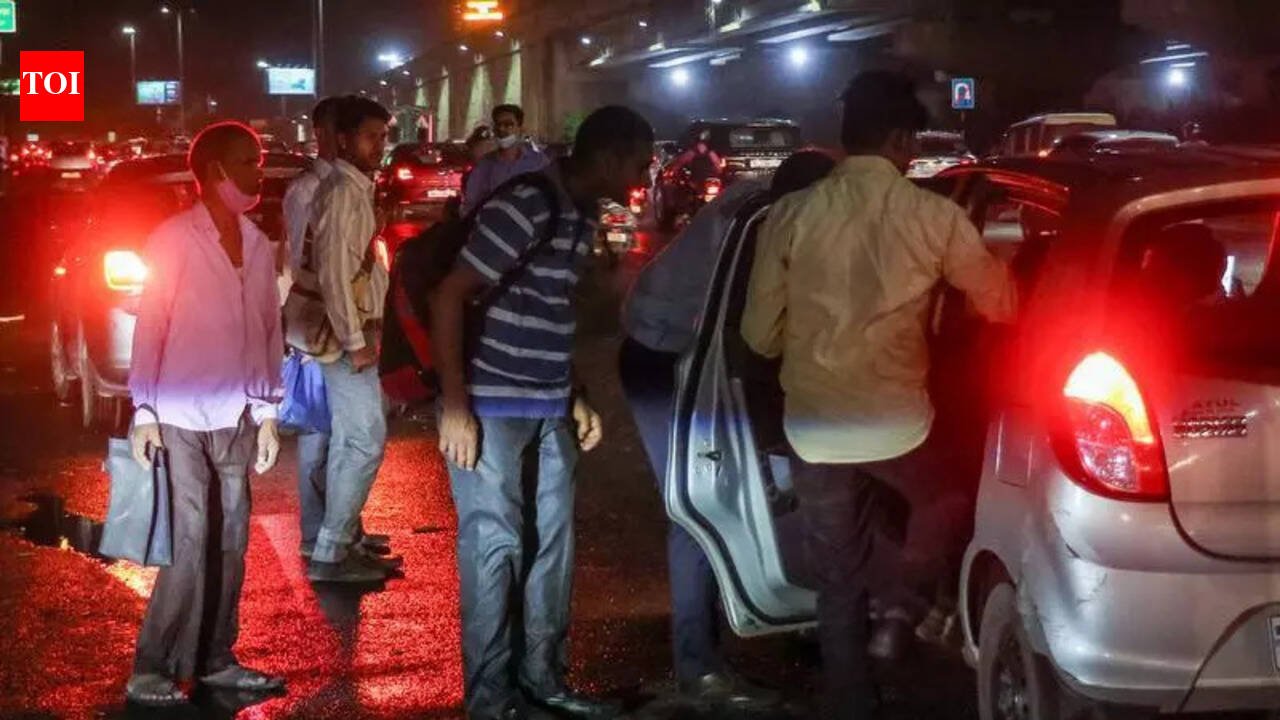
Gurgaon: In a city that is already public transport-starved, a brief spell of rain on Wednesday evening sent cab fares shooting through the roof within minutes, leaving commuters struggling to find rides and triggering a familiar wave of infrastructure breakdowns.A 7km-ride that would normally cost Rs 150, from Golf Course Road to the Sector 15 area, surged to Rs 500 after it began raining. Those without private vehicles were hit the hardest. “It’s crazy how even a little rain brings the entire city to a halt. This isn’t an emergency, it’s routine weather,” said Gaurav, a resident. Many commuters reported difficulty booking cabs, with ride-hailing apps showing limited availability or flashing “no service” messages in several areas. “It wasn’t even heavy rain, but fares shot up instantly. You are left with no option but to pay or walk,” said Priya Pratap, a resident of Sector 72 who travels to Udyog Vihar daily for work.“Every evening I pay Rs 150 to Rs 160 to reach home from office, but on Wednesday evening after light rain and gusty wind, the cab fare rose to Rs 500,” said Anoop Singh, who regularly takes a cab from Golf Course Road to his house in Sector 15.According to data recorded between 8am on Wednesday and 8am on Thursday, the district received an average rainfall of about 6.6 mm, with wide variations across regions. Several areas also reported electricity cuts lasting up to three hours. Poorly maintained roads and slow traffic during peak hours was amplified by inadequate drainage and defunct streetlights — signalling the lack of preparedness for a mild change in weather in a city of over 30 lakh. Several affected areas were key commuter corridors where connectivity remains heavily skewed towards road-based transport. Stretches such as Golf Course Road and Golf Course Extension Road are only partially served by the Rapid Metro, with many residential sectors located far from stations, forcing commuters to rely on cabs, autos and private vehicles for daily travel. Udyog Vihar, a major office hub, has no direct metro access and has limited office shuttles from Cyber City or IFFCO Chowk.Along NH 48 and MG Road, despite metro lines running parallel, short-distance and last-mile travel is still largely dependent on private vehicles. Residents flagged serious safety concerns as well. “It was quite unsettling — rain, no electricity, and flooded roads. In many places, you couldn’t see what you were stepping into. It’s not safe to walk, let alone drive,” Sanjay Gupta, a commuter, said.In Sector 90, a long stretch of road remained poorly lit, with only headlights of passing vehicles bouncing off the wet asphalt. Pools of water lined the edges, while dark patches made it difficult to gauge road depth and surface conditions. Anger against civic agencies was palpable, with commuters questioning why basic preparedness continues to elude the city year after year. “Every monsoon, authorities promise fixes, but when it rains, nothing works—drainage, power supply, streetlights. Yet citizens are expected to deal with surge fares and unsafe streets,” said Shubham Singh, a resident of Sector 57. Others pointed to a lack of accountability and coordination among agencies. “There is always talk of projects and reviews, but when rain falls, the reality is chaos. Who checks drains or secures electrical infrastructure before the season begins?” asked Narender Joshi, a working professional. The frustration is sharpened by memories of last monsoon, when several people lost their lives in following rain-related incidents.A spell of heavy rain last Sept brought the city to a near standstill, with waterlogging across key stretches such as NH-48, Hero Honda Chowk, Rajiv Chowk and Narsinghpur triggering traffic snarls that stretched up to 20km in parts. Commuters were stuck for three to six hours. “People died last year after year during rain, yet we are again walking through dark, flooded roads with live cables around. Are we waiting for another fatality before taking action?” Joshi added. Residents questioned the cascading disruptions after limited rainfall on Thursday, pointing to a recurring pattern of infrastructure stress even during short spells, underscoring persistent gaps in drainage management, power reliability, and commuter safety—concerns that loom larger as the monsoon season approaches. Before this rain, GMDA held a meeting with its officials to strengthen the infrastructure of the city. GMDA CEO PC Meena said during the meeting that the authority is focusing on a comprehensive and time-bound approach to strengthen the city’s road and drainage infrastructure. “From ensuring dust-free roads and clearing C&D waste to improving green belts and expediting drain works, our priority is to enhance urban mobility, prevent waterlogging, and deliver visible improvements on the ground for the residents of Gurgaon,” Meena had said.


