






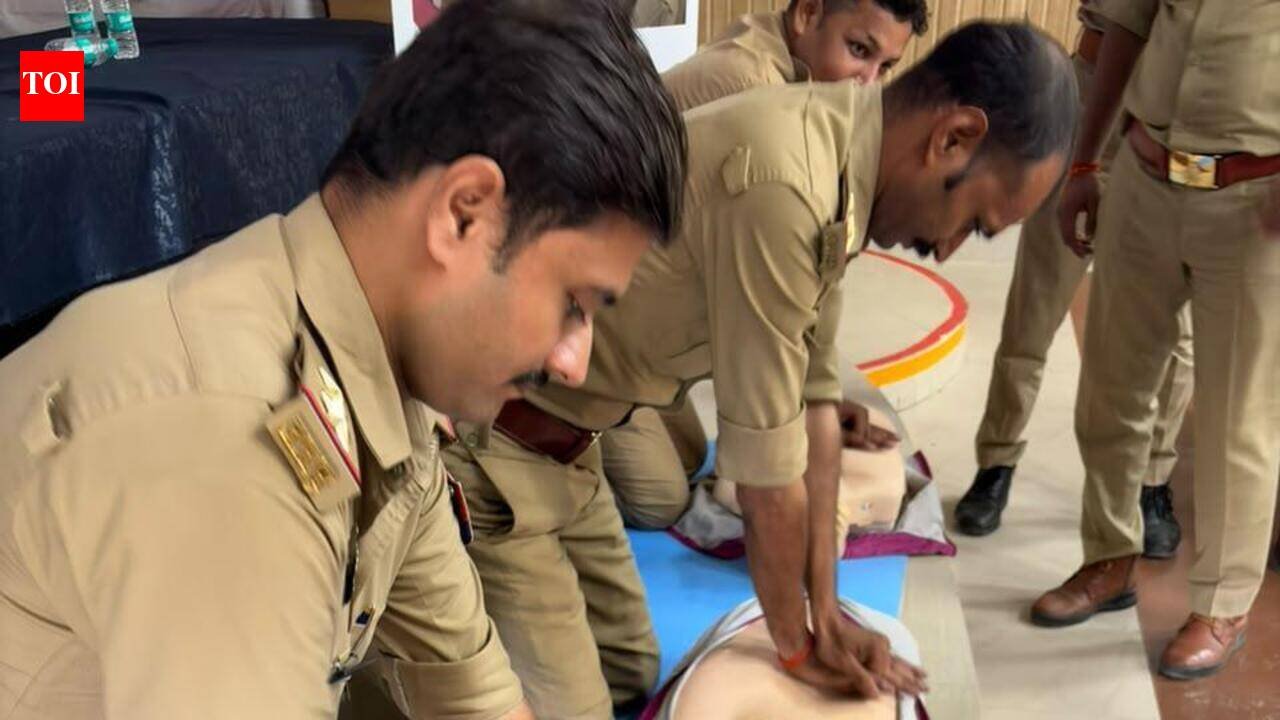
Lucknow: In a push towards reducing road fatalities, Lucknow Police has trained personnel at every police station to provide emergency trauma care at accident sites, enabling officers to assist victims during the critical ‘golden hour’ before ambulances arrive.The initiative is being implemented through five-member Critical Corridor Teams (CCTs) across the city that have undergone Basic Trauma Life Support (BTLS) training by SaveLIFE Foundation, equipping them with skills such as rapid assessment of injuries, controlling severe bleeding, airway management, safe victim handling and coordination with emergency medical services.The programme is an operational arm of PRAMAAN (Police Road Accident Monitoring, Assurance and Analytics Network), under which Lucknow Police is analysing road accident FIRs registered since Jan 2024. Around 25 parameters extracted from each case, include location coordinates, timing, collision type, vehicles involved, casualties and road classification, to identify crash patterns and high-risk zones.DCP Traffic Raveena Tyagi said the objective is to make police personnel among the first responders to provide life-saving assistance before medical teams arrive. “The aim is to reinforce Pramaan under the Zero Fatality District programme,” she said.An SI will lead the response, coordinate with agencies and assess causes of crashes. A head constable will ensure availability and maintenance of equipment for emergency response. Of the three constables, one will focus on first aid and coordination with the 108 ambulance service and hospitals, another will manage traffic, crowd control and barricading, while the third will document the scene through photographs and videos, preserve evidence and record road-safety deficiencies.The teams will serve as road-safety auditors, documenting factors such as damaged road surfaces, illegal cuts, inadequate lighting, poor signage, faded lane markings, unsafe median openings, visibility issues and faulty junction designs. The findings will help identify recurring causes of crashes and recommend corrective measures to engineering and civic agencies.


