


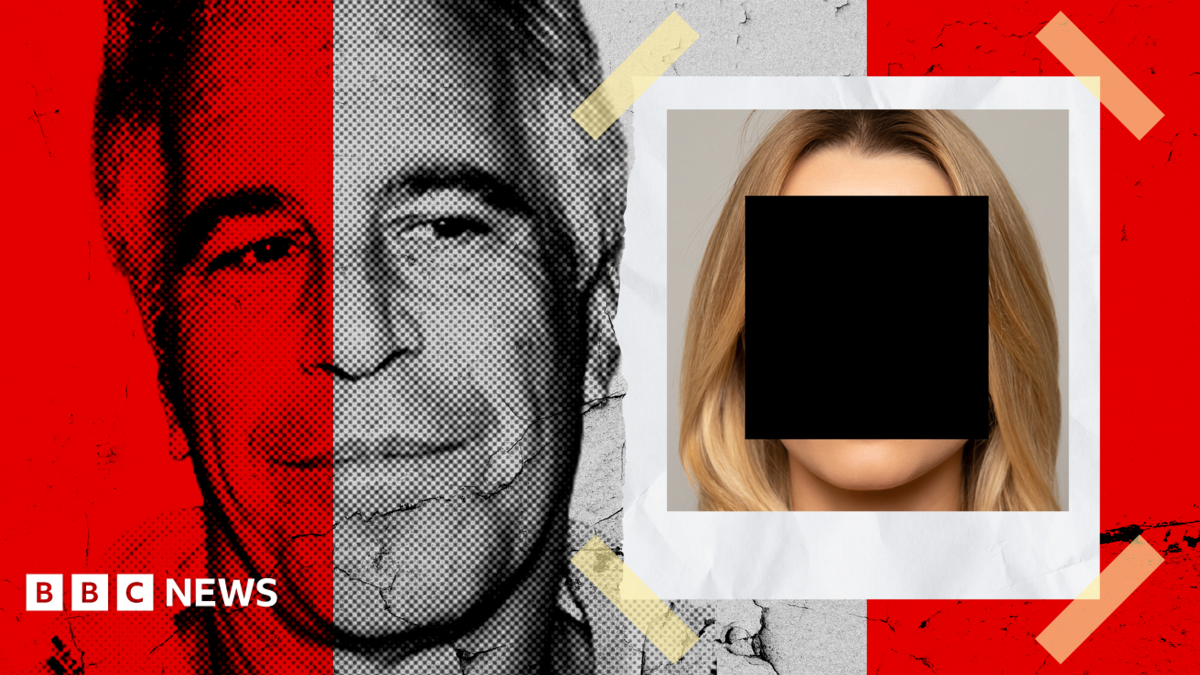
In the week after the sex-criminal financier Jeffrey Epstein died, Anya (not her real name) opened the door of her New York apartment. Outside was Epstein’s brother, Mark, telling her she had to leave, she says.
Anya had lived for years in one of several flats on East 66th Street in Manhattan used by Jeffrey Epstein to house women he abused. In one moment, she lost her home but escaped a nightmare. (Mark Epstein denies he was aware of his brother’s wrongdoing.)
“I’m still struggling to reconcile with the fact that I was abused for years,” Anya says. “You were not chained to a door or something, right? You were not locked up in a basement. The chains were less obvious, but they were there.”
Epstein, who died in 2019 while awaiting charges for sex-trafficking children, used to say that his operation was “like a cult, and he was the cult leader”, Anya says.
She has given the BBC a rare account of life as one of Epstein’s “assistants”, detailing how the financier maintained a hold over so many of his victims for so long.
The assistants were a group of women – roughly a dozen at one time, Anya estimates – who were housed by Epstein, worked all hours at his beck and call, and were regularly sexually abused by him.
Anya says they were drawn in with elaborate deceptions and empty promises of work, before he began to coercively control nearly every aspect of their lives, exploiting any weaknesses he could uncover.
She says he controlled their finances, dictated who they saw and psychologically demeaned them. He monitored their bodies obsessively, Anya says, and forced her to have unnecessary, disfiguring surgery.
Her account of Epstein’s control is echoed by Sarah Kellen, another former assistant. She told the US House Oversight Committee earlier this year how Epstein presented himself as the assistants’ saviour. “He was very good at just decimating your ability to make your own decisions and have your own autonomy. And it made you more and more dependent on him,” she said.
There is a bias which tends to make people think that only children are susceptible to this type of coercion, but “you can be groomed as an adult”, says Dr Tara Quinn-Cirillo, a clinical psychologist who has worked with victims of coercive control. “You can be vulnerable to this,” she says.
