



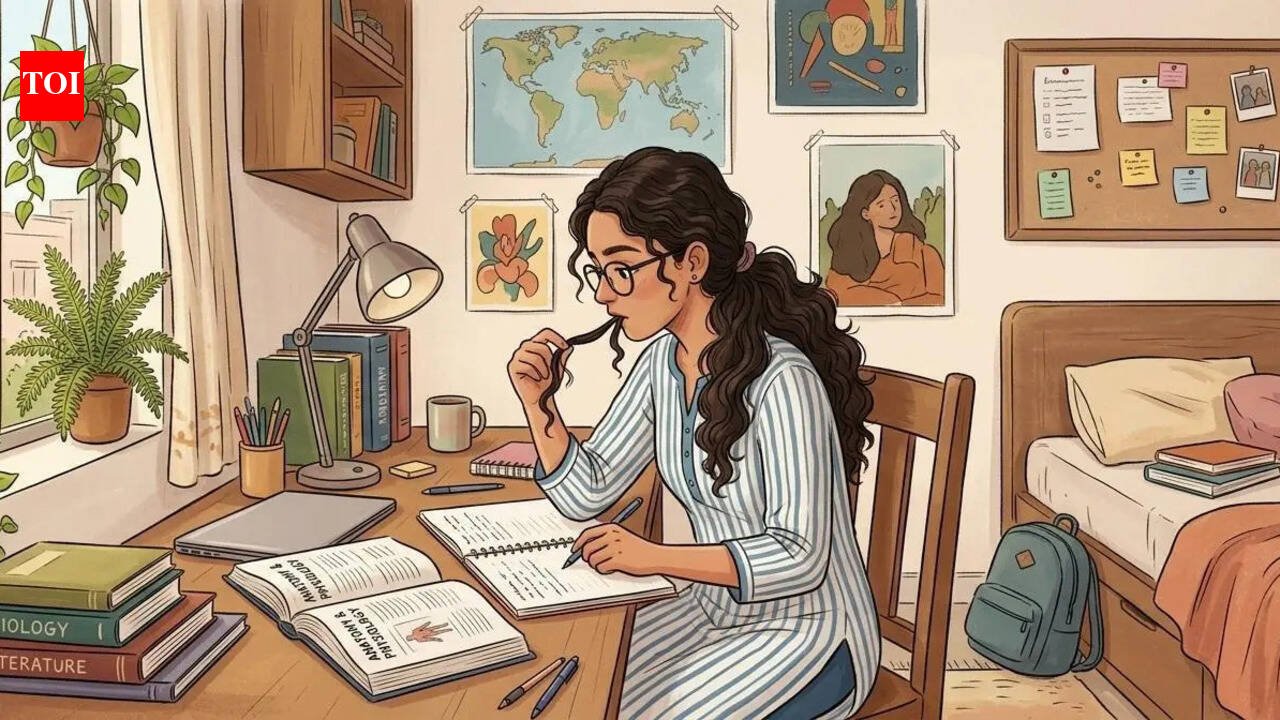
Bengaluru: “I was so stressed I almost pulled out my hair” is an expression often used casually. But sometimes, people do end up pulling out and even eating their own hair — a condition that can eventually lead to a hairball forming inside the stomach, known medically as a trichobezoar.A series of recent cases in the city has brought renewed attention to trichotillomania and trichophagia, psychiatric conditions in which a person develops the compulsive urge to pull out and ingest hair.In one recent case, a 23-year-old woman underwent surgery for the removal of a massive trichobezoar measuring 24x14cm from her stomach. The woman had been suffering from abdominal discomfort, poor appetite, and frequent vomiting for several months before scans revealed that a large hairball occupied most of her stomach.In another case, described by doctors as extremely rare, a two-year-old child developed Rapunzel syndrome — a severe and potentially fatal condition in which the hair mass extends from the stomach into the intestines. Doctors said the child had been ingesting hair, rubber bands, and pieces of balloons since infancy. Over time, this led to the formation of a massive trichobezoar, causing severe abdominal pain, persistent vomiting, and reduced food intake.“Trichobezoar — commonly known as a hairball in the stomach — is usually associated with underlying psychiatric or behavioural conditions. Many of these patients have a condition called trichotillomania, where they keep pulling out their hair and eventually ingest it,” said Dr Deepak Ganga P, senior consultant-medical gastroenterology, hepatology and interventional endoscopy, KIMS Hospitals, Mahadevapura.He added that the behaviour can also be associated with pica, a disorder in which people consume non-food substances such as hair, sand, or mud. According to him, the condition is seen more often among children and young women, though men can occasionally develop it as well.Life-threatening if untreated, say docsDoctors warned that trichobezoars can become life-threatening if left untreated, as they can obstruct the passage of food from the stomach into the small intestine. One of the biggest challenges, doctors said, is that many patients may not show obvious symptoms until the condition becomes severe.“Pica in young children is often overlooked in the early stages. Parents may not realise its seriousness until complications arise. Early identification of such unusual eating habits and timely medical evaluation can prevent life-threatening conditions like this,” said Dr Leenatha Reddy N, consultant paediatrician and neonatologist, Medicover Hospitals, who treated the two-year-old child.Symptoms to look forAccording to doctors, family members should watch out for vague symptoms such as vomiting, decreased appetite, abdominal pain, and patchy hair loss, especially among individuals with underlying psychiatric conditions.“Hair-eating, or trichotillomania with trichophagia, is primarily psychiatric in nature. It is a compulsive behavioural disorder often associated with obsessive-compulsive tendencies, stress, or depression,” said Dr Kumar Parth, consultant surgical gastroenterologist, Sagar Hospitals, who operated on the 23-year-old woman.He added that patients may pull out hair not only from the scalp, but also from the eyebrows and eyelashes. “Small amounts of ingested hair may pass through the digestive tract naturally, but long hair tends to accumulate and form a mass inside the stomach,” he explained.Doctors said treatment usually involves surgical removal of the hairball, followed by psychiatric medication, behavioural therapy, and counselling to prevent recurrence.


