



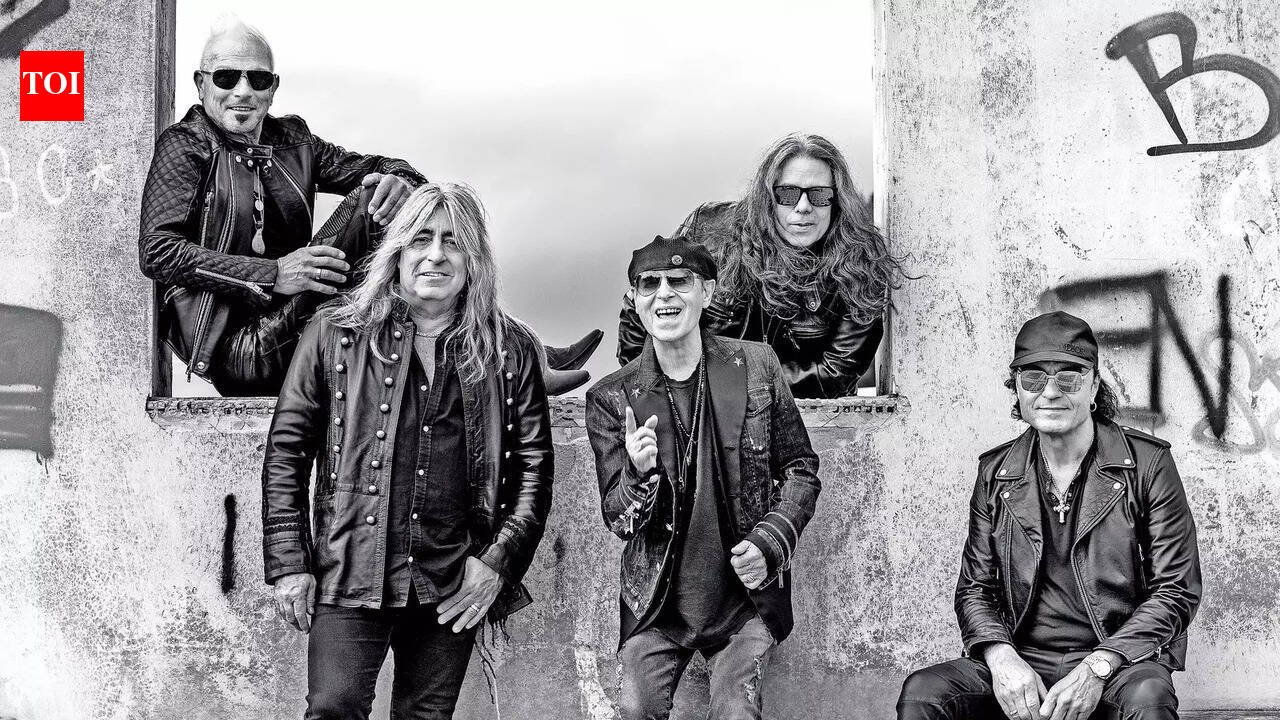
As the Scorpions prepare to return to India after nearly two decades, the curiosity is immediate and specific. Their interest now lies in comparison — in discovering what has changed, what has grown, and what still holds the same charge. In conversation ahead of their four city tour, there is an alertness in the way Klaus Meine, Rudolf Schenker and Matthias Jabs speak — fully aware of how the world, the industry and audiences have shifted, yet keen to see this moment as it is. Even after sixty years, they are not coasting on legacy. They are still observing, still asking, still paying attention. Excerpts:‘It’s not a comeback for us, it’s a continuation’Today, the band is reaching listeners not through radio or record stores, but streaming culture — a scene in Stranger Things, a curated playlist, or a short clip reviving a decades-old track. Klaus finds that rediscovery moving. Songs, he believes, have their own timelines. “It’s wonderful to see how music finds new ways to reach people,” he says. Younger listeners often arrive without context — only emotion. “They hear a song, they feel something, and then they want to know more.” The band doesn’t see this as a comeback. For Matthias, it’s simply a continuation. Their concerts now draw three generations — longtime fans, those who found them through film and television, and digital natives discovering them online. “It’s such a privilege to play in front of three generations and still feel that connection,” he says. A great song, they believe, isn’t tied to an era. It simply waits to be found again.
It’s wonderful to see how music finds new ways to reach people. Many young listeners hear a song, feel something and then they want to know more
– Klause Meine
‘Concerts here weren’t about scale, it was about presence’Not all lasting memories are forged in arenas. Some of the moments that stay with them have little to do with scale or perfect sound. Rudolf recalls a charity concert in Sikkim in 2000 — not even a Scorpions show, but a solo appearance. “The stage was made out of bamboo,” he says. “It was such a big event. Very special.” Shillong left a similar imprint. The concert there became such an occasion that schoolchildren were given a day off to attend. That is the kind of detail a band carries forward — not because of crowd size, but because of what music briefly becomes in a place. For a few hours, it transforms routine into memory. “Over the years, we’ve played in environments that tested everything — high-altitude shows in Bolivia, performances deep in the Amazon, bitter cold in Siberia,” Klaus says. “Touring like that takes a different physical toll now. Long flights, shifting time zones, unfamiliar climates. Preparation matters more. Arriving early matters. Rest matters,” he adds. And yet, once a tour begins, something instinctive takes over. Matthias describes it as momentum. “Once it’s rolling, the strain doesn’t register in quite the same way. What sets places like Sikkim or Shillong apart isn’t logistics. It’s presence. Music doing its quiet, necessary work — connecting people, if only for a night,” he says.‘Lose the connection with the audience, and you lose the soul’ Live performance still matters most to them. No matter how music is streamed, clipped, or discovered in fragments, the truth of a song reveals itself fully only when it’s played in a room full of people. “We were never just a rock band. We wanted to build bridges between cultures and make the world a little better through music,” states Klaus. However, the connection with the audience continues to be a priority for the band. “Right before a show, there’s still a pause. A tightening in the chest. That feeling hasn’t gone away, and we’re glad it hasn’t,” they say. Rudolf Schenker described it as tension rather than fear. “It’s not scaring, it’s forcing,” he says. The moment they step on stage and lock eyes with the audience, it dissolves. Klaus explains, “You see the faces, you look them in the eyes, and you know this is the place where I should be. This is like coming home. Lose that feeling, they believe, and you lose the soul of it all.”
We always knew where we came from. That helped us stay grounded even as success came very fast. You never forget where you started. That’s why celebrating sixty years at Hanover, where we began, meant everything
– Matthias Jabs
The Scorpions are attentive to the present, aware of how technology, social media, and even AI are reshaping music. Young artistes today, Klaus noted, aren’t just writing songs anymore. “You have to do much more self-marketing now,” he said. “Budgets are smaller, but the reach is bigger than ever.” The pressure, however, is constant. Rudolf was blunt about the limits of technology. “AI can’t replace heart and soul. Music has to come from real human feeling. Tools can assist and distribute. Feeling is something else. A song that lasts still has to come from somewhere honest,” he says.
I wrote Wind of Change, and just months later the Berlin Wall came down. It was very special because for a brief moment, the window for peace was wide open
– Klause Meine
‘It was always songwriting from the heart’ From the very beginning, Scorpions chose to write in English — not as a strategy or chasing trends or markets, but as a way to keep doors open and let the music travel. “No pressure. It was always songwriting from the heart,” says Klaus. What none of them could have predicted was just how far those emotions would carry. Still Loving You and Rock You Like a Hurricane became global fixtures, played across continents and generations. Then came Wind of Change, a song that seemed to slip beyond charts and into history itself. Klaus traces its origins to their first shows in the Soviet Union, when something in the atmosphere felt unmistakably different. “I wrote Wind of Change, and just months later the Berlin Wall came down. It was very special because for a brief moment, the window for peace was wide open,” he recalls. What began as a personal reflection became a shared anthem — proof that sometimes, when a song is written honestly enough, it finds its own place in the world.
We followed our artistic vision and stayed true to our musical DNA. Differences are natural, but chemistry is fragile. Ego is the most dangerous thing. You can have great musicians, but if the chemistry breaks, it’s gone
– Rudolf Schenker
‘This time, our visit to India will be beyond the stage’ India isn’t a new chapter for Scorpions — it’s a story that has remained open. Klaus recalls an unexpected overnight halt in Delhi in the late ’70s, grounded mid-journey. Rudolf remembers returning years later for charity football matches, high-altitude performances and unlikely collaborations. Nearly two decades have passed since their last major visit, and this return carries something personal. However, they’re looking beyond the stage this time. “I would love to see the Taj Mahal. I’ve never been there,” says Klaus. For Rudolf, India is tied to something inward. Yoga and meditation have long been part of his life. “That whole world gave me a lot of energy,” he says, describing it as grounding rather than escape. Matthias is approaching the visit with curiosity. “I’d really like to understand Indian music better. It’s much more complex than what we do,” he says.


