



The world’s focus shifted roughly 900 km away from the troubled Strait of Hormuz as an American F-15 went down in the hilly terrain of South West Iran in the Khuzestan province. After initial visuals of debris from the F-15E Strike Eagle, videos showed a low-flying HH-60W Jolly Green-II — a variant of the famed Black Hawk helicopter tailored for Combat Search and Rescue (CSAR) — and an HC-130, a variant of the Hercules aircraft, flying dangerously low near the area where the F-15 was shot down, risking the same fate as the Strike Eagle.
‘That others may live’
The motto of the US Air Force Pararescue teams, more popularly known as PJs, is ‘That others may live’. The men and women in these rescue squadrons are trained to fly into danger zones, teeming with air defence units, to rescue downed aircrew. Normally, air elements depend on fast-in and fast-out tactics in fast flying aircraft to deliver weapons on target. The rescue element goes deep inside enemy territory towards an alerted enemy already prepared for a faceoff with the rescue party.
Into the jaws of death
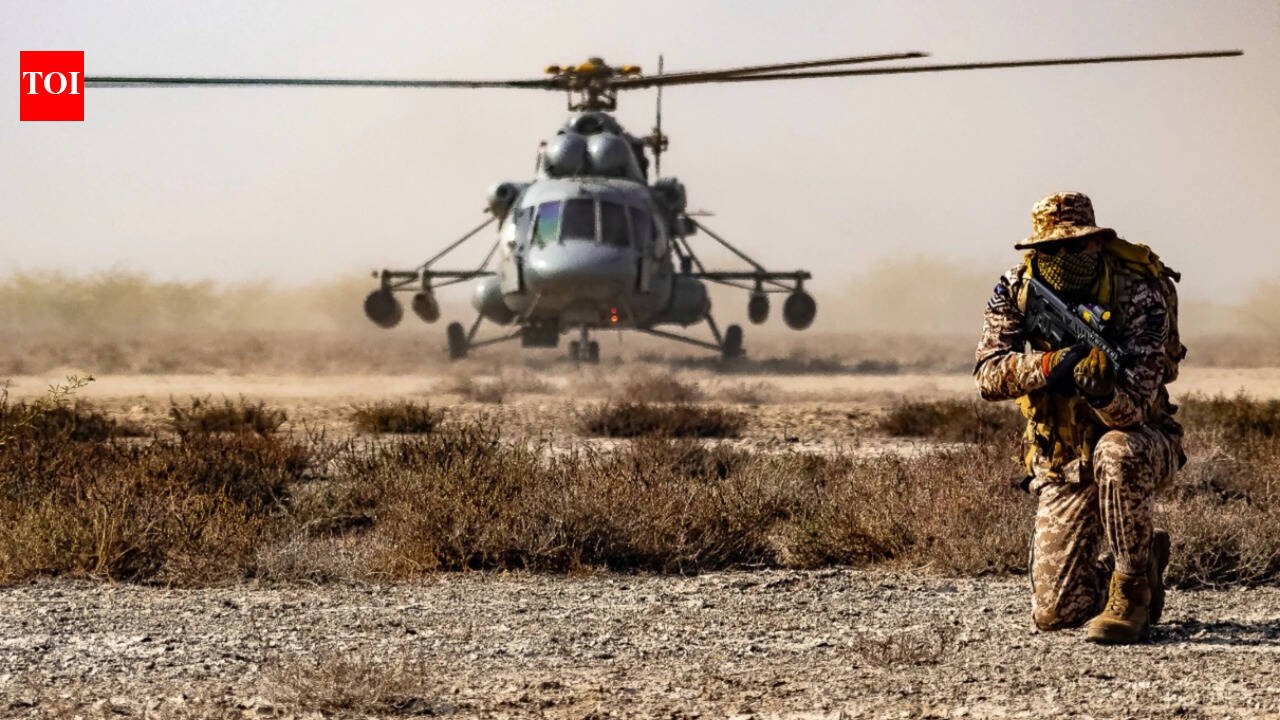
Although the Indian Air Force does not have dedicated squadrons for CSAR, instead, pilots from regular helicopter units and transport squadrons regularly train for this contingency. During a CSAR mission, this element will have to fly inside the weapon engagement zones of the very systems that downed the aircrew awaiting rescue. This too has to be carried in aircraft that are flying low and slow. The aircraft has to land deep inside enemy territory to rescue the downed pilot, who may have been injured during the ejection process.The pilot after ejecting over enemy territory, till rescue, has to depend on his Survival, Evasion, Resistance, and Escape (SERE) training at the Jungle and Snow Survival School. Pilots and other aircrew are trained to provide first aid for any injuries received. The training focuses on evading the civilian and uniformed personnel looking for them. Aircrew are also trained to live off the land and carry water, ration and water sanitation kit. Most importantly, the pilots are to inform the rescue element about the ground situation relevant for pick up and about a safe zone for the pickup.The CSAR process begins as soon as a pilot ejects. The pilot’s GPS location at the time of the crash is registered. The IAF takes the help of inter government agency. The CSAR operation is initiated as soon as the pilot ejects. The rescue package flies to the pilot’s last known location. The pilot can be tracked by the airborne team in different ways. “The rescue team is guided toward the pilot by a rescue beacon. Once the rescue team is in range the pilot will contact the rescue team through an encrypted radio and apprise the CSAR team of the situation on the ground,” a serving officer said.Multiple aircraft are used in a single mission. “A CSAR operation is carried out by a Rescue platform along with escort aircraft. Members of the Special Forces are also part of the mission in case the area on the ground needs to be sanitised” another serving officer said. A medical team is also a part of the operation to provide aid to the rescued aircrew. After the return, the aircrew undergoes a thorough medical check-up.The entire process is regularly rehearsed by the air force. The operation is unique in the sense that the rescue element consisting of many individuals is sent on a dangerous mission to rescue a single individual in many cases. These missions are a living example of the armed forces’ ethos of ‘No man left behind’.


