



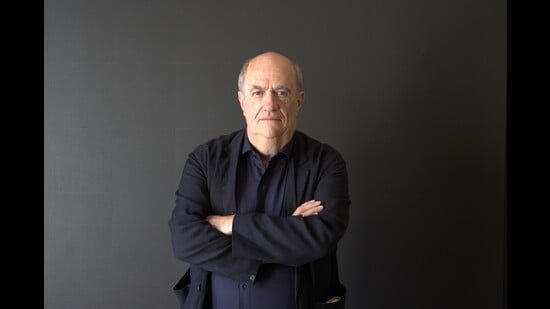
Tell us about the genesis of this short story collection.


These were the only good stories I wrote over a period of about 15 years. They were written one by one, with no sense of what they would look like together. By now – I will be 71 this year – it is clear even to me that I have a limited number of subjects and landscapes. Each story in the book is in some sort of dialogue with other work I have done. The first story, for example, The Journey to Galway is about Lady Gregory, who is also the subject of Silence, the first story in The Empty Family. She is also the subject of my short monograph Lady Gregory’s Toothbrush and my play Beauty in a Broken Place and my opera libretto Lady Gregory in America. I think Sleep is a kind of companion piece to my story One Minus One. Maybe Summer of ’38 could be usefully read with my first novel The South and The News from Dublin could be put beside my novel The Heather Blazing.
Your stories traverse different geographies. Do you have personal affinities with these places?
Yes. I lived in Buenos Aires in 1985 so that made its way into The Catalan Girls. I spend time each year in the Catalan Pyrenees and that made its way into The Catalan Girls and Summer of ’38. I have lived in San Francisco and that made its way into Five Bridges. I was a student at St Peter’s College in Wexford (see A Sum of Money). I have lived in Barcelona (see A Free Man). I have lived in Austin, Texas (see Barton Springs). I spend time in New York (see Sleep). I am from Enniscorthy (see The News from Dublin). The stories depend on these places. But they are mainly places I have lost, where I don’t live anymore.
The dread of separation often permeates these stories – the dread of a mother’s separation from her son in the Journey to Galway and a father’s separation from his daughter in Five Bridges. What would you say about this leitmotif?
I work with drama. In a family, separation is dramatic. It is a big subject.
How important is it for a fiction writer to understand the complexities of human relationships?
It is essential for me that nothing is simple, no desire is simple, no motive, no interaction. I work with complexity, to see how much energy I can get from a single emotion, how much ambiguity and nuance.
Why does the idea of uprootedness (and dislocatedness) dominate your stories?
The secret history of Ireland since the mid-nineteenth century is dislocation, as so many people went to the US, the UK, Australia and New Zealand. It is something I have done. I lived in Spain between 1975 and 1978. And then I have lived mainly in the United States over the past 20 years. What interests me is not merely dislocation but the emotions around returning, what it means to come home, if home is the word. This is the subject of The Catalan Girls and Sleep and Five Bridges and a good few of my novels, most notably The South and Brooklyn and Long Island.
What’s home for you? Do these stories reflect your personal loss of home?
This is a difficult question. The first answer is that I live in my head and my head is my home. But that is too glib. I am Irish, or, more accurately, I am from Enniscorthy in the south-east of Ireland. I have a house on the coast there. Maybe that is home. But I am not there as much as I am in the US. The US is not home, it is not my country. I am not at home here. But I am, oddly, at home in the two rooms I inhabited in New York – a room to sleep and a room to work, with some books, some CDs, a small kitchen and a small bathroom. I spend my day quite happily here. But Ireland? Most of my family are dead now. Maybe it is a place of memory, but I like being in Ireland. I read an Irish newspaper before I go to sleep each night. Home is a vague word, too vague maybe for me.
The question of morality is often present in some stories like A Free Man and The Catalan Girls. How do you look at that?
A Free Man raises a complex moral problem. What if someone who has done grievous wrong feels no remorse? I am interested in the drama of this, what it feels like, what it looks like. In some of the other stories, the question is lighter. In The Catalan Girls and A Sum of Money, the characters steal, but I don’t see that as complex moral problem.
What are the challenges of writing short fiction?
Very few ideas I have work for a short story. You try them and then they fall away. Every so often you strike what might be gold. The main thing is to avoid easy plotting or too much action or confrontation. But something has to happen, even if it feels like nothing, or nothing much.
What’s your advice for young fiction writers?
Finish what you start. Control your weekend.
Which authors have been a great influence on you?
In no special order: Jane Austen, George Eliot, Marcel Proust, James Joyce, Henry James, Thomas Mann, Elizabeth Bishop, Thom Gunn, Philip Larkin, James Baldwin.
Are you working on some new projects?
I have two opera librettos done; they will be performed this year. One is a version of my novel The Testament of Mary, the other is an original story. I have half a book of poems written. And I am toying with a new novel.
Mohammad Farhan teaches English at Jamia Millia Islamia, a Central University in New Delhi.


