



Users of cars running on pure battery energy or powered by a hybrid powertrain often complain about not getting the range as much as quoted by the OEM. Some of that range discrepancy can be tracked down to the controlled nature of an official range test from which the quoted data is coming. Additionally, there is a healthy bit of marketing fluff as well. Now, a study conducted by the American Automobile Association (AAA) has revealed that weather conditions have tales to tell.


AAA tested electric vehicles and hybrid vehicles in controlled climate conditions. It has been revealed that cold weather had a much larger impact on the driving range of electric vehicles than heat, while hybrid vehicles also lost efficiency in extreme temperatures during testing. Expanded research conducted by AAA has revealed drastic efficiency reductions for both kinds of powertrains, though the results differ. While electric vehicles might hate the cold, hybrids hate the heat.
AAA put cars on a treadmill in a controlled climate
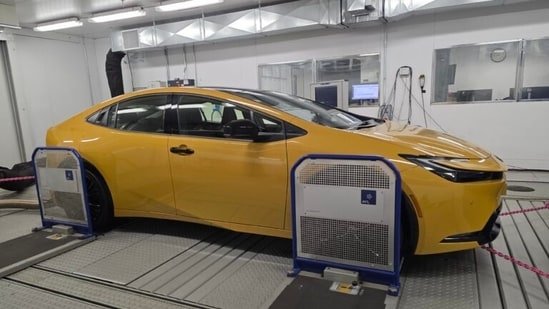
AAA took three hybrid cars and three electric vehicles and placed them in a laboratory test cell that included a dyno. This was quite like a running treadmill in a temperature -controlled room. Then they set the cars’ air conditioning and heating systems to a comfortable 22.2 degree celcius. Meanwhile, the test cell’s temperature was varied. There were three temperature values, namely -6.7 degree celcius signifying a cold winter, 23.9 degree celcius signifying average temperature, and 35 degree celcius signifying a hot summer day. And the cars were driven.
AAA took the baseline as 23.9 degrees celsius, and found that at 35 degree celcius, the electric vehicles lost an average of 8.5% of their driving range, corresponding to a 10.4% efficiency reduction. Hybrids performed even worse in heat, recording a a 12% decline in fuel efficiency. This means the cost per kilometre for the owner of a hybrid car would take a mild hit.
The test also revealed that at -6.7 degree celcius, the electric vehicles registered a whopping 35.6% efficiency drop, resulting in an average range reduction of 39%. In the cold weather conditions, the hybrids also took a noticeable hit, with a 22.8% drop in fuel efficiency.
Takeaway from the test
The bottom line of the test conducted by AAA is that if you live in an area where winters and summers are mild, and the temperatures generally hover around 23.8, you don’t need to worry too much about the range of your EV or the fuel economy of your hybrid car. If you live in a place where summers are really hot, consider buying an electric car that offers some extra range, which ensures you get to charge it before the battery level drops below 20%. If you live in a place where the winters are harsh, make sure to evaluate your options judiciously.


