



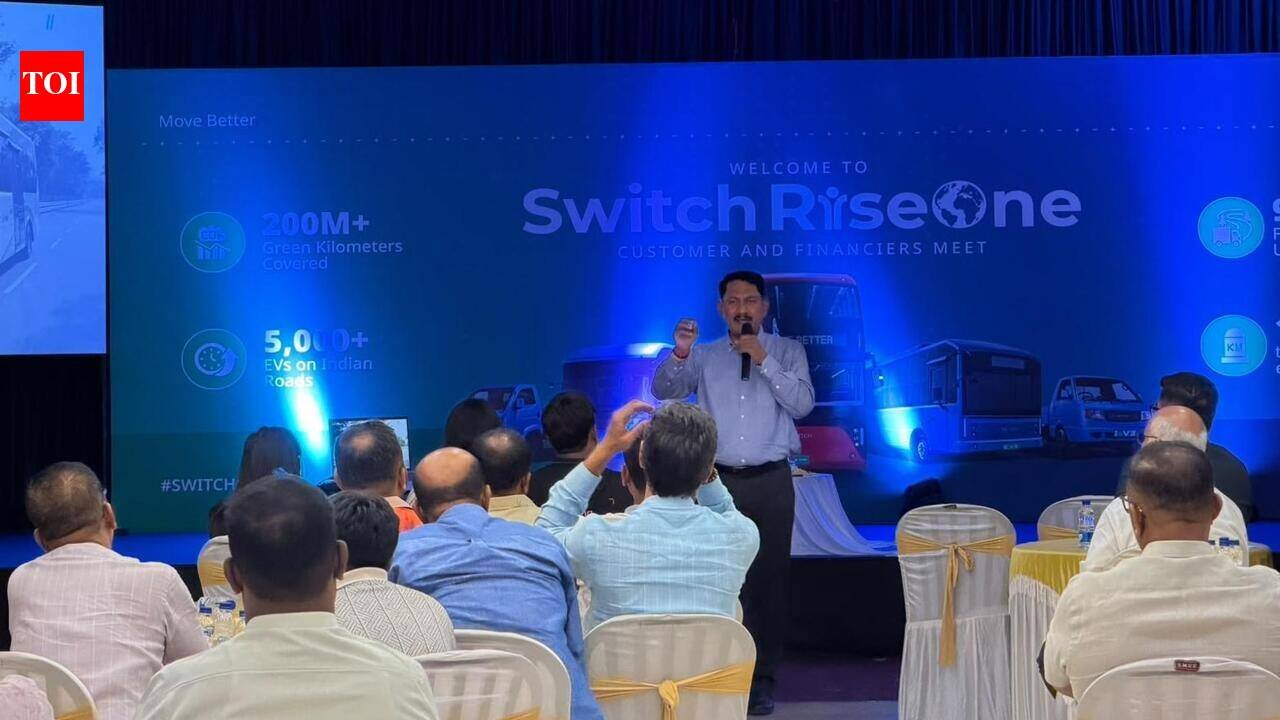
Mangaluru: Private bus operators from Dakshina Kannada, Udupi and neighbouring districts have expressed interest in adopting electric buses through a lease model rather than outright buy during a meeting titled ‘Switch Kar’ with Switch Mobility in Udupi Friday.Rajavarma Ballal, president, Canara Bus Owners Association, said: “Many operators have expressed interest, and after we get stage carriage rates and charging stations are provided, we can see if we can work out as per the lease scheme they have provided. A decision will be made after operators make a discussion.”
We may see around five e-buses operating in the Mangaluru-Udupi-Kundapur sector in the coming monthsWe may see around five e-buses operating in the Mangaluru-Udupi-Kundapur sector in the coming months, says Sadanand Chatra, vice-president, Canara Bus Owners Association
Sadanand Chatra, vice-president, Canara Bus Owners Association, told TOI that several operators in the region have strongly expressed interest.“We may see around five e-buses operating in the Mangaluru-Udupi-Kundapur sector in the coming months,” he said, adding that discussions are still at a preliminary stage.Operators are mainly interested in a per-kilometre lease model, similar to one adopted by BMTC in Bengaluru, he said. Many pointed out that while a diesel bus typically costs around Rs 50-70 lakh, an electric bus can cost upwards of Rs 80 lakh or more, making outright purchase risky.Chatra said charging infrastructure is also critical. There are space constraints in bus stands and municipal areas, but if govt supports this, it can be done.Officials from Switch Mobility said the company is working on electric buses tailored for coastal routes, including non-AC models with double doors similar to existing diesel buses.An official said a single charge can cover up to 350km, while intermediate charging can enable an additional 100-150km after a 20-30 minute charge.The company is also planning to establish charging infrastructure within bus stands to minimise disruptions to operations. According to officials, operational costs could significantly reduce, with per-kilometre expenses dropping from around Rs 26 for diesel buses to approximately Rs 8 for electric buses, offering better margins for operators.The charging infrastructure will be set up by the company, with places to be identified and allotted by either the association or municipality, the official said.Around 150 operators from Dakshina Kannada, Udupi, Shivamogga, Chikkamagaluru, Madikeri and parts of north Kerala attended the event.


