






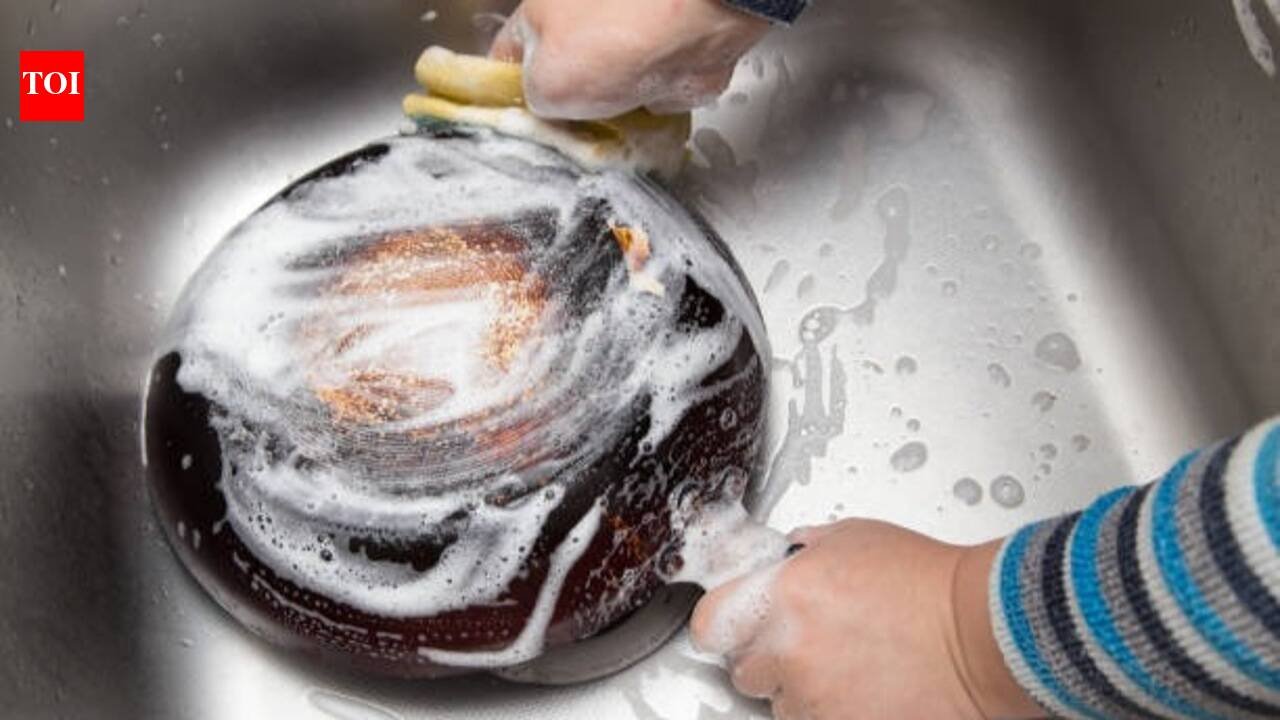
Stubborn burnt food stuck to the bottom of a pan is one of those small kitchen frustrations almost everyone’s dealt with, no matter how careful you try to be at the stove. Regular dish soap barely makes a dent, and most people end up soaking the pan overnight, hoping the mess will somehow lift off on its own by morning. A combination of salt, vinegar and baking soda, three things already sitting in most kitchens, can genuinely clear burnt-on grime in minutes rather than hours. Here’s how it actually works, and how to use it properly.
Why this combination actually works
Salt acts as a mild abrasive, helping physically scrub away stuck food without scratching most pan surfaces the way steel wool can. Baking soda is mildly alkaline and breaks down grease and loosens burnt residue effectively, while vinegar’s acidity helps dissolve mineral buildup and lift stains that baking soda alone might struggle with. Used together, especially with a bit of heat involved, the three create a genuinely effective combination against even stubborn, cooked-on mess.
The basic method
Start by sprinkling a generous layer of baking soda directly over the burnt area, then add a splash of water, just enough to form a loose paste rather than a runny liquid. Pour in a cup or so of white vinegar and turn the stove on to a gentle simmer, letting the fizzing reaction work while the heat helps loosen the burnt layer underneath. After a few minutes of bubbling, turn off the heat, sprinkle in some coarse salt, and scrub with a sponge or scouring pad. The salt adds just enough grit to physically lift what’s left without damaging the pan.
For really stubborn, deeply burnt spots
If the burn is particularly bad, skip straight to a thick baking soda paste, roughly three parts baking soda to one part water, and spread it directly over the worst areas. Let it sit for 15 to 20 minutes before turning the heat on and adding the vinegar, since that extra sitting time gives the baking soda more of a chance to work into the stuck residue before scrubbing begins. For truly stubborn cases, letting the pan sit overnight with just the baking soda paste on it, then doing the vinegar and salt step fresh in the morning, usually finishes the job completely.
A few things worth keeping in mind
This method works well on stainless steel and most standard metal pans, but it’s worth being a little more careful with non-stick coatings, since vinegar’s acidity and harsh scrubbing can wear down the coating over repeated use. Always let a very hot pan cool slightly before adding vinegar directly to it, since pouring cold liquid onto extremely hot metal can occasionally cause warping. Rinsing thoroughly afterward matters more than people expect too, since any leftover baking soda residue can leave a slightly gritty film if it isn’t properly washed away.Disclaimer:This article is intended for general informational and household purposes only. Results may vary depending on pan material and the severity of the burn. Always check manufacturer care instructions before using vinegar or abrasive cleaning methods on non-stick or coated cookware.


