



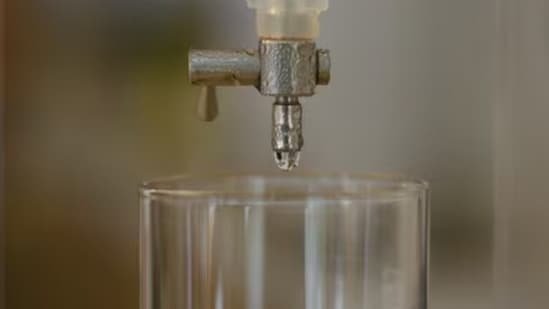
India has made real progress in expanding access to drinking water over the past decade. Millions of households now have tap connections, something that once felt like an ambitious goal. But access isn’t the same as safety. And that’s where the gap still lies.
Water reaching a household is only half the job. Whether it is safe to drink, every single day, is what truly matters. That is where the next phase of India’s public health journey needs to focus.
Chlorination remains one of the most reliable ways to get there.
It is not new, and that is precisely its strength. Among the many water treatment options available today, chlorination continues to stand out because it works at scale, at relatively low cost, and with consistent results. When done properly, it can significantly reduce the burden of waterborne diseases, especially in rural and underserved areas.
What makes it particularly effective is something often overlooked: it doesn’t just treat water at the source, it keeps working as water moves through the system. That residual protection becomes critical in places where infrastructure is uneven or prone to contamination.
But technology alone doesn’t solve the problem. The harder part is making chlorination work reliably on the ground. India’s rural water systems are quite diverse. What works in one district may not work in another. Terrain, water sources, infrastructure, all of it varies.
That’s why flexibility matters. In some places, liquid dosing systems make sense. In others, electro-chlorinators or tablet-based solutions are more practical. The challenge isn’t choosing one “best” solution, it’s choosing the right one for the local context, and making sure it keeps working over-time.
The less obvious components functioning supply chains, skilled operators, and routine chlorine level monitoring are essential to sustainable water safety. Without these, even well-designed systems begin to fail quietly.
There is also a human side to this that cannot be ignored. Infrastructure, by itself, does not change outcomes. People do. If communities do not trust treated water, or do not understand why it matters, adoption remains inconsistent.
But when communities are informed and involved when they see the value and take ownership the impact is far more durable.
India’s water story is now at an inflection point. The focus can no longer remain only on building infrastructure. The next step is making sure that what has been built actually delivers safe water, consistently. Not occasionally. Not in parts. But every single day.
This entails treating chlorination as a fundamental component of public water systems rather than as an add-on.
Additionally, it entails enhancing accountability by making sure that systems are not merely set up and abandoned but are continuously maintained, observed, and enhanced.
Safe water is not a one-time achievement. It is something that has to be delivered, checked, and sustained—again and again.
Chlorination, in its simplicity and effectiveness, gives us a practical way to do that. The opportunity now is not to reinvent solutions, but to implement them well—and at scale.
This article is authored by Ankur Garg, executive vice president & country director, India (EAII Advisors), Evidence Action.


