



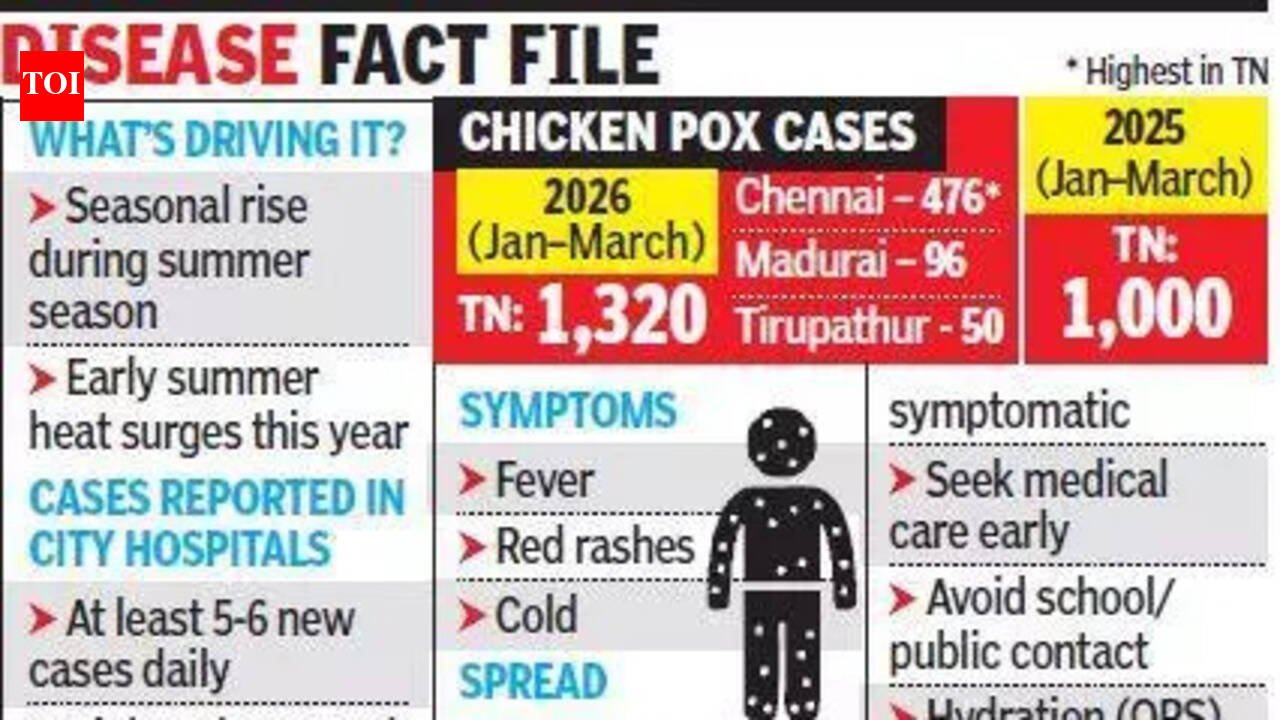
Chennai: Fever and rashes are becoming increasingly common across Chennai this summer, as the city has recorded the highest number of chickenpox cases in Tamil Nadu with 476 infections so far this year. While doctors say the rise follows a seasonal trend, they caution that the early surge and rising temperatures are creating ideal conditions for the virus to spread. They have advised people to stay alert, isolate symptomatic patients, and not ignore early warning signs.Tamil Nadu has reported 1,320 chickenpox cases from Jan to March this year, with Chennai recording the highest at 476 cases, followed by Madurai and Tirupathur districts with 96 and 50 cases respectively. In comparison, around 1,000 cases were reported during the same period last year. The number of cases is expected to increase further in the coming weeks due to rising temperatures.“It is a seasonal virus and usually occurs with a rise in temperature. In 2025, there was rainfall during summer, so the number of cases was around 1,000. However, this year, we are already witnessing a surge in temperatures. People with symptoms such as fever, cold, or rashes are advised to visit hospitals immediately and isolate themselves,” said Dr M Senthil Kumar, joint director (communicable diseases), directorate of public health.The virus spreads through respiratory droplets, and those affected are advised to isolate, especially immunocompromised individuals, children, and senior citizens. To stay protected, people are urged to remain hydrated by consuming oral rehydration solutions (ORS) and eating water-rich fruits and vegetables to help regulate body temperature.Private hospitals are also witnessing a noticeable increase in the number of cases. Over the past four weeks, outpatient departments reported a steady rise compared to the winter months. While this aligns with seasonal trends, doctors say the intensity is higher this year.“We are seeing about five to six fresh cases a day. The majority are among school-aged children, but we are also observing infections in older teenagers and young adults with no prior history of infection or vaccination. Cases rose earlier this season, likely due to fluctuating temperatures creating favourable conditions for the virus,” said Dr Praveen Kumar, consultant, general medicine, SRM Prime Hospital, Ramapuram.Health experts strongly advise those with fever and rashes to stay home and isolate themselves, as chickenpox is highly contagious. Vaccination is recommended for those who have not been immunised, as it helps prevent complications.


