



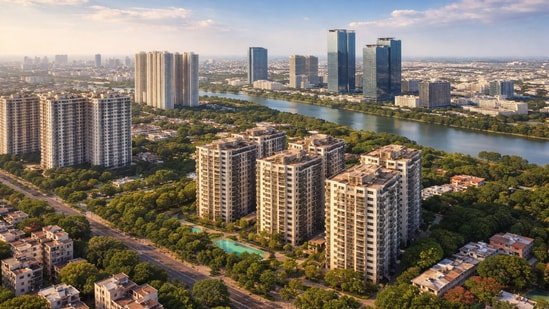
Chennai home sales crossed 4,763 units in Q1 2026, rising 9% year-on-year from 4,357 units, making it the fastest-growing residential market among major cities, according to a report by Knight Frank India.


New launches also saw momentum, increasing 12% YoY to 5,112 units, up from 4,576 units a year ago. Residential prices climbed 6% YoY, indicating sustained demand in the market, the report said.
“On the residential side, the market has recorded healthy growth in both sales and launches, with strong traction in mid and premium segments. This reflects evolving homebuyer preferences and sustained end-user demand,” Joseph Thilak, National Director, Occupier Strategy and Solutions (Hyderabad, Chennai and Kochi), Knight Frank India, said.
Also Read: CREDAI sees South, West Chennai leading housing growth in 2026
Shift toward mid and premium housing
Knight Frank India said that Chennai’s residential market exhibited a clear shift in demand across ticket sizes, with traction moving away from the affordable segment toward mid and premium housing.
The sub- ₹50 lakh category saw a sharp 39% decline, pointing to weakening demand in the affordable segment.
In contrast, the ₹50 lakh– ₹1 crore segment grew 19% YoY. Higher ticket-size homes also gained traction, particularly in the ₹2–5 crore bracket, which surged 52% YoY, the data showed.
In Q1 2026, Chennai’s residential demand was led by the mid-income segment, with the ₹50 lakh– ₹1 crore category accounting for 2,278 units, making it the largest contributor to overall sales. This was followed by the ₹1–2 crore segment, which recorded 1,240 units.
The ₹2–5 crore segment saw 557 units sold. In the higher-end market, the ₹5–10 crore segment registered 74 units, while homes priced above ₹10 crore accounted for 21 units, the data showed.
Housing sales drop 4% across top eight cities
Housing sales across India’s top eight cities moderated by 4% year-on-year in Q1 2026 to 84,827 units, down from 88,361 units in the same period last year, the report said. The dip signals early signs of recalibration amid global uncertainties, including geopolitical tensions such as the US-Iran conflict, following a prolonged period of strong growth.
Sales declined in key markets, including Mumbai (down 7% to 23,185 units), Delhi-NCR (down 11% to 12,734 units), and Pune (down 11% to 12,711 units). In contrast, demand remained resilient in Bengaluru (up 5% to 13,092 units), Hyderabad (up 1% to 9,541 units), and
New supply also declined marginally by 2% to 94,855 units during the quarter. Launch activity slowed across most cities, except Bengaluru, Chennai, and Ahmedabad. NCR recorded the sharpest drop in new launches at 8% YoY, followed by Hyderabad and Kolkata (down 6% each), while Pune and Mumbai saw relatively smaller declines of 5% and 1%, respectively.
Demand remained skewed toward premium housing. Sales of homes priced above ₹1 crore grew 11% YoY, even as the sub- ₹50 lakh and ₹50 lakh– ₹1 crore segments contracted by 23% and 12%, respectively. The ₹1–2 crore segment drove much of this growth, rising 10% YoY and accounting for 29% of total sales. Higher-end categories also saw strong traction, with sales increasing 17% in the ₹2–5 crore segment, 12% in the ₹10–20 crore segment, and a sharp 80% surge in the ₹20–50 crore bracket.


