


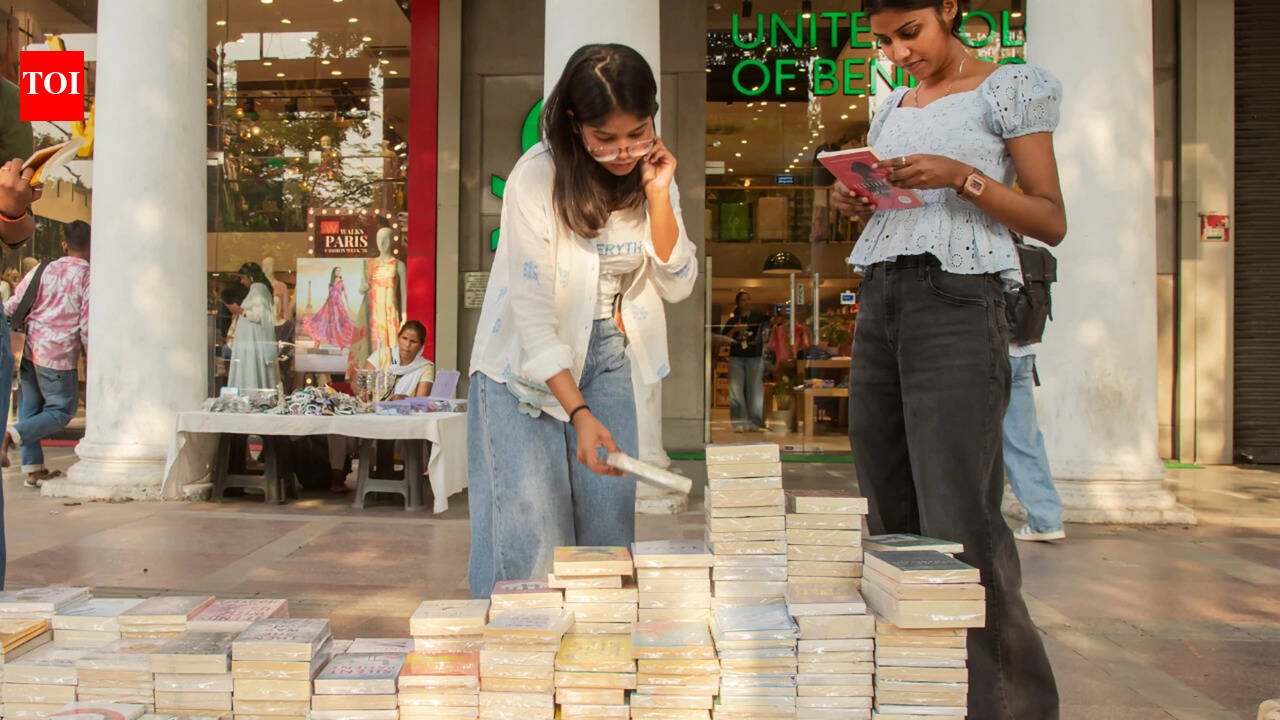
A recent piracy crackdown in Delhi has spotlighted what’s being sold and read on the city’s streets. In March, Penguin Random House, alongside Simon & Schuster and Hay House, worked with Delhi Police to seize over 20,000 books from a Rohini-based racket, uncovering an illegal printing press and distribution network. Yet in markets like Connaught Place, pirated books – from ₹100 classics to discounted box sets – remain easily available, with buyers often overlooking authenticity for lower prices.‘Bestselling authors with strong market demand are most vulnerable’Manoj Satti, SVP, Product, Sales & Marketing, Penguin Random House India, says the recent seizure of pirated books revealed how piracy networks target commercially successful, fast-moving titles across genres such as self-help, business, literary fiction and contemporary fiction.He notes, “The affected works were from leading international and Indian publishers. Bestselling authors with strong market demand are most vulnerable, as piracy is driven by commercial viability rather than author or genre preference.”
Self-help, memoirs and business remain the most pirated genres
We are monitoring copies to tackle piracy: PublishersSpeaking about efforts to tackle book piracy, Riti Jagoorie, Managing Director, Hachette India, says, “We have a dedicated page to help readers identify legitimate editions. All genuine reprints carry a four-level hologram on the back cover. We’ve also listed authorised sellers on e-commerce platforms, as we receive a surprising number of complaints from readers who mistake counterfeit copies for printing or binding errors. Beyond that, our team monitors e-commerce platforms daily, flags pirated listings for removal, and works closely with legal teams on regular antipiracy raids.”‘Piracy networks operate more actively in Delhi’Advocate Jyoti Taneja, legal advisor to Penguin Random House on its anti-piracy enforcement initiatives, says, “Delhi, being a major commercial and distribution hub, sees a higher volume of book trade, so piracy networks tend to operate more actively here. Similar patterns exist in other major cities too. What is important is the presence of robust enforcement mechanisms to curb such activities.”
We say it jokingly, if your brand isn’t being pirated, it doesn’t count. CP remains one of the few markets where vendors can sell relatively openly, shares Ajay Jain
‘Author-led awareness can help highlight piracy’s impact’Author Srishti Chaudhary, who recently spotted pirated copies of her books in Connaught Place, says, “Everything seems to suggest that the true marker of success in Indian publishing is when your books start getting pirated. But beyond this bit of validation, I wantto build a sustainable career in writing.” Her book Once Upon A Curfew, features an illustration of Connaught Place on its cover. “Seeing pirated copies of it being sold on CP sidewalks in 2026 feels oddly meta and funny,” says Chaudhary, who often buys pirated copies of her books and posts informational videos online. Meanwhile, Manoj insists that author-led awareness can make a real difference in helping readers understand the impact of piracy. “When authors speak up about how piracy directly affects their royalties and livelihoods, it helps shift the narrative from piracy being seen as a ‘harmless alternative’ to something with real consequences for the people creating the work.”‘Price is the only driving factor for people buying pirated books’While publishers tighten enforcement, affordability still drives demand. In Connaught Place, bestsellers by Khaled Hosseini and Dan Brown, alongside Harry Potter titles, are sold at hard-to-ignore prices. Price continues to be the biggest driver behind the demand for pirated books, say vendors. “We’ve heard customers in our store and at the World Book Fair discuss, ‘Let’s just pick up pirated copies, they’re cheaper’. Few Indian authors sell at the scale needed to drive widespread piracy. You have writers like Arundhati Roy and Amish Tripathi, whose books get pirated, but international authors are more widely copied because they sell at much larger volumes. The only driving factor for people buying pirated books is the price,” says Ajay Jain, founder of bookstore chain Kunzum Books.
Piracy trends indicate that bestselling authors with strong market demand are most vulnerable, as piracy is driven by commercial viability rather than author or genre preferenceManoj Satti, SVP, Product, Sales & Marketing, at a publishing house
Hindustan mein har aadmi ₹500 ki kitaab nahin padh sakta: VendorsAnil Jain, who has been selling books in G Block for the last 37 years, says cost is the deciding factor for most buyers. He states, “Hindustan ek gareeb desh hai. Yahan har aadmi ₹500 ki kitaab khareed ke nahin padh sakta.”
Pirated books remain easily available, with buyers often overlooking authenticity for lower prices
The Daryaganj connectionWhile second-hand books are largely sourced from Daryaganj, pirated editions – mostly bestselling titles – arrive through informal importers. The supply chain, however, remains hazy. At Central Market, Lajpat Nagar, one vendor said his stock came from Akshardham before an older seller corrected him: “Laxmi Nagar.” Across markets, the details vary, but the Daryaganj link persists. Near B Block in Connaught Place, a vendor selling “originals at pirated prices” refused photographs while pointing to non-fiction and self-help as reliable copies. Among them, The Satanic Verses by Salman Rushdie – recently back in circulation after a 36-year ban in India – has emerged as an unlikely bestseller on the streets.
