



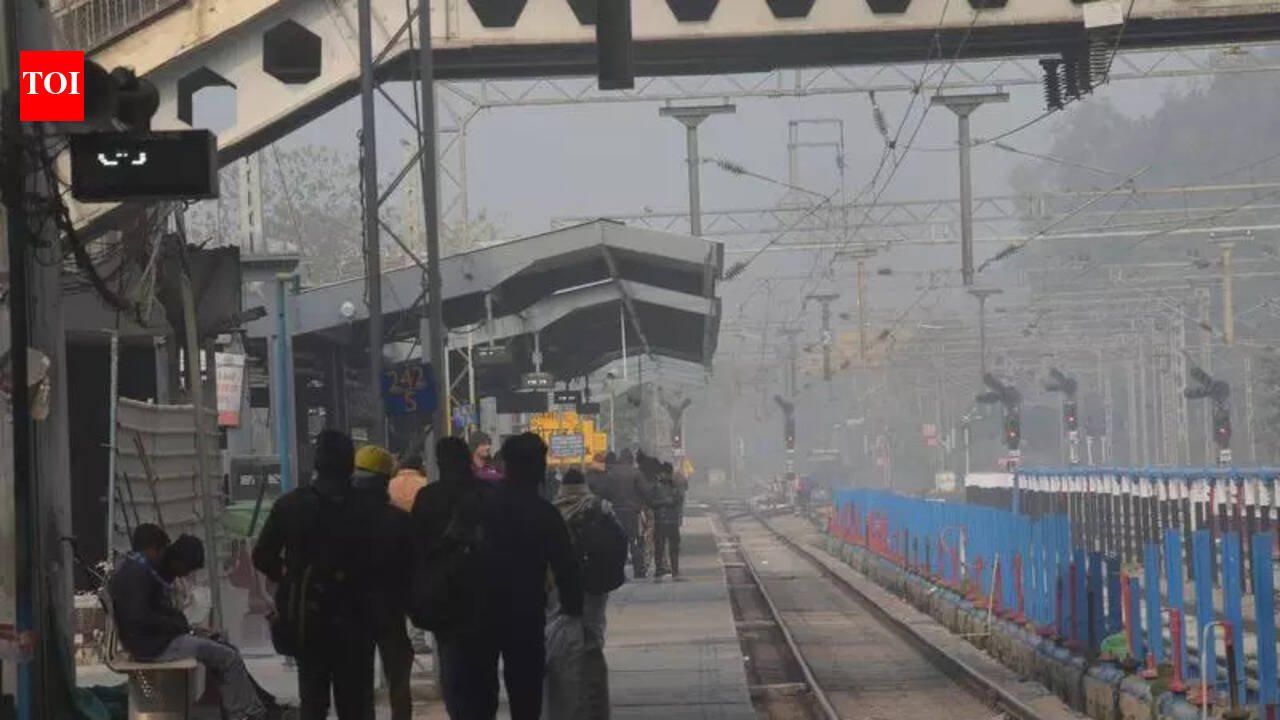
Chandigarh: The Union govt assured that the Chandigarh–Delhi railway route is safe for train operations and is regularly inspected and maintained under a robust safety and monitoring system of Indian Railways.Responding to concerns raised in Parliament by MP Manish Tewari regarding the condition of tracks on the Chandigarh–Delhi corridor, railway minister Ashwini Vaishnaw said passenger safety remained the top priority for Indian Railways. He stated that the route is inspected and maintained as per the provisions of the Permanent Way Manual and is safe for trains to run at the permitted speed.Tewari asked whether the govt was aware of concerns regarding unsafe track conditions on certain stretches of the route, particularly reports of excessive bouncing, swaying and instability in trains. He also sought details on whether such conditions were reported in premium trains such as the Delhi–Kalka Shatabdi Express and whether any complaints regarding these issues were received over the past year.In his reply, the minister said railway tracks across the network, including the Chandigarh–Delhi corridor, are regularly inspected by designated officials as per a fixed schedule. These inspections include daily patrolling, on-foot inspections, trolley inspections and footplate or rear-window inspections carried out by railway officials.To objectively assess the condition of tracks, Indian Railways conducts runs of track recording cars (TRC) and oscillation monitoring system (OMS) at scheduled intervals. These systems monitor track geometry and stability across the entire railway network. Based on the findings, corrective maintenance is carried out in a time-bound manner to ensure safe train operations.The minister also highlighted several technological measures being adopted to strengthen railway safety. All locomotives are equipped with Vigilance Control Devices (VCD), which help ensure that loco pilots remain alert while operating trains and trigger warnings if the pilot fails to respond.In electrified sections, retro-reflective sigma boards are installed on masts located 2 overhead equipment (OHE) poles before railway signals to alert train crews about upcoming signals, especially during low-visibility conditions such as fog.To assist loco pilots in fog-prone regions, GPS-based Fog Safety Devices (FSD) are also introduced. These devices provide real-time information about the distance of approaching landmarks such as signals and level-crossing gates, improving operational awareness during poor visibility. Railways also conduct regular Ultrasonic Flaw Detection (USFD) testing of rails to detect internal defects that may not be visible on the surface. Defective rails identified through these tests are replaced in time to prevent accidents.Track stability and geometry are further monitored through advanced technologies such as TRC and OMS, which help detect irregularities in track alignment and level so that timely maintenance is carried out.The minister added that Indian Railways also developed Kavach, an indigenous Automatic Train Protection (ATP) system designed to enhance operational safety. The system meets the highest safety certification standard (SIL-4) and assists loco pilots in maintaining prescribed speed limits by automatically applying brakes if the pilot fails to take action.


