






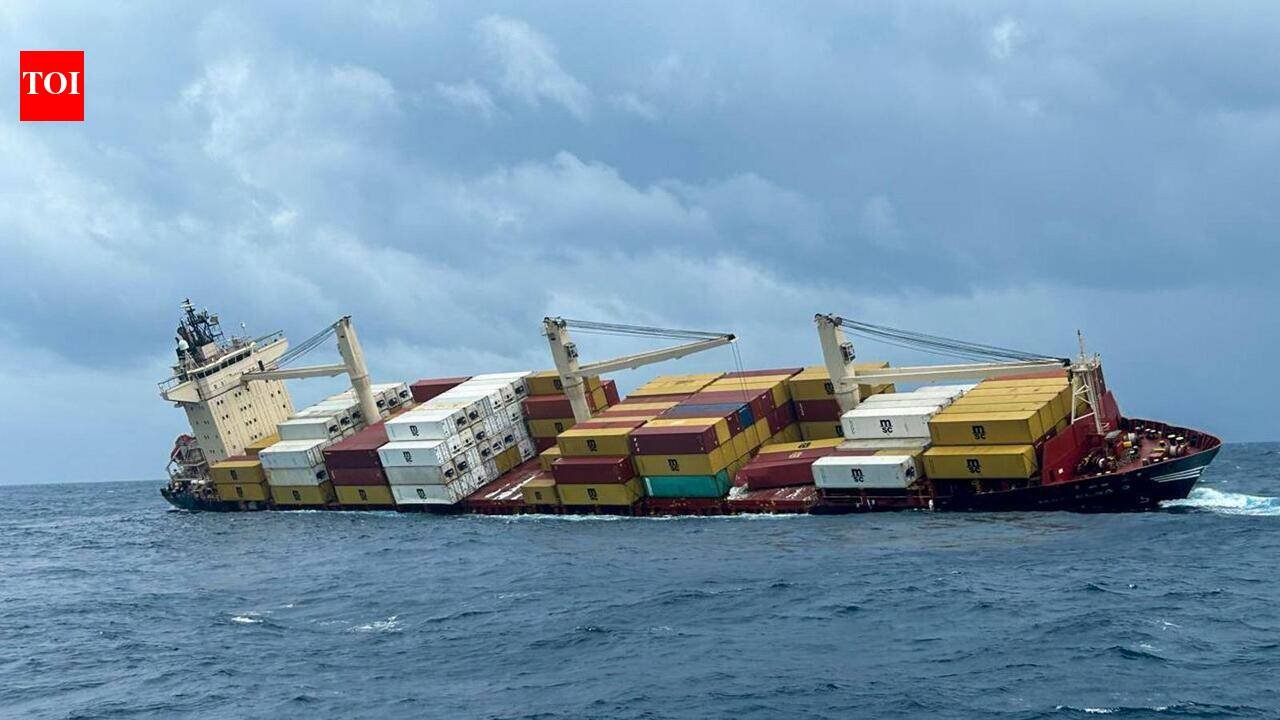
Thiruvananthapuram: Union govt doesn’t seem to have a long-term strategy to assess the impact of shipping-related accidents or pollution on the marine ecosystem off the state’s coast, especially after two ship accidents in 2025.There are concerns about the long-term impact of MSC Elsa 3’s sinking off Kochi and a fire accident on a Singapore-flagged ship MV Wan Hai 503 off Beypore.With an MSC subsidiary set to acquire a stake in Vizhinjam International Seaport, shipping traffic is expected to increase, potentially resulting in greater shipping-related pollution and other impacts on the marine environment.In a written reply to a question raised by Hibi Eden in the Lok Sabha, Union fisheries minister Rajiv Ranjan Singh mentioned only the deployment of artificial reefs to rejuvenate fish ecosystems as a long-term strategy for marine ecosystem conservation and restoration.The reply stated, “Test results indicated that the fish samples were in good condition, with no objectionable smell or flavour, while water parameters such as pH, salinity and conductivity remained within normal ranges. Preliminary analyses found no traces of oil or evidence of hazardous chemicals and confirmed that fish samples from Ernakulam, Alappuzha, Kollam and other affected coastal areas were safe for consumption. No visible oil slicks or tar balls were detected. However, large quantities of plastic nurdles, cotton bales and container debris were observed along the coastline, particularly in Kollam and Thiruvananthapuram. No immediate evidence of large-scale chemical contamination in nearshore waters was found during the monitoring period.”Eden said, “This shouldn’t be viewed merely as an issue of compensation, but as one that affects the flora and fauna, as many fisherfolk along our coastal belt depend on the ecosystem for their livelihoods.”He said there was a need for clarity on such accidents, as govt was emphasising the blue economy and plans to transport 30% of cargo by waterways.Robert Panipilla of Friends of Marine Life, an NGO, said there was a need to study the long-term impact of such accidents and shipping-related pollution along the coast. “Plastic nurdles continue to wash ashore, and fisherfolk recently recovered two sacks of nurdles from the high seas,” he said.“Preventing such accidents is crucial. Hazardous containers shouldn’t be loaded without insurance and must be properly secured. If they fall overboard and their contents are scattered, recovery is virtually impossible,” he said.An artificial reef is a fish-aggregating device that has been installed with central and state funding since the 1990s and has no connection with the impact of container ship Elsa’s sinking, he added.


