


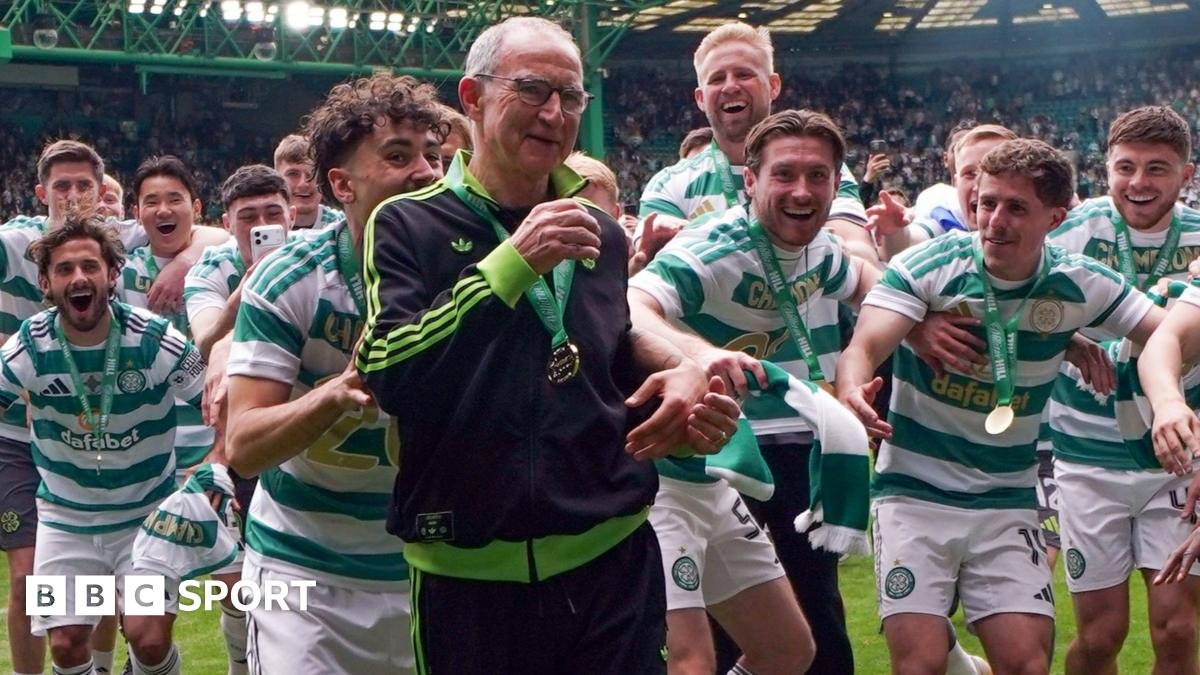
At the start of the season, with Rodgers seemingly imperious, the notion that the septuagenarian was going to return to Parkhead not just once but twice, and steer home a troubled club, would have been outlandish.
Truth, sometimes, is stranger than fiction.
And Celtic’s truth has been wild. O’Neill has ensured a happy ending, but so much of what went before was angry and divisive. Hostility reigned supreme until an uneasy truce towards the end of the season.
It all kicked off with that Champions League exit at the hands of Kairat Almaty. Two games, zero goals and a transfer window that enraged the supporters. Celtic won four games out of 12 in Europe.
The summer arrivals: Kieran Tierney, Isaac English, Ross Doohan, Benjamin Nygren, Callum Osmand, Hayato Inamura, Shin Yamada, Jahmai Simpson-Pusey, Michel-Ange Balikwisha, Marcelo Saracchi, Sebastien Tounekti and Kelechi Iheanacho.
Only five of those made it into double figures in league appearances. Others rarely, if ever, featured.
Rodgers said a few of them were “club signings”, the inference being that they weren’t his choices. His rhetoric caused ructions behind the scenes. It would spill out in public soon enough.
Rodgers, agitated and agitating about the business done in the market, infamously likened his squad to a Honda Civic rather than the Ferrari he wanted to drive. In October, Celtic lost 2-0 to Dundee and 3-1 to Hearts and he resigned.
On his way out he received a verbal blast, the like of which has never been seen before in Scottish football. Dermot Desmond, the major shareholder, issued a statement that filleted Rodgers in the most brutal way.
The former manager had been “divisive, misleading, and self-serving”, said Desmond. He had “contributed to a toxic atmosphere and fuelled hostility towards members of the executive team and the board. Some of the abuse directed at them, and at their families, has been entirely unwarranted and unacceptable”.
