



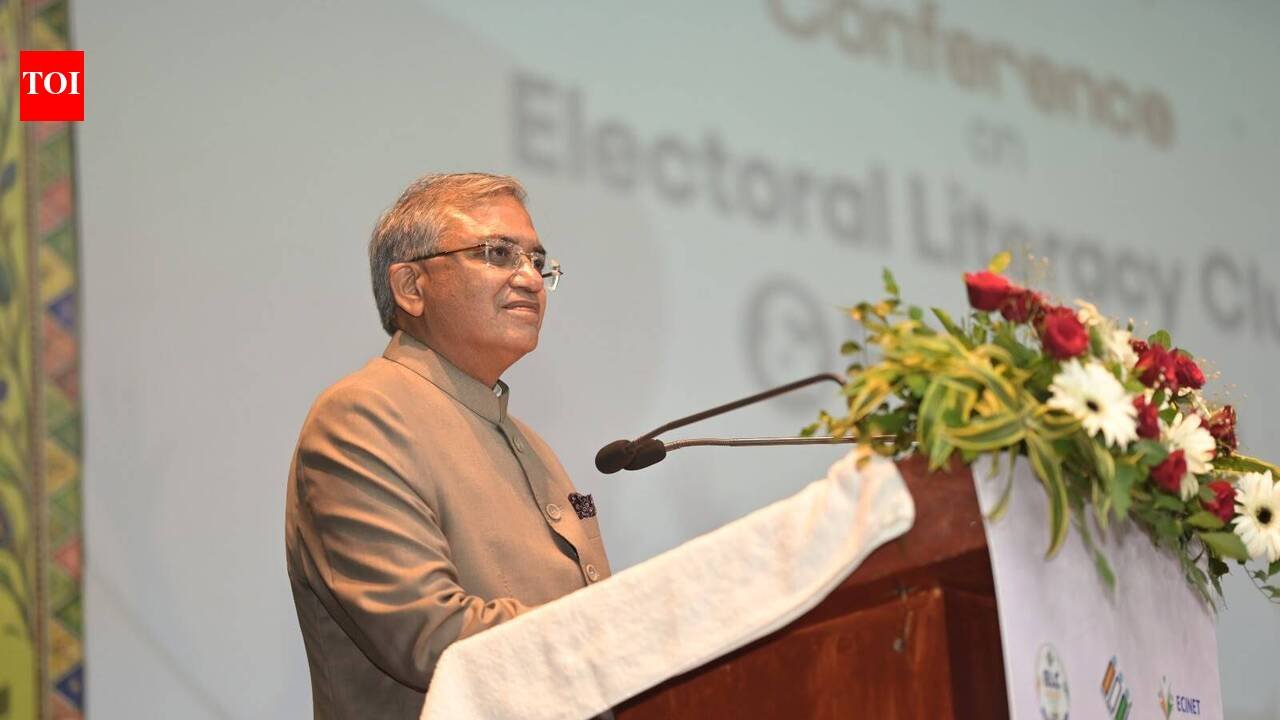
Patna: Chief Election Commissioner (CEC) Gyanesh Kumar on Monday interacted with students and young voters at Gyan Bhavan and launched Electoral Literacy Clubs 2.0 (ELC 2.0) in Bihar, an initiative aimed at promoting electoral awareness and informed participation in democracy.The interaction was held during a conference on Electoral Literacy Clubs and ECINet, where Kumar inaugurated an ECI workshop and emphasised the role of educational institutions in strengthening public trust in elections. He said young voters should be familiar with democratic values, voter registration, polling and counting procedures, and the functioning of the Election Commission.Describing students as the future of Bihar and India, Kumar highlighted the state’s rich heritage, citing Sitamarhi, Mithila art, Vaishali and Nalanda. He noted that India, with nearly 95 crore electors, is the world’s largest democracy.The CEC also cautioned against misinformation on social media and stressed that elections in India are conducted strictly in accordance with the Constitution, electoral laws and ECI guidelines. He said the electoral process remains transparent and is subject to scrutiny by political parties, candidates and their authorised representatives at every stage.Chief secretary Pratyaya Amrit said Bihar was the first state to successfully implement the SIR initiative under the guidance of the CEC and expressed confidence that ELC 2.0 would be implemented effectively. He noted that nearly 58% of Bihar’s population is below the age of 25 and stressed the importance of encouraging youth participation in the democratic process.The programme generated enthusiastic participation from students, who interacted with the CEC and sought information on various aspects of the electoral process and safeguards ensuring transparency.Earlier in the day, Kumar visited Nalanda and interacted with around 500 booth level officers (BLOs) from Gaya, Nawada, Jehanabad, Sheikhpura and Nalanda districts at Nalanda University’s Sushma Swaraj Auditorium. He discussed their role in elections and the use of technology in improving electoral processes.


