



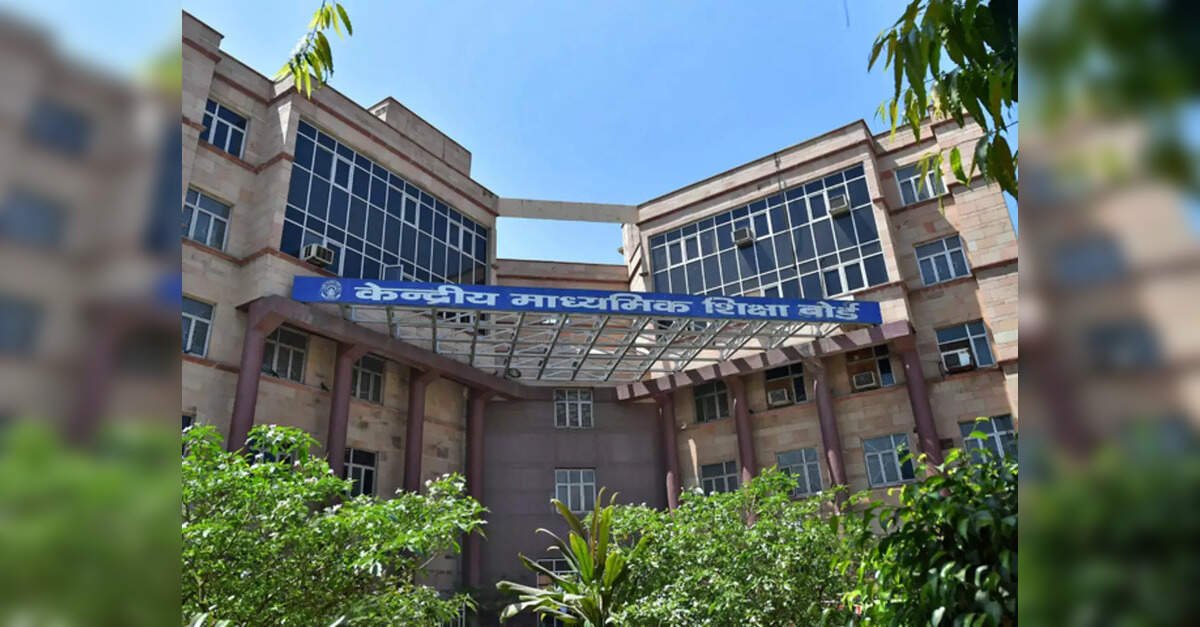
Mangaluru: CBSE’s proposed curriculum overhaul for the 2026-27 academic year seeks to promote flexibility, competency-based learning, multidisciplinary education, and continuous assessment.
While the move has been welcomed by educators, its implementation is expected to pose significant challenges for students, parents, teachers, and school managements.
One of the key features of the new framework is the introduction of a two-level system in science and mathematics, offering standard and advanced options. The change is expected to help students choose the depth of study according to their competency level and career plans — whether in competitive fields such as engineering and medicine or in streams where higher-level mathematics may not be essential.
Mathew C Ninan, director, Little Rock Indian School, Brahmavar, Udupi, described the move to offer science and mathematics at two levels as a positive step. He said it would allow students to make more informed academic choices.
At the same time, he raised concerns over the language policy, particularly if English is treated as a foreign language while two Indian languages become compulsory. He warned that reducing the importance of English could affect students’ employability and global competitiveness.
The three-language formula may increase the academic burden on students and create confusion among parents, according to school heads. Rev Fr Rohan D’Almeida, principal at St Aloysius Gonzaga School, said the overall reform would benefit students in the long run, but the transition would be difficult for all stakeholders.
He noted that students would now study three languages instead of two, while also having to choose between basic and advanced mathematics from Class 9 onwards. Such differentiation may help students who do not intend to pursue careers involving mathematics, but introducing these changes at Grade 9 could be challenging because such transitions are usually more effective when started at lower grades, he said.
With the curriculum placing greater emphasis on skills, technology and applied learning, educators will need urgent upskilling to move beyond rote-based teaching methods.
Fr D’Almeida said many schools still lack teachers trained in areas such as artificial intelligence and robotics.
School managements wiill have to invest on faculty development and infrastructure upgrades. An immediate challenge is helping parents understand the changes. Standard mathematics is currently perceived as tougher than advanced mathematics, and the board has been provided with feedback.


