



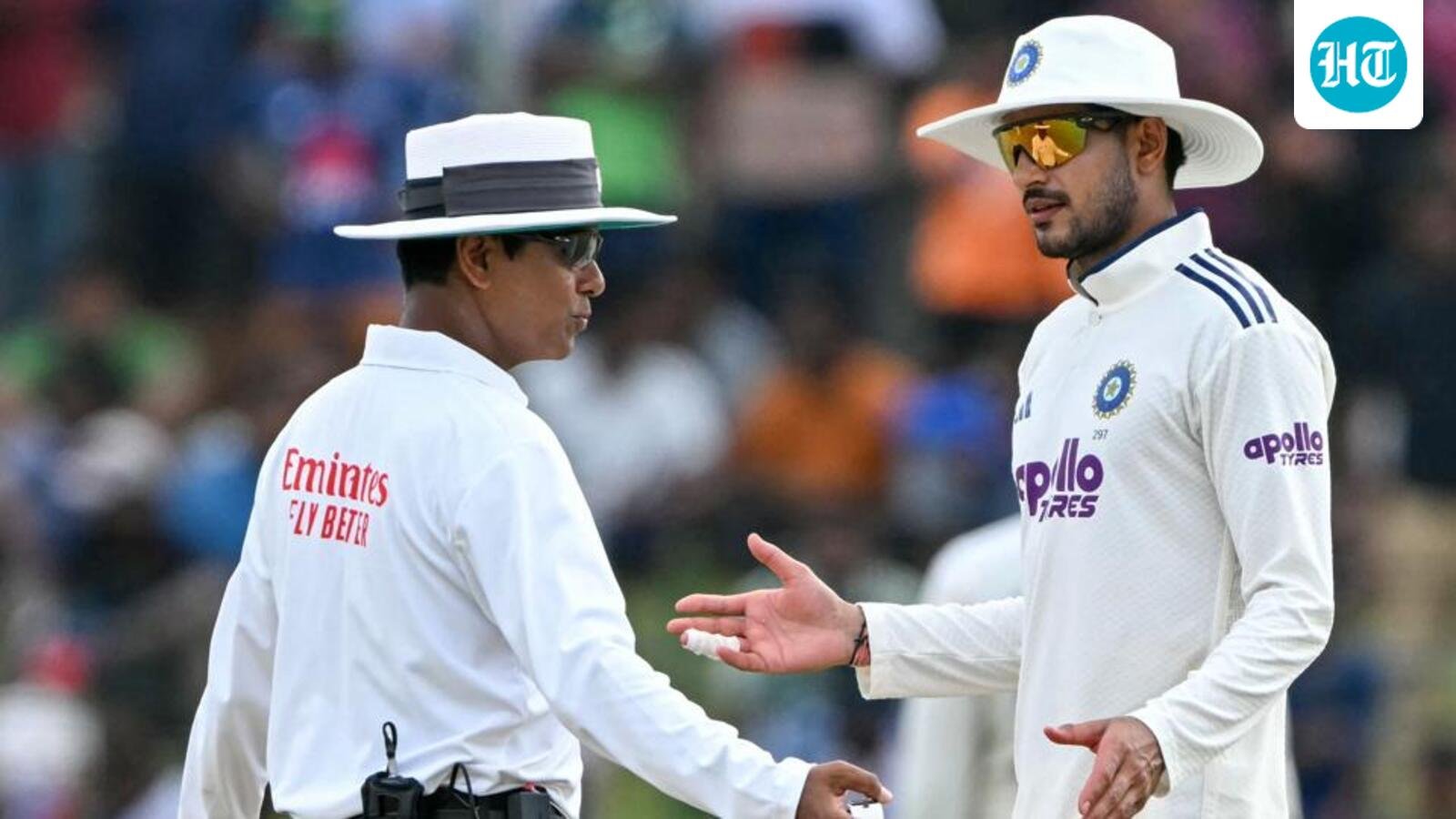
Mumbai: After their World Test Championship (WTC) final hopes were further dented by the draw in Colombo, Indian captain Shubman Gill might feel the burden that often accompanies introspection.
He wouldn’t show it though.
“Honestly, nothing,” he answered when asked at the post-match presentation if he could have done anything differently on the final day’s play.
Privately, he might have asked himself, ‘what if I had not declared? What if it had not rained to give Sri Lanka another night’s sleep on Day 4? What if Mohammed Siraj was the workhorse he has always been and not short of gas, as he appeared to be?’
Before the first ball was bowled in the second Test, Indian head coach Gautam Gambhir was asked another ‘what if’. Of their possible response, if the Sinhalese Sports Club pitch did not deteriorate. His prognosis was that India’s bowling strength of five specialist bowlers would do the job.
They didn’t prove to be enough. Far from it. It wasn’t just Sri Lanka’s young batting star Sonal Dinusha; the lower order resisted India for three sessions on the final day. The rain the visitors feared, which influenced their declaration call, never showed up.
“We were anticipating (rain), wanted to take that chance. Had we not taken it and it had rained, you would have asked why no follow-on,” Gill told reporters.
To defend his bowlers, Gill said the pitch slowed down considerably taking bowled and lbw out of play. “I think the wicket got slower. It was not like the ball was not spinning. But the wickets (stumps) were not in play. As a batsman, if you know that the bowlers do not have two modes of dismissal in play, then it becomes easier to bat,”
No answers to Dinusha
India would still have hoped their bowling unit responded better. Dinusha had already given them a glimpse of how good he was sweeping during his innings of 100 and 84 in the first Test. India’s spin trio – Ravindra Jadeja, Manav Suthar and Saransh Jain – couldn’t force him off his plans in both innings of the Colombo Test match. Sweeps became his default scoring option on the slow pitch as he showed his entire range of broom-work – conventional and reverse.
Gill admitted that their home-work on the prolific left-hander’s sweeps, of keeping a boundary cover didn’t do the job because his defense was “solid” and he played the match situation. “We thought we could get him with fast bowling, but there was no pace in the wicket,” Gill said.
Below-par Siraj
The one fast bowler who bent his back right through the series and was fairly successful was Prasidh Krishna. But the experienced Siraj was short of a gallop. Gill’s explanation was concerning. “Siraj wasn’t injured, but he was coming back after a couple of months, having played the last Test in June,” he said. “Sometimes, it takes time to come back in rhythm. Sometimes you find it, as you play.”
Gill’s captaincy decisions will continue to be closely scrutinised as he leads more in sub-continental conditions. In Sri Lanka, he gave the spinners unusually short spells.
“The idea was to rotate them consistently. Especially on a wicket like this, when a batsman gets set, it’s very difficult to get him out, if he is not trying to play shots,” he opined. “So our thinking is you can keep changing the bowlers. Once the batsman is set, if he keeps playing different kinds of bowlers, it gives us more chance to take wickets.”


