







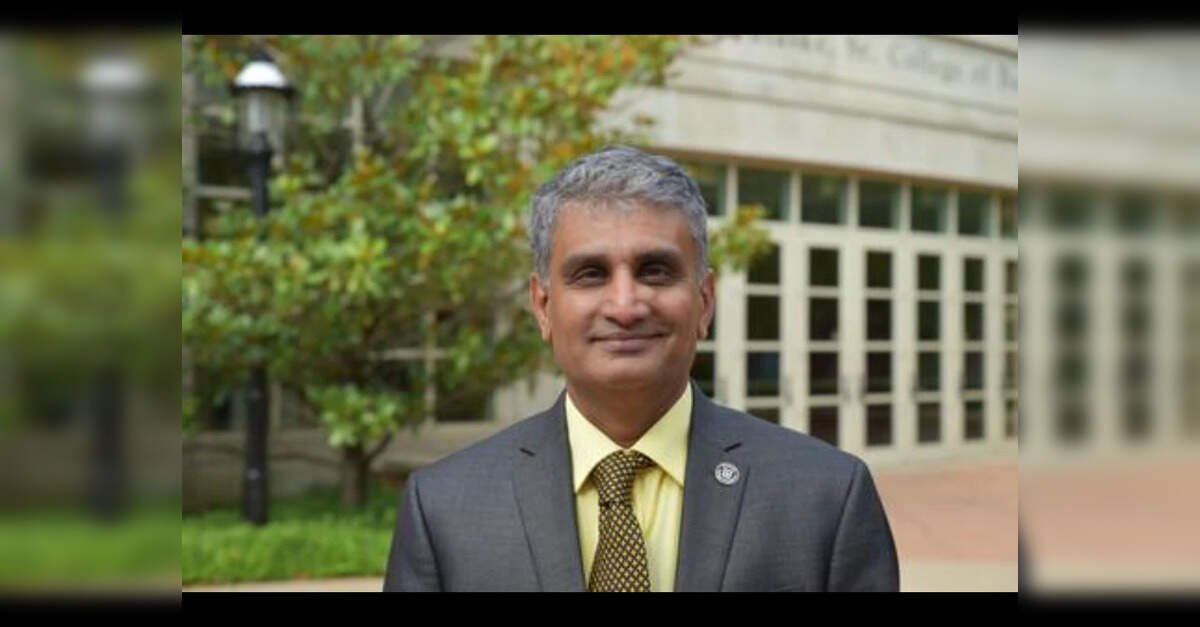
By Balaji Rajagopalan
The Joint Parliamentary Committee examining the Viksit Bharat Shiksha Adhishthan (VBSA) Bill has now deferred adoption of its report twice this month. The delay is being read as political management. It is better read as an unanswered question: what, exactly, is a regulator supposed to produce?
A single regulator cannot manufacture excellence
The Bill’s ambition is not in doubt. It would dissolve the UGC, AICTE and NCTE and place regulation, accreditation and standard-setting under a single apex commission with three councils — the statutory expression of NEP 2020’s promise of a system that is ‘light but tight’. The case is strong. Three regulators with overlapping writs have given India duplication, slow approvals and a compliance load that consumes time better spent on teaching and research.
Yet the panel’s own draft report flags the risk: extensive powers concentrated in one central regulator, with consequences for institutional autonomy. That tension deserves more than a safeguards clause, because it goes to what reform can and cannot achieve. No regulator has ever produced a great university. Accreditation certifies a floor; it cannot manufacture a ceiling. Rankings measure outputs; they cannot create the culture that generates them.
The scale of the challenge
The arithmetic sets the stakes. AISHE 2023-24 recorded 64,756 registered higher education institutions — 1,278 universities, 46,468 colleges and 11,787 standalone institutions among those that responded — with gross enrolment at 30%, against NEP’s target of 50% by 2035.
Reaching it means expanding at a pace few systems have managed. But adding institutions is not the same as adding institutional capacity. India can double its colleges and still fall short, if those colleges lack the code.
That code is not mysterious. Across countries and centuries, institutions that changed how humans live share a recognisable DNA — habits, incentives and protections that repeatedly convert talent into consequence. Seven strands matter most, and each is now a live policy question here.
Mission over metric. Great institutions are organised around a question, not a rank. Enrolment, fees, placement percentages and NIRF position are byproducts. The mission is the problem the institution is uniquely placed to solve. A system that measures everything invites institutions to optimise for the measurement. The discipline is to keep asking what knowledge must exist in the world that does not yet exist — and purpose is what allows an institution to decline opportunities. That capacity to say no is among the scarcest in Indian higher education.
Curiosity at every level. AI has made this non-negotiable. Once machines retrieve and reproduce knowledge better than people do, the human premium shifts to framing problems, asking what has not been asked, and judging what matters. Institutions that train students to clear examinations are producing graduates whose skills a model replicates at negligible cost. Institutions that cultivate disciplined wonder produce graduates who direct AI rather than compete with it. That requires porousness as much as depth — engineers learning from philosophers, physicians from data scientists, economists from historians.
Freedom, joined to responsibility. This is the crux of the current debate, and it is not special pleading by academics. Inquiry that cannot follow evidence into uncomfortable territory is not inquiry. Institutions that fear their regulator become cautious, and cautious institutions become irrelevant. But freedom is not licence. The strongest systems pair it with insistence on evidence, honesty and ethical conduct. The design task for VBSA is to secure standards and autonomy simultaneously, because most important truths are inconvenient before they are accepted.
Density beats dispersion. Licensing an institution is quick. Assembling the density of excellent faculty, postdoctoral researchers, technicians, mentors and collaborators who push one another is slow and expensive. Talent goes where serious work is possible. A small number of genuinely deep research environments — with computing capacity, instrumentation, archives, seed funding and research administration that removes friction rather than adding it — will contribute more to national capability than a large number of thinly resourced ones. Infrastructure is a bet on decades, not on a grant cycle.
Translation, not just discovery. No strand connects more directly to the top-three-economy ambition. Economic transformation does not come from knowledge produced and shelved; it comes from knowledge that reaches the firms, clinics, farms and agencies that can use it. That needs bridges — technology transfer, incubators, policy clinics, industry partnerships, alumni networks — and cultural permission for faculty and students to build. It also needs discrimination: some ideas should become companies, others public goods, clinical protocols or civic reform. Commercialisation is one route to impact, not a synonym for it.
Subsidiarity in governance. Decisions belong as close as possible to those with the relevant expertise. Faculty should shape academic priorities, students should have channels for voice, staff should be treated as institutional builders rather than overhead. Leaders set direction, remove obstacles and protect values, resisting the urge to control what expert judgment handles better. The principle scales up. A regulator that reserves to itself the judgments a capable vice chancellor should make will get compliance and lose initiative. Distributed strength is what makes both institutions and systems resilient.
Disciplined patience. The least glamorous strand, and the most decisive. Culture, faculty strength, research capacity and trust compound slowly; reputation is the only thing that moves quickly. National targets create pressure to show results by the next review cycle, and quality
cannot be legislated into existence on a policy timeline. But patience is not nostalgia. Institutions must retire what no longer serves, invest in unfashionable fields, back young talent before the world notices it, and protect quality precisely during expansion — which is the phase India is in now.
Reform can enable excellence, not create it
The combination is demanding. Curiosity without discipline scatters. Freedom without responsibility turns self-indulgent. Infrastructure without imagination is expensive emptiness. Entrepreneurship without ethics becomes extraction. Governance without autonomy becomes paperwork. Patience without renewal is decline.
None of this can be legislated. All of it can be enabled or obstructed. A VBSA that clears contradictory rules, makes accreditation credible and hard-wires graded autonomy would give Indian institutions room to grow this DNA. A VBSA that centralises judgment and rewards conformity will crowd it out — efficiently, and at scale.
The Bill is a means. What it can supply is scaffolding: clearer standards, credible accreditation, less regulatory overlap. Scaffolding is useful. It is not the building. For a Viksit Bharat worth the name, the building is what counts.
– The author is the Dr. Rajagopalan is Robert J Trulaske Sr Dean, Trulaske College of Business, University of Missouri.
DISCLAIMER: The views expressed are solely of the author and ETEducation does not necessarily subscribe to it. ETEducation will not be responsible for any damage caused to any person or organisation directly or indirectly.


