



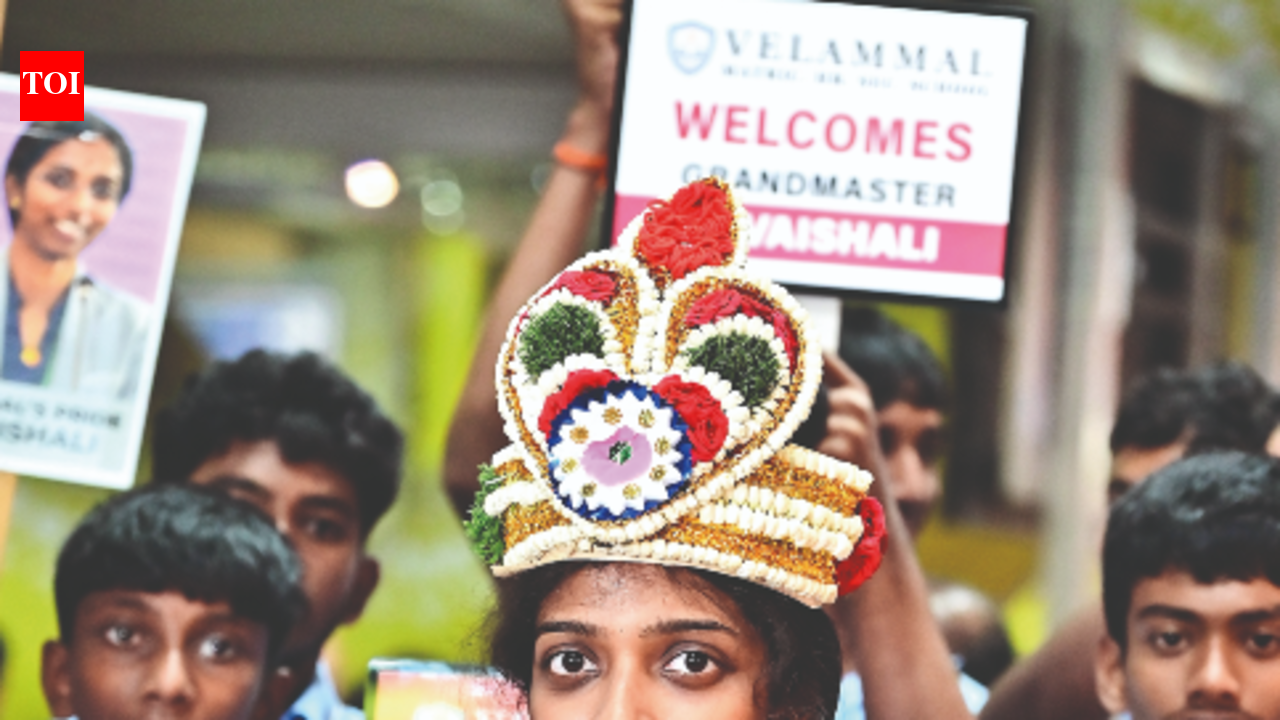
The ink had barely dried on R Vaishali’s Candidates glory when another name from Tamil Nadu made its mark on the global stage. Days after the 24-year-old Grandmaster from Chennai scripted history, 11-year-old A S Sharvaanica was crowned U12 girls’ rapid champion at the FIDE World Cadet and Youth Championships in Serbia. While five-time world champion Viswanathan Anand won his first title and inspired an entire generation, Vaishali stands on the cusp of doing the same for the next. If she beats China’s Ju Wenjun in the Women’s World Championship, it could spark a similar wave among young girls, many of whom, like Sharvaanica, are beginning to break through. “I wondered who would rise to challenge for the women’s crown after D Gukesh’s ascent to the top,” says Woman Candidate Master (WCM) Sharvaanica, a former world under-10 cadet champion from Udayarpalayam in Ariyalur district. “When Vaishali ‘akka’ won, I was so happy. She is rooting for young players. She is showing us anything is possible with hard work. I also want to reach that level.” Chennai’s Subbaraman Vijayalakshmi, India’s first Woman Grandmaster (WGM), says if Vaishali wins the World Championship, it would be a significant moment for women’s chess in the state and country. “The Candidates is a tough event, be it the open or women’s. It’s a brilliant achievement. But having had a challenger earlier (Koneru Humpy challenged for the crown in 2011), I would wish for Vaishali to go the distance this time. India has been waiting for a women’s world champion,” says Vijayalakshmi. Even as results such as Vaishali’s and Sharvaanica’s point to a promising trend, Vijayalakshmi, a six-time national women’s champion, cautions that the overall picture of women’s chess remains far from ideal. Of the 95 Grandmasters India has produced, just four are women. And when it comes to Tamil Nadu, the capital of chess in India, Vaishali is the only representative. The WGM count is slightly better though. Of the 27 India has, nine are from TN.“If you look at women’s chess in India and across the world, the numbers have gone down drastically. About 20 years ago, participation was close to 30%. Now it is less than 15%. That is low considering how much chess has grown overall,” says Vijayalakshmi. “Unfortunately, women’s chess has not seen the kind of surge it should have. It needs more support and attention to grow faster. We need more sponsors to come in and specifically encourage women’s chess.”Coach R B Ramesh, who trains Vaishali, says registration at his chess academies skews heavily towards boys, but adds that Vaishali’s success may change the trend. “For women’s chess, having a world champion from India will give hope to young girls that they can also be the best in the world. When we were growing up, our generation felt we were not good enough compared to the Russians and other foreign players, because we didn’t have much exposure to players from the West. But this generation, with such role models from a young age, will feel they can be the best players in the world,” says Ramesh. At the forefront of that shift are two-time Women’s World Rapid champion Koneru Humpy, World Cup winner Divya Deshmukh and Vaishali. “I hope girls will get inspired and take up chess professionally,” says Vaishali. “The last few years for Indian women’s chess have been amazing. We’ve seen Indian juniors dominating, but Indian women’s chess is different. It’s nice that we are winning tournaments also.”And in chess, where the queen is the most powerful piece on the board, it remains to be seen if this promise from the state and the country can translate into ruling the throne.


